
Trump Administration Issues Subpoenas To Stifle Reporting On War Against Iran
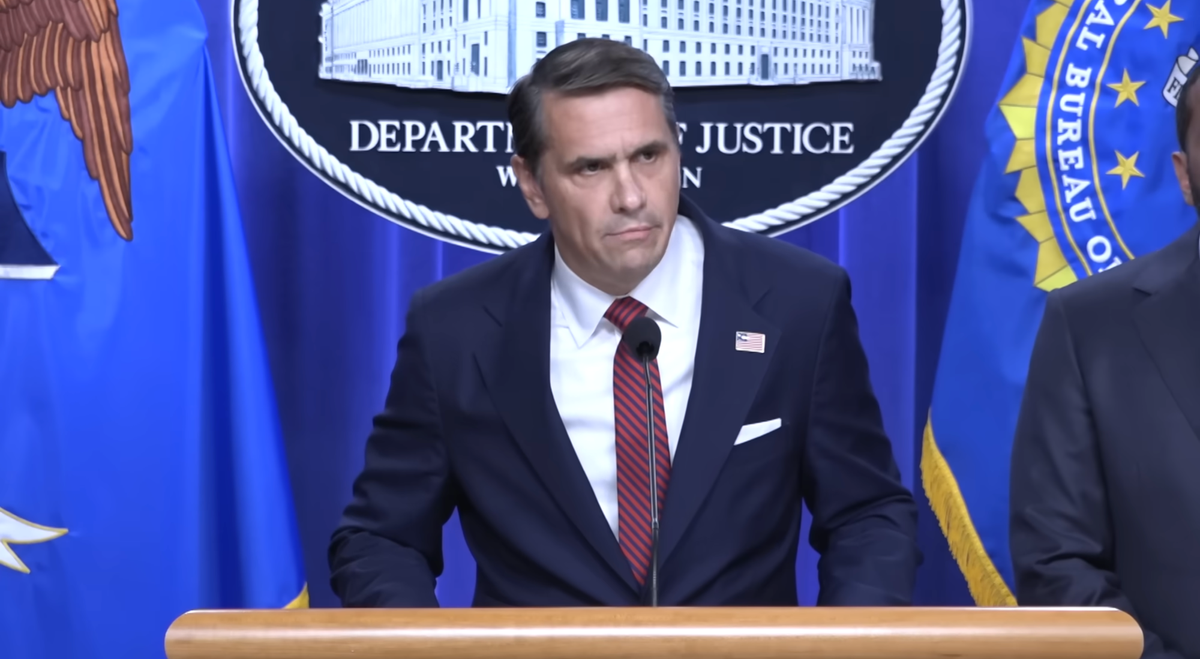
On behalf of President Donald Trump, the Justice Department issued grand jury subpoenas that targeted Wall Street Journal reporters involved in covering the war against Iran.
“The government’s subpoenas to The Wall Street Journal and our reporters represent an attack on constitutionally protected newsgathering. We will vigorously oppose this effort to stifle and intimidate essential reporting,” stated Ashok Sinha, the chief communications officer for Dow Jones, the Journal’s publisher.
According to the Journal, the subpoenas stemmed from a February 23 article that reported that “Gen. Dan Caine, the chairman of the Joint Chiefs of Staff, and others at the Pentagon warned the president about the risks of an extended military campaign against Iran. Other news outlets, including Axios and the Washington Post, published similar stories that day. Trump launched the war five days later, on Feb. 28.”
Unnamed administration officials “familiar with the matter” told the Journal that Trump complained to Attorney General Todd Blanche about “media leaks.” Blanche subsequently sought subpoenas “targeting the records of reporters who have worked on sensitive national security stories, one official said.”
The Journal additionally reported, “In one meeting, Trump passed a stack of news articles he and other senior officials thought threatened national security to Blanche with a sticky note on it that said ‘treason,’ another administration official said.”
“The government’s investigation of The Wall Street Journal has nothing to do with ‘national security,’” Freedom of the Press Foundation advocacy director Seth Stern declared. “It’s an outrageous attempt to silence sources, intimidate journalists, and bury the truth about President Trump’s unpopular decision to launch a war even his own generals warned against."
Stern described the subpoenas as a “direct threat to the public’s right to know,” and added, “Since the Department of Justice has abandoned the First Amendment, it’s up to the courts to restrain the government’s attempts to crush investigative journalism.”
“This isn’t a leak investigation—it’s an attempt to shut down reporting,” said Committee to Protect Journalists CEO Jodie Ginsberg. “Conflating journalism with treason is dangerous and anti-democratic. We call on the Justice Department to withdraw these subpoenas now.”
Back in 2025, Attorney General Pam Bondi revised the Justice Department’s policy for subpoenaing members of the press and encouraged the pursuit of reporters, editors, news producers, and other media staff in leak investigations.
Theodore Boutrous, Jr., who represents the Times in its lawsuit against the Pentagon’s media restrictions, contended that the Trump administration is using grand jury subpoenas to “invade directly into the reporter’s relationship with sources and the newsgathering process, which is meant to allow the American people to get information about the government.”
Previously, the Washington Post received a grand jury subpoena that was linked to the Espionage Act prosecution against Aurelio Perez-Lugones, who is accused of disclosing information about U.S. military operations against Venezuela. (This is the same case where FBI agents raided the home of Washington Post reporter Hannah Natanson and seized her electronics.)
Tim Richardson, who is the journalism and disinformation program director at PEN America, stated, “Even for an administration that brands protest as lawlessness and dissent as disloyalty, it is still alarming to see standard reporting practices framed as ‘treason.’”
“As Americans question a war now in its tenth week, the government is using a leak investigation to intimidate reporters in the hopes of shielding wartime decision-making from the public,” Richardson added.
After the Iranian military shot down a United States military aircraft over Iran, the Pentagon searched for two crew members. An “administration official” told the Journal that the “stack of news articles Trump provided the acting attorney general was about those rescue operations.”
On April 3, Trump showed his anger at coverage of the rescue operations, particularly how an unnamed outlet had reported that one airman was safe but the other airman had not been rescued yet. “We’re going to go to the media company that released it, and we’re going to say national security, give it up or go to jail.”
The Trump administration has waged a campaign against the news media that discourages scrutiny of not only the war against Iran but all U.S. military operations.
On May 12, Trump posted the following on his social media platform Truth Social, "When the Fake News says that the Iranian enemy is doing well, Militarily, against us, it’s virtual TREASON in that it is such a false, and even preposterous, statement. They are aiding and abetting the enemy!”
“All it does is give Iran false hope when none should exist. These are American cowards that are rooting against our Country,” Trump added. The same day the New York Times reported that Iran still has “significant missile capabilities” despite claims to the contrary by Trump officials.
In mid-March, Pentagon Secretary Pete Hegseth scolded the press for supposedly showing “mercy” to U.S. “enemies.” He stressed that news media should rewrite headlines to make them more suitable to the Trump administration.
“For example, a banner or a headline: “Mideast war intensifies,” splashing on the screen the last couple of days, alongside visuals of civilian or energy targets that Iran has hit, because that's what they do,” Hegseth said. “ What should the banner read instead?”
“How about, ‘Iran increasingly desperate,’ because they are. They know it and so do you, if it can be admitted,” Hegseth added. A few weeks later, it was the Trump administration that reached out to Pakistan to broker a ceasefire between the U.S. and Iran.
Plus, prior to the war on Iran, Hegseth and the Pentagon ramped up hostility toward the press by adopting unconstitutional media restrictions that effectively allowed for viewpoint-based discrimination against reporters.
Judge Paul Friedman stated when the court ruled against the policy, “[I]n light of the country’s recent incursion into Venezuela and its ongoing war with Iran, it is more important than ever that the public have access to information from a variety of perspectives about what its government is doing. So that the public can support government policies, if it wants to support them; protest, if it wants to protest; and decide based on full, complete, and open information who they are going to vote for in the next election.”
Comments ()