
Trump Broadens Crackdown On Media Sources In The Federal Government
Donald Trump's administration proposed a gag order for all US government employees, broadening its crackdown on news media sources
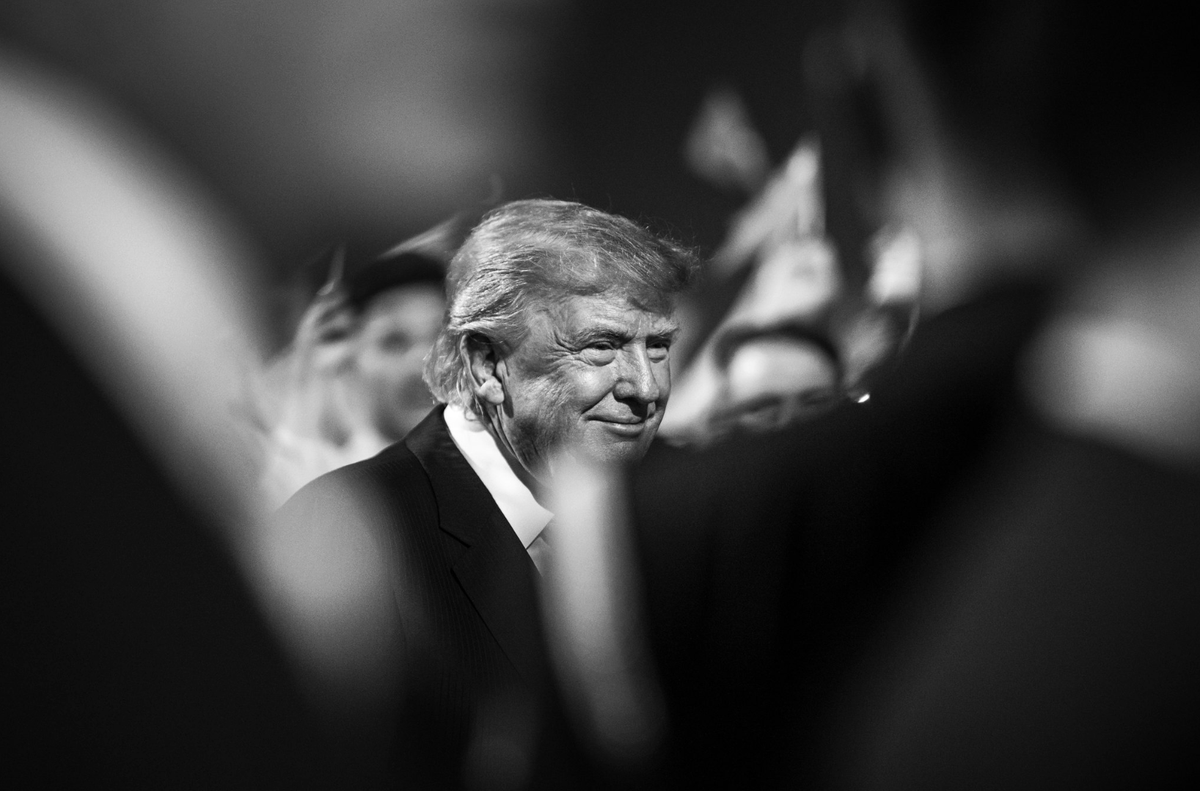
President Donald Trump’s administration expanded its crackdown on news media sources, who work for the federal government, proposing a gag order for all U.S. government employees. It would cover “non-public, confidential, or proprietary information,” and infringe upon employees’ First Amendment right to freedom of speech.
The information covered by the proposed non-disclosure agreement is far-reaching, including information related to “internal agency operations, personnel matters, procurement processes, or any sensitive, pre-decisional or deliberative material that is not currently publicly available.” It goes well beyond agreements that employees are already required to sign to safeguard classified information.
Since Trump returned to office in 2025, the administration has not only hunted down alleged leakers but also tightened restrictions on government employees and clamped down on press interactions with employees. For example, restrictions imposed on reporters at the Pentagon required them to effectively sign an unconstitutional pledge that they would not solicit information.
A notice that the administration would impose government-wide non-disclosure agreement was shared on May 27 by the Office of Personnel Management (OPM), an agency that is often characterized as the government’s human resources department.
“There have been several recent instances in which internal agency communications related to rulemaking and policy development were disclosed without authorization,” according to “background” in the OPM notice. “Such disclosures risk chilling candid interagency feedback, disrupting orderly decision-making, and weakening trust within and among Federal agencies.”
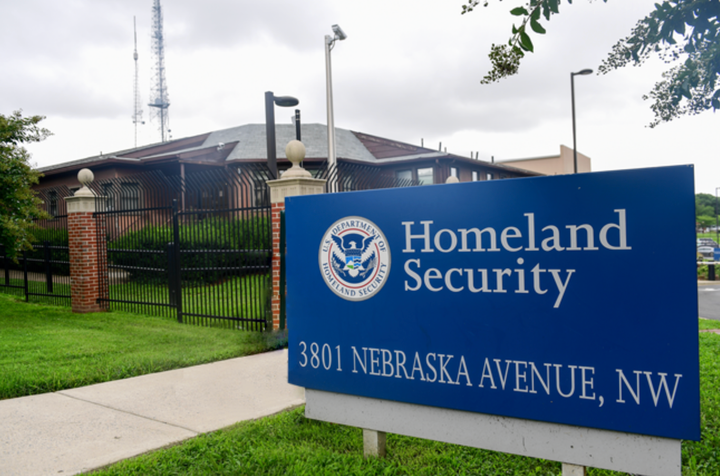
OPM complained that media sources at the FBI and the Department of Homeland Security allegedly leaked information in 2025 related to the location of “immigration enforcement actions.” (Last year, the administration responded by subjecting employees to unreliable lie detector tests to identify “leakers.”)
“In early 2026,” the OPM added, “the New York Times and Washington Post received unauthorized disclosures from Federal employees divulging the secret U.S. raid on Venezuela prior to it occurring. These leaks put the lives of members of the armed forces at risk, leading news organizations to delay ‘publishing what they knew to avoid endangering US troops.’”
For what it’s worth, New York Times executive editor Joe Kahn insists that the Times never had “verified details about the pending operation” to kidnap Maduro nor did the media outlet “withhold publication at the request of the Trump administration.”
After an ICE agent killed Renee Good in Minneapolis, an unnamed DHS whistleblower reportedly provided a list of 4,500 ICE employees to Dominick Skinner, an Irish person who lives in the Netherlands. It contained the personal information of 2,000 employees who were deployed to the “frontlines.” But not all of the information provided to him was published as part of ICE List, which OPM mentioned as another reason why employees must sign an NDA.
OPM also invoked the disclosure of a draft Supreme Court decision written by Justice Samuel Alito in the Dobbs case, which ended the right to abortion. Incidentally, Alito was implicated in the alleged Dobbs leak as well as another Christian fundamentalist case, Burwell v. Hobby Lobby.
Within the summary attached to the notice, OPM insists that the “proposed NDA does not create new substantive restrictions on employee speech or disclosure rights. Rather, it is designed to provide agencies with a standardized mechanism for employees to acknowledge and agree to comply with obligations that already exist under law and regulation, while expressly preserving rights to make disclosures authorized by law, including protected whistleblower disclosures.”
But the American Federation of Government Employees (AFGE), which represents hundreds of thousands of federal workers, characterized the proposed NDA as “another attempt by the administration to purge the civil service of nonpartisan career employees and replace them with loyalists who won’t speak out against waste, fraud, and abuse.”
“OPM will pressure agencies to make the NDA mandatory and then fire employees who refuse to sign it,” AFGE asserted. “Federal employees do not surrender their First Amendment rights when they accept federal employment, and the public has a right to know about this administration’s abuses.”
The National Federation of Federal Employees, which represents over 100,000 government workers throughout the United States, similarly slammed the proposed NDA.
“This is clearly yet another baseless threat to intimidate federal workers, designed to muzzle employees and further politicize the civil service,” declared NFFE National President Randy Erwin. “Federal workers should never feel discouraged to report fraud, waste, abuse of power, and other misconduct seen at federal agencies.”
“We believe it is clear the Trump Administration is using the requirement of signing a sweeping NDA to instill fear in career public servants for speaking out about injustices. If this rule is imposed, it would cast a chilling effect across the entire workforce,” Erwin added.
During his first term, Trump had White House staff sign an NDA to keep them from writing books or speaking about his presidency.
At agencies like the Department of Agriculture or Environmental Protection Agency, the ACLU recalled that Trump imposed restrictions "limiting social media posts and press releases to preventing communications with Congress."
The ACLU was clear: “What the government cannot do is impose an overbroad muzzle on its employees that prevents them from speaking out at all.”
Their protections are strongest when they are speaking about issues that do not relate to their job duties. For example, a scientist who works at the Environmental Protection Agency is free to research and write academic papers on her own time, which she can then publish under her own name. A State Department employee can attend a local school board meeting and express support for a measure being proposed. To the extent their speech meets the above requirements, employees can even speak anonymously. (One Twitter account that launched last night seems to be run by a handful of National Park Service rangers apparently writing during their personal time.)
Lauren Harper, the Daniel Ellsberg chair on government secrecy for the Freedom of the Press Foundation, said, “We know exactly what kind of information the administration wants to bury. Look no further than the FOIA release to Freedom of the Press Foundation that showed the administration had no solid legal rationale for conducting mass deportations under the Alien Enemies Act, substantiating a leak the administration called ‘fake news’ and cited as false justification for loosening restrictions on subpoenas to reporters.”
“Trying to force the entire federal government to adopt the Trump organization’s aggressive use of NDAs won’t make anybody safer and won’t improve agency processes,” Harper concluded. “Its sole intent would be to protect the administration from the leak of embarrassing, politically damaging, or unlawful information.”

Comments ()