
Lawsuit Challenges Trump Administration's Claim That It May Delete Text Messages
Two watchdog organizations filed a lawsuit to ensure that Trump administration records remain preserved under the Presidential Records Act
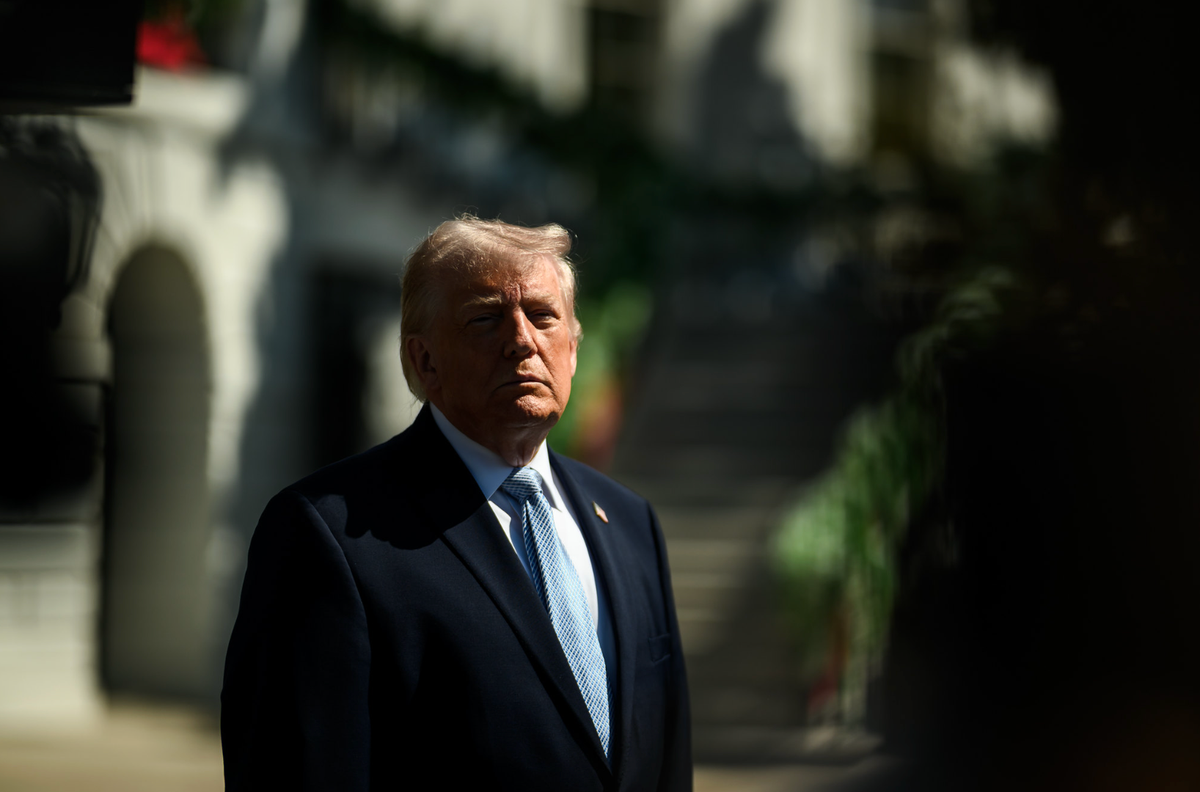
In early April, the Justice Department issued a “legal opinion” asserting that President Donald Trump does not need to follow the Presidential Records Act because it is “unconstitutional.” The White House immediately adopted a record keeping policy that allows Trump and other officials to delete their text messages.
Citizens for Responsibility and Ethics in Washington (CREW) and the Freedom of the Press Foundation (FPF) sued [PDF] Trump, Vice President J.D. Vance, and the White House on April 24.
“The White House is now flagrantly violating the law and flouting the requirements Congress enacted to ensure public transparency,” CREW and FPF declared in a joint press statement. “It is clear that the Trump administration wishes it could return the country to a pre-Watergate status quo in which records of the president’s and White House’s official conduct are the private property of the president—records he can destroy, sell, or withhold from the public at will—but that is not reality.”
CREW and FPF also sued the National Archives and Records Administration. FPF asked the agency in mid-April if it planned to process the organization's Freedom of Information Act (FOIA) requests for “Presidential records" but received no response.
According to the organizations, the opinion from the DOJ’s Office of Legal Counsel disregards Supreme Court precedent and rewrites the history of the Presidential Records Act. The Trump administration never challenged the Presidential Records Act in court.
“[A]lthough no court has declared the PRA unconstitutional, the OLC Opinion unilaterally declared that, effective immediately, ‘the President need not further comply with its dictates,’” CREW and FPF recall.
The record keeping policy adopted by the White House on April 2 allows Trump officials that they should preserve text messages “when they are the sole record of official decision-making, government action, or contain unique information not available elsewhere.” They are not obligated to retain text messages that involve “ministerial tasks or other workplace minutes.”
But as the complaint states, this standard does not appear in the Presidential Records Act, and the policy contains no instructions for executive officials when it comes to determining whether text messages are the “sole record.” Put another way, the policy gives executive officials “unchecked discretion” to delete text messages that should legally be preserved.
The OLC opinion acknowledges that officials in the White House regularly text message, saying it is “more akin to speaking every day” and complaining that preserving these records is “resource intensive.”
Two other organizations, American Oversight and the American Historical Association, filed a similar lawsuit [PDF] days after the new record keeping policy was adopted by the Trump administration.
“In the aftermath of the Watergate scandal, when President [Richard] Nixon attempted to destroy records and cover up his wrongdoing, Congress passed the PRA, requiring that official acts of the president and his staff be documented, preserved and eventually made available to the public,” stated American Oversight executive director Chioma Chukwu.
Chukwu continued, “The PRA makes clear that presidential records are the property of the United States and the American people, not of any individual president—no matter how much he may wish to destroy the public record or hoard documents after he leaves office.”
The complaint notes that White House spokesperson Abigail Jackson said nothing about following the Presidential Records Act’s restrictions on “non-official electronic messaging accounts.”
“Messages on such non-official platforms—including personal email, text messages, Signal, or other applications in which users can set messages to automatically delete—are not saved to ‘the White House system” by default.”
Additionally, messages are only preserved "if a staff member manually forwards the message to their official account or otherwise saves the message onto the White House network.”
Evidence strongly suggests that Trump has used “a disappearing messaging application to conduct sensitive communications with leaders of foreign countries.”
Back in January, American Oversight raised alarm over the fact that the messages with foreign leaders were not being “properly preserved” under the Presidential Records Act.
Comments ()