
Israeli Military Reportedly Bombed Lebanese Journalist, Blocked Rescuers
The Israeli military reportedly targeted two Lebanese journalists, assassinating Amal Khalil and seriously injuring Zeinab Faraj.
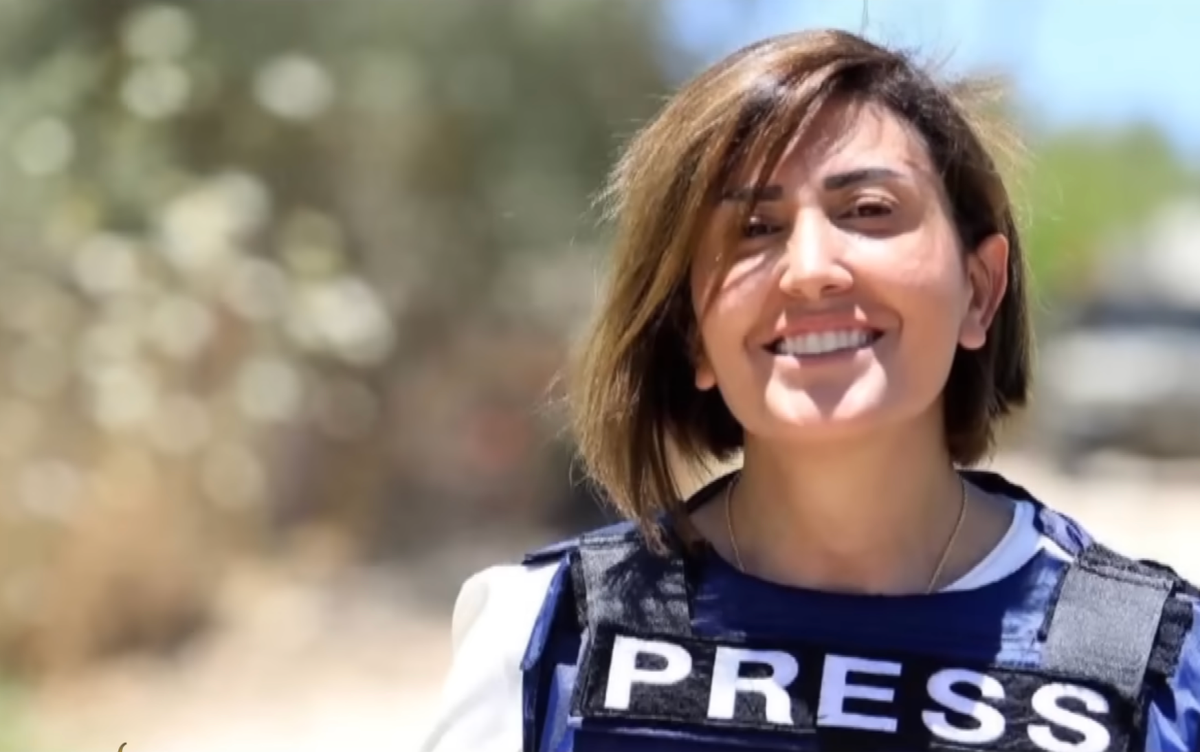
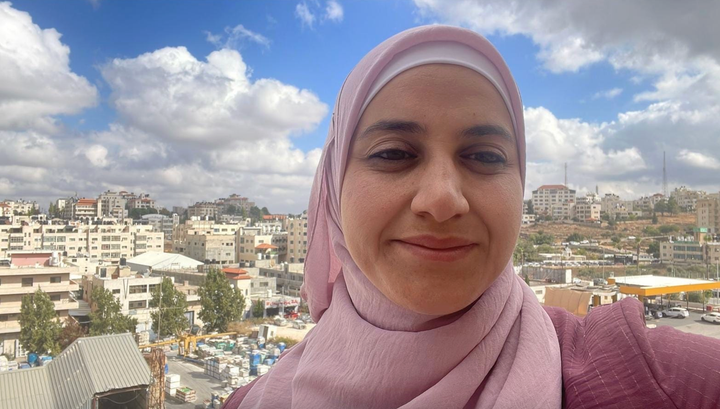
The Israeli military reportedly targeted two Lebanese journalists, assassinating Amal Khalil who worked for the Al-Akhbar newspaper and seriously injuring freelance photographer Zeinab Faraj.
Lebanese Red Cross volunteers rescued Faraj but were unable to rescue Khalil before she died because the Israeli military opened fire on them, which Lebanese Prime Minister Nawaf Salam called a “war crime.”
“Israel’s targeting of media professionals in the South while they are performing their professional duties can no longer be viewed as a series of isolated incidents,” Salam declared. “Rather, it has become a proven pattern—one that we condemn and reject, just as it is condemned and rejected by all international laws and norms.”
Khalil is the fourth Lebanese journalist that the Israeli military has killed this year.
Committee to Protect Journalists (CPJ) regional director Sara Qudah reacted, “The repeated strikes on the same location, the targeting of an area where journalists were sheltering, and the obstruction of medical and humanitarian access constitute a grave breach of international humanitarian law.”
“CPJ holds Israeli forces responsible for the endangerment of Amal Khalil’s life and the injuries Zeinab Faraj sustained after the targeted strike on their location,” Qudah added.
In 2024, according to Al Jazeera English, Khalil received “direct threats from an Israeli phone number on WhatsApp, telling her to cease her reporting.” Reporter Heidi Pett noted that she was told to leave Lebanon if she wished for her “head to remain on her shoulders.”
CPJ said that Khalil and Faraj were covering “recent attacks on the southern village of Bint Jbeil. “En route,” according to Al-Jadeed TV, "they became trapped under rubble after a direct strike hit the building they were sheltering in.” (A “nearby civilian vehicle on the main road in Al Tayri” was also attacked just before they were hit.)
Pett, who is in Lebanon, reported that the two Lebanese journalists were “pinned” for “more than one hour.” Rescuers could not reach them because Israeli forces allegedly obstructed access, as they have done repeatedly (the brutal incident involving five-year-old Hind Rajab in Gaza is perhaps the most well-known example).
“A team from the Red Cross was eventually able to reach the location and evacuate Faraj. They brought her to hospital, along with the bodies of two civilians who were killed in an earlier strike,” Pett recounted. Israeli forces shot the ambulance, and it arrived at the Tebnine Government Hospital with “bullet marks on the vehicle.”
The Lebanese Health Ministry accused Israel of “pursuing” Khalil and Faraj by “targeting” the location where they took shelter in at-Tiri.
“When the Lebanese Red Cross arrived to transport the wounded the enemy obstructed the humanitarian mission, firing a stun grenade at the ambulance, and targeting it with gunfire,” the ministry declared in a statement.
Elsy Moufarrej, who is the head of the journalists union in Lebanon, placed the targeting of Khalil and Faraj within the framework of silencing those who seek to document the Israeli military’s crimes in Lebanon and Palestine. Moufarrej acknowledged that this is not limited to murder and could include arrests, threats, and other accusations that endanger the lives of media professionals.
In a report from Baisariyeh, Lebanon, the home of Khalil’s parents, Al Jazeera English senior correspondent Malcolm Webb reported that “everyone” they had “stopped to ask for directions” was “mourning” her death.
Khalil started her career in 2006 during the Israeli military’s “third invasion of Lebanon.” She was a “well-known, prolific journalist” in the country, and Khalil spent the past 20 years reporting on southern Lebanon.
On April 8, the Israeli military launched separate strikes that killed Ghada Dayekh, a presenter for Sawt Al-Farah, and Suzan Khalil, a reporter and presenter for Al-Manar TV and Al-Nour Radio. That same day the Israeli military launched a drone attack in Gaza City that killed Mohammed Samir Washah, who was a correspondent for Al Jazeera Mubasher.
CPJ noted that Israel targeted them as the military “intensified” its bombing of Lebanon, hours after a so-called “ceasefire” between Iran, Israel, and the United States had been adopted.
The Israeli government is widely recognized by global press freedom groups as the “worst enemy” of journalists. In the organization’s 2025 report, Reporters Without Borders stated, “Over the last 12 months, the Israeli army has been responsible for nearly half (43%) of all journalists killed worldwide.”
Numerous times, particularly in Gaza, the Israeli military has employed double-tap strikes to kill journalists when they arrive at the scene of attacks to gather news, and the U.S. government bears a level of responsibility for these deaths because it continues to provided billions of dollars in arms and funding to the Israeli military.
Comments ()