
The Leak Investigations Will Continue Until Morale Improves
Since Trump and Republicans were routed in the midterm elections, news reports point to a renewed focus on hunting down leakers
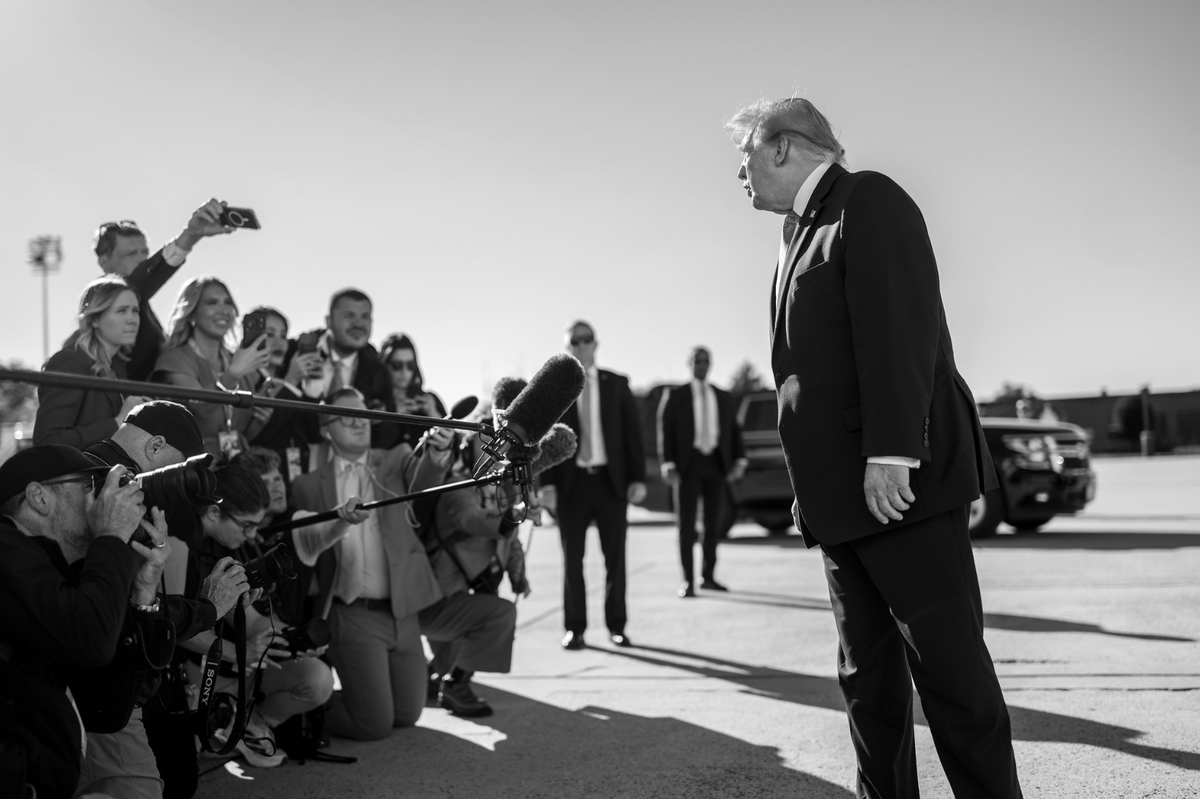
Hunting down journalists and their sources has long been a trademark of President Donald Trump. He views all media coverage that exposes his misdeeds as opposition.
Since Trump and Republicans were routed in the midterm elections, a number of news reports point to a renewed focus on leak investigations. There are even signs that the Trump administration may threaten journalists with criminal prosecution to scare them into divulging their confidential sources.
Suzie Wiles, chief of staff for the Trump White House, was replaced by Stephen Miller, a top Trump advisor and fascistic architect of Project 2025 that brought mass deportations, further abuses of mass surveillance, and attacks on the freedom to protest, especially by targeting an array supposed left-wing groups for promoting “terrorism.”
The Atlantic reported that the change in leadership may have stemmed from Miller’s support for jailing journalists. Justice Department officials have discussed “various tactics they could use—including arrests,” as part of efforts to clampdown on leaks. Two unnamed sources claim Wiles “pushed back.” Miller, on the other hand, “insisted it wouldn’t take long for journalists to give up their sources.”
Remarkably, according to NPR, Wiles “built a reputation as a strict manager who has reduced the staff turnover and volatility of press leaks which plagued Trump’s first term in the White House.” But apparently that was no longer enough for Trump.
According to the Freedom of the Press Foundation's United States Press Freedom Tracker, the Trump administration has issued 19 subpoenas and legal orders to journalists or news outlets. The vast majority were the result of leak investigations.
The DOJ charged CIA contractor Ian Brinksman, Fort Bragg whistleblower Courtney Williams, and Pentagon contractor Aurelio Perez-Lugones with violating the Espionage Act after they allegedly leaked information to the press.
Prosecutors are trying to pursue a case against former FBI director James Comey for allegedly directing staff to speak to a reporter and correct a story about surveillance, even though it occurred more than 10 years ago and is outside the statute of limitations.
Officials at the FBI, Pentagon, Homeland Security Department, and other intelligence agencies turned to unreliable polygraph exams or lie detector tests to identify leakers. Employees were subjected to exams, even in instances that involved unclassified information.
It was evident before Trump started his second term that his administration would be more “brutal” when it came to waging war on alleged leakers and the press. While it is unknown how many criminal referrals for investigating leaks have been referred to the DOJ, every other week there is at least one headline that reflects the administration’s anti-leaks obsession.
This week, the U.S. Court of Appeals for the Fourth Circuit instructed the government to narrow its request for journalists’ LinkedIn data in a leak case. Coverage by the New York Times indicated that the legal order, which LinkedIn challenged, was likely related to a report o Navy Seal Team 6 operation in 2019.
The unit, according to the Times, slipped into North Korea “at night to plant a surveillance device. Interrupted by a boat, the troops feared they had been discovered by security forces, and shot and killed everyone aboard. The North Koreans turned out to be unarmed civilians. The first Trump administration did not inform Congress of the operation."
Journalist Matthew Cole co-authored the report, and the Trump Justice Department subpoenaed Cole in an effort to force him to testify about his confidential sources before a grand jury. (He is “due in court next week,” the Times added.)
Five reporters worked on the story, and the court determined that they had “collectively published nearly 1,000 different articles during the 18 months covered by the administration’s demand,” which Judge Elizabeth W. Hanes noted was “less than 5 percent of which appear to have anything to do with the subject at issue here.”
The week before it was reported that the Trump administration was investigating fired Lt. Gen. Brett Sylvia for allegedly speaking with the press about the U.S. war on Iran and the Russia-Ukraine conflict.
Trump has fully exposed how a president's obsession with leaks has extremely little to do with national security. His administration cited "leaks" as an excuse to bar CNN, MS Now, and Politico from the White House. But a court twice rebuffed Trump because his administration just wants to discourage and obstruct media outlets from scrutinizing the president.
Pentagon Secretary Pete Hegseth, who should be impeached, mimics this behavior, trying to impose press restrictions at the Defense Department that are unconstitutional.
Trump’s first term set a record for media leaks referred to the Justice Department for criminal investigation, and the CIA was responsible for the huge spike. Documents obtained by the Project on Government Oversight (POGO) showed, “Many of those referrals pertained to leaks that had taken place months and even years prior during [President Barack Obama’s] administration, raising questions about why they were being revisited.”
But the focus on Obama and President Joe Biden’s administrations is all about settling political scores, wielding a legal apparatus that is powered by pervasive technology capable of rooting out anyone who questions the president’s authority and policymaking. (Of course, much of that machinery was developed under Obama in response to WikiLeaks and NSA whistleblower Edward Snowden.)
The Trump administration is at a low point, making repressive acts more likely. Which is why it is essential to repeal the Espionage Act or at minimum pass the Daniel Ellsberg Press Freedom and Whistleblower Protection Act that would reform the Espionage Act.
It is also crucial for the next Congress to adopt a national reporter’s shield law, something like the PRESS Act that will protect journalists from presidents who relish the idea of jailing reporters if they don't reveal their sources.

Comments ()