
US Magistrate Judge Urges ICE To Release Afghan Journalist
A federal magistrate judge recommended that ICE release Afghan journalist Shaban Ali Rafat from an ICE facility in California City.
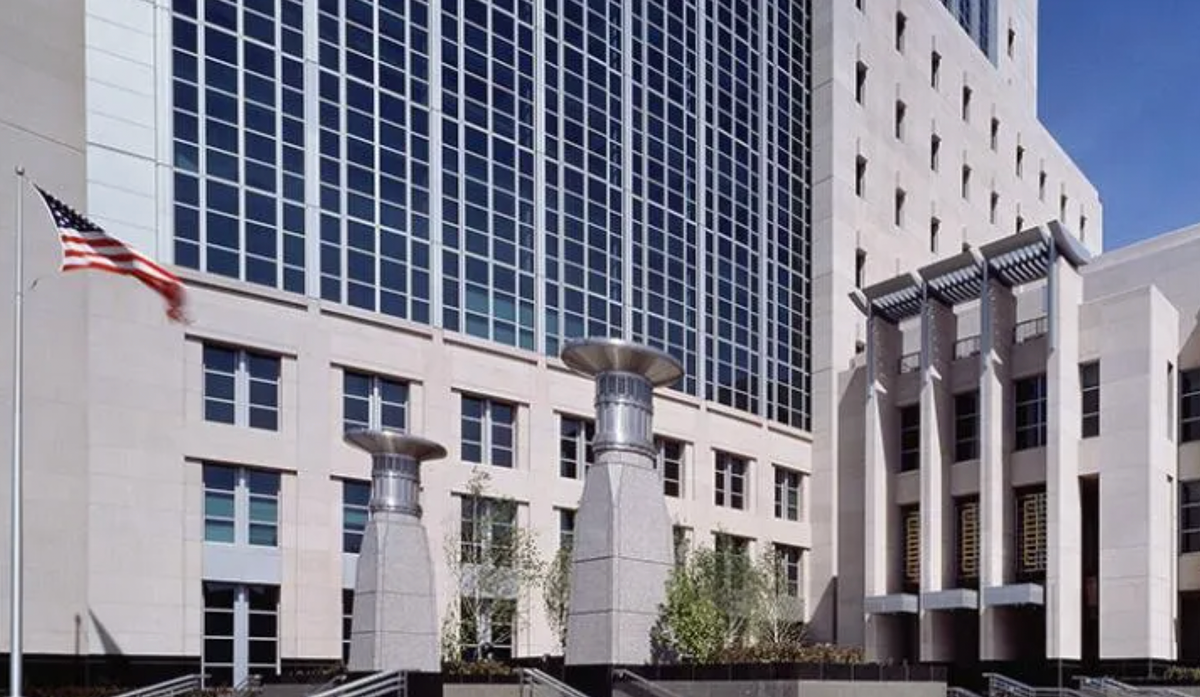
On November 6, a federal magistrate judge recommended that ICE release Afghan journalist Shaban Ali Rafat from its detention center in California City.
Rafat, who is part of the Hazara ethnic minority, participated in a Convention Against Torture" interview on March 18, 2025, which determined that he would likely be tortured if deported to Afghanistan.
The magistrate judge gave ICE and any other government agency 14 days to object to this decision. If there are no objections, then a district court judge will review the ruling.
According to the Committee to Protect Journalists (CPJ), “Rafat worked as a producer and reporter for state-owned Maaref TV and served as a senior media officer at Kabul University, where he extensively covered the 2020 terrorist attack on the university and the plight of the Hazara community,” which is recognized as a "persecuted ethnic and religious minority."
The magistrate judge’s decision indicates that Rafat sought asylum on August 23, 2024, when he applied for an appointment through the “CBP One” app. He stayed in Chiapas, Mexico and waited until January 21, 2025, when he was “mugged and severely beaten.” That night Rafat entered the U.S. “through the Lukeville, Arizona border and surrendered himself to immigration.”
Rafat was immediately informed that he would be “removed,” however, he was granted a “withholding of removal to Afghanistan,” which mean that U.S. Citizenship and Immigration Services would consider his “fear of persecution or torture.” He was transferred to the Northwest ICE Processing Center, a detention facility in Tacoma, Washington.
In June 2025, he was moved to the ICE detention center in Adelanto, California. Then on January 20, he was transferred once again to the California City facility.
Those detained at the California City facility, which is in the desert northeast of Los Angeles, have likened the center to "a torture chamber," "a zoo," and "hell on earth." It is "on the grounds of a state prison that closed in March 2024," and as the Guardian reported, CoreCivic reopened the facility in 2025.
A federal court determined in July that the ICE center had failed to provide emergency care, adequate medical screenings, accommodations for people with disabilities, and medications in a timely manner, despite a judge's orders.
The documents in Rafat’s case appear to be restricted. It is not currently possible to access the habeas petition that Rafat filed on July 31. But Rafat asked a federal court to force ICE and the Justice Department to end his detention and ensure that he is not sent back to Afghanistan.
On November 13, CPJ urged ICE to “immediately and unconditionally release” Rafat and “grant him full access to a hearing on the merits of his asylum claim.”
“Rafat fled Afghanistan because the Taliban made it impossible for him to work as a journalist without risking his life. Deporting him now would deliver him directly into the hands of the very persecutors he escaped,” declared Jose Zamora, the regional program director for CPJ Americas. “His prolonged detention is a betrayal of the United States’ commitments to press freedom and human rights.”
In addition to being a part of the Hazara minority, Rafat comes from a family with a Shia “religious background.”
CPJ has tracked the Taliban’s crackdown on media that focuses on Hazara and Shiite communities. On September 24, the Taliban shut down the Afghan Voice Agency and detained journalist Zamin Ali Chavoshi, who was the outlet’s security manager. They also detained “four other writers.”
On September 6, the Taliban raided Rah-e-Farda TV and detained its owner Salman Akhlaqi. The offices were “sealed.” The Taliban raided the Kabul headquarters of Shiite-owned Tamadon TV on June 23 and ordered the station to shut down.
It is possible that the government will deport Rafat to a third country, such as the Central African Republic. As challenged by the ACLU, President Donald Trump’s administration has deported numerous “people who won protection in U.S. courts after proving they were likely to be persecuted or tortured if deported to the countries they fled.”
For example, a young Afghan named Khalil and his family helped the U.S. military. When his family was attacked by the Taliban, he tried to seek U.S. asylum. But after a judge found that he would be persecuted if returned to Afghanistan, the Trump administration deported him to the conflict zone of CAR—a country known for armed groups attacking Muslim communities.

Comments ()