
Israeli Military Extends Detention For Palestinian American Journalist
The Committee to Protect Journalists demands the release of Palestinian American journalist Naqaa Hamed as an Israeli military court keeps her in detention.
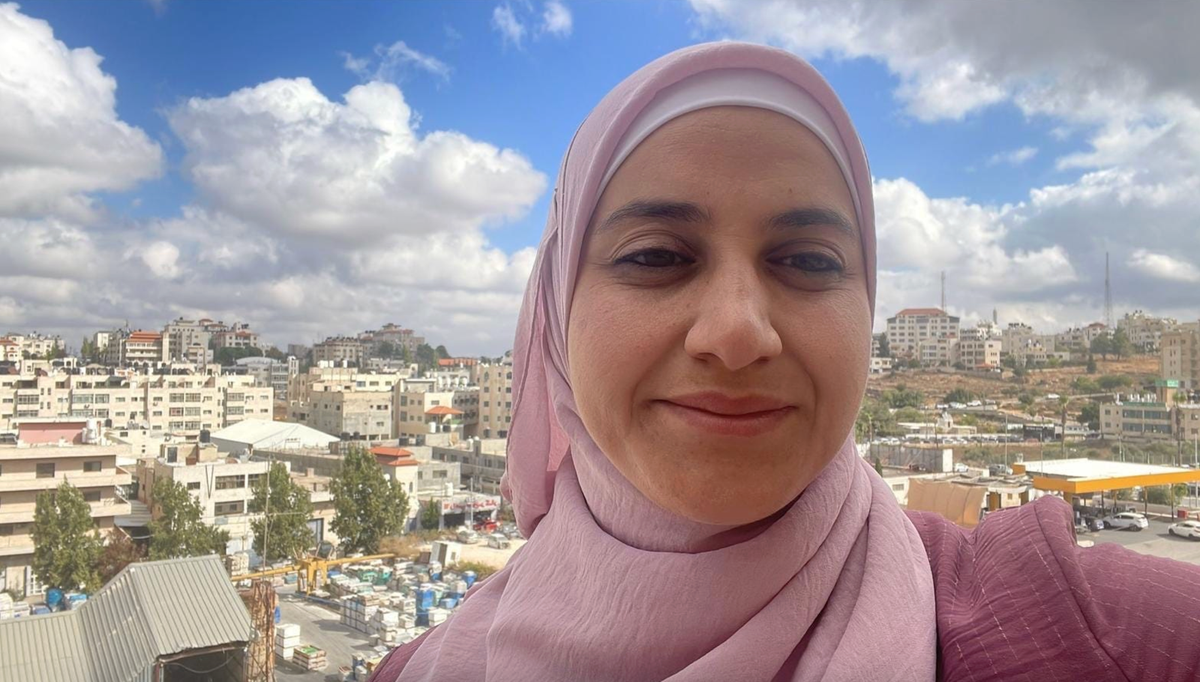
The Committee to Protect Journalists demanded the release of Palestinian American journalist Naqaa Hamed, as Israel’s Salem military court extended Hamed’s detention until September 23.
Hamed is a freelancer who was working for Turkish state broadcaster TRT in the occupied West Bank. She is also a contributor to Drop Site News, and she was stopped at a “temporary Israeli army checkpoint,” along with Wissam Hajouj and Hamada Mansour, two TRT cameramen who were released.
“Israeli authorities should immediately free Hamed and publicly clarify the legal basis for her detention,” declared CPJ regional director Sara Qudah. “Unsubstantiated espionage allegations must not be used to criminalize journalism, and the systemic harassment and intimidation targeting her work in the occupied West Bank must end.”
Senator Chris Van Hollen amplified CPJ’s call for Hamed’s release. “Another American citizen wrongfully detained by the Israeli [government. Naqaa Hamed, an American journalist, was stopped by the IDF, interrogated about her work, and now faces bogus espionage allegations.”
The International Federation of Journalists also condemned the Israeli government and demanded that the military release Hamed.
Drop Site reported that Hamed was expected to be transferred from “Hasharon, a temporary detention facility in central Israel,” to Damon Prison near Haifa, where most Palestinian female prisoners are held.”
Previously, Hamed worked as a correspondent for Iranian state broadcaster Press TV. Anonymous military sources told the Israeli news site Ynet that she was “suspected of cooperating with an enemy entity and may also be under suspicion of espionage.” But the Israeli authorities have yet to formally charge Hamed.
The Israeli human rights organization B’Tselem recently put out a report on the occupied West Bank called “The Elimination Project.” It details a “sweeping Israeli assault that is systematically and at an accelerating pace dismantling the foundations of Palestinian existence.”
“The ability to get to work, take children to school, attend university, receive medical care or municipal services, meet with family and acquaintances, cultivate one's land, go on vacation, or attend cultural events, along with hundreds of other ordinary activities that make up daily life, are all under constant Israeli attack and are sometimes denied altogether,” according to B’Tselem. “Over and above all this looms a constant threat to life and bodily integrity. At any moment, Palestinians may be exposed to violence by soldiers or armed settler militias, arrested and imprisoned, subjected to abuse and humiliation, and sometimes even killed.”
This widespread assault on Palestinian life in the occupied West Bank is what Hamed was reporting on when the Israeli military detained her. She was in Masafer Yatta to report on an uptick in Israeli settler attacks. (Note: This is the mountainous area profiled in the Academy Award-winning “No Other Land,” where filmmaker Basel Adra lives.)
Drop Site reported, “Over the past several weeks, Israeli settlers have targeted Hamed with a wave of incitement on Telegram channels and in Hebrew media following her coverage of an Israeli siege on families in the village of Qusra, according to her colleagues.”
An online campaign for Hamed’s arrest was launched, according to Hamed’s husband Bashar Abed, who spoke with CPJ.
In May, Hamed visited Deir Ammar in the occupied West Bank and reported on 34 settlements that were “secretly approved by the Israeli security cabinet in late March—the “largest number of settlements approved” by the Israeli government “at one time.”
Hamed described what it was like for Mustafa Badaha, a Palestinian in Deir Ammar, to see land that belonged to him stolen by settlers.
“Everything is legal—I have permits—but it makes no difference. A settler comes and simply says, ‘This is my land. You have no place here,’” Badaha told Drop Site. For years, he cultivated the land, building a small summer home where his family would gather. “Now, no one can go there—if we try, we are attacked,” he said. “What was once my joy is now my greatest fear.”
When Israeli soldiers stopped Hamed, Hajouj, and Mansour, according to Hajouj, they were taken to a “military watchtower” after three female soldiers took photographs of their IDs.
Hajouj told Drop Site, “We were forced to sit on the ground for around 45 minutes, and in that time Naqaa was taken by the female soldiers to the side.” Hamed returned and said that soldiers questioned her about her “journalistic work. They then had Hamed grab her electronics and took her into custody.
As noted by Maysa Mustafa, a journalist for Drop Site and Middle East Eye, Hamed was the second Drop Site contributor to be “wrongfully detained by Israeli forces for their West Bank coverage in the last month.” Drop Site contributor Mohammed Awad was arrested on August 12.
Awad, who also freelances for Agence France-Presse, was at his home in Beitunia in the occupied West Bank. His wife told CPJ that Awad was “blindfolded” in the “early hours of the morning” and taken to Ofer Prison.
The military baselessly accused Awad of “advancing terrorist attacks against Israeli civilians and IDF soldiers,” operating with Hamas, and “being in contact” with Hamas members. Awad reported on the burning of a mosque in Qusra and a settler attack in Masafer Yatta just prior to being placed in detention without any charges.
With Hamed’s detention, according to the Palestinian Journalists Syndicate, the number of journalists detained by Israel is now 38. The organization called attention to the fact that she is a mother of three and “has diabetes and other health problems.”
Five of the 38 journalists in detention are women: Hamed, Bushra al-Tawil, Islam Amarnah, Farah Abu Ayyash, and Natalie Abu Diya.
Al-Tawil was recently “transferred from Damon Prison to solitary confinement in Ramleh amid intensified isolation and other measures against Palestinian women prisoners.”
Meanwhile, the Israeli culture minister has threatened to strip Academy Award-winning filmmakers Yuval Abraham and Rachel Szor of their Israeli citizenship because they produced a film called "NAZA" that features Israeli military and intelligence whistleblowers. It exposes the AI apparatus used to kill Palestinians.
Abraham and Szor worked on "No Other Land" with Adra and also received Academy Awards.
Comments ()