
Leak Outing Fired General As Alleged Leaker Likely Violated Privacy Law
An unnamed Pentagon official leaked details of an alleged leak investigation and likely violated the privacy of a high-ranking officer
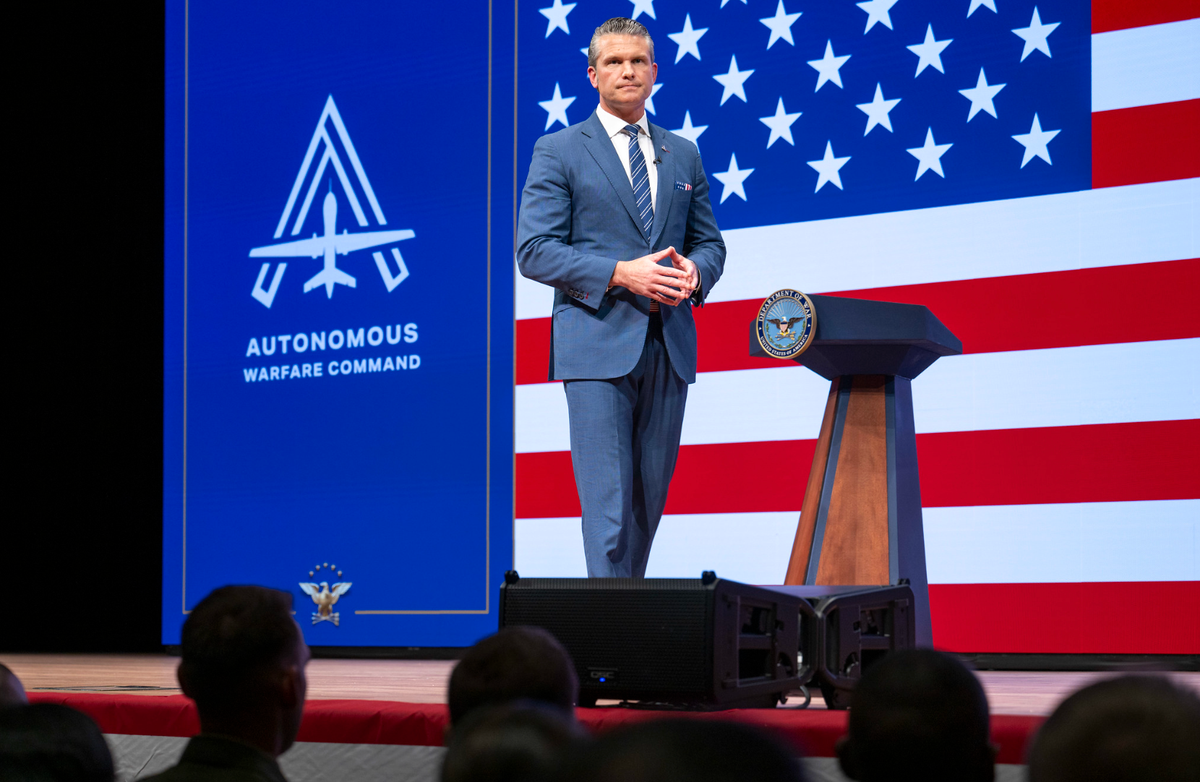
An unnamed Pentagon official leaked details of an alleged leak investigation and likely violated the privacy of a high-ranking officer, who was removed from his position as head of strategy, plans, and policy on the Joint Chiefs of Staff.
Army Lt. Gen. Brett Sylvia’s removal was reported on October 28, and it garnered attention as the news media reported that President Donald Trump planned to launch further strikes against Iran. Secretary Pete Hegseth also apparently had him purged as part of a crackdown on media sources.
According to the Associated Press, the Pentagon official claimed that Sylvia was “under investigation over allegations of sharing classified information about the Iran war, the Russia-Ukraine conflict, and other topics with journalists.” The official further disclosed that Sylvia had “failed three polygraph tests about leaking classified information.”
“The extent of his leaking became so critical that Secretary Hegseth took immediate action and fired Sylvia in order to protect national security. Urgent action was needed and could not wait another second," the official additionally stated.
“This is a Privacy Act violation,” declared Cody Harnish, a former Army officer with the Judge Advocate General’s Corps. He continued, “Polygraph results are protected records under the Privacy Act of 1974. They are exactly the kind of records the Pentagon withholds from requests under the Freedom of Information Act because they are protected. Secretary Hegseth cannot sign off on the Pentagon not following the statute.”
Harnish contended, “The statement discloses a lot more than polygraph results. It also discloses the existence of a pending counterintelligence investigation, a referral to the Department of Justice.” It contains the “Pentagon's conclusory statement of 'severe misconduct' in a case that it admits is still being investigated.” And if the Pentagon wants to put Sylvia through a court-martial, “the statement is clear proof of Unlawful Command Influence.”
Unlawful command influence occurs when senior military officers or high-ranking government officials interfere in a manner that deprives an officer of a fair and impartial proceeding, particularly in a military court. (Though by reportedly referring the case to the DOJ, the Pentagon is seeking charges in a civilian court.)
An overview of the Privacy Act clearly outlines the context for the law. “In 1974, Congress was concerned with curbing the illegal surveillance and investigation of individuals by federal agencies that had been exposed during the Watergate scandal.”
Congress was additionally “concerned with potential abuses presented by the government’s increasing use of computers to store and retrieve personal data by means of a universal identifier — such as an individual’s social security number.
Laura Loomer, a right-wing influencer with close ties to Trump who has had several people fired, urged Hegseth to “review” Sylvia’s employment after his son objected to flying the American flag at “half mast” after Charlie Kirk was assassinated.
Axios said it obtained a copy of an internal report from an investigation by the Air Force Office of Special Investigations. Sylvia reportedly “admitted to leaking classified information about Ukraine and Iran to two reporters from separate outlets over a one-year period.”
After a reporter had their access to the Pentagon revoked, the report said Sylvia met with that journalist at the Silver Diner in Arlington, Virginia. He allegedly relied on notes from a “classified secret report” when speaking to this member of the press about “U.S. assistance to Ukraine.”
“[T]he reporter in question was writing a book and met twice with Sylvia. It also emphasized that the general ‘did not coordinate these meetings with [the Pentagon's Public Affairs Office], or seek to have the information reviewed before providing it to the reporter,’” according to Axios.
Furthermore, the report allegedly contained details about a Signal chat with a reporter that he deleted. He suggested the thread had involved Iran. And separately, Sylvia “admitted to being one of the 20 officials” that were cited in a story that criticized “Pentagon leadership.”
The increased use of unreliable lie detector tests by the Trump administration has been widely covered. Such tests can easily misidentify the sources of leaks while discouraging whistleblowers from reporting waste, fraud, and abuse.
Still, Hegseth’s chief of staff made it clear that any “information identifying a party responsible for an unauthorized disclosure” would be “referred to the appropriate criminal entity for criminal prosecution.” Most likely that would mean charges under the Espionage Act.
Vindictiveness could definitely be a part of Hegseth's Pentagon firing Sylvia, if Sylvia objected to Hegseth's anti-press policy for Pentagon media access that was deemed unconstitutional.
It is unclear if the DOJ even has a case to bring against Sylvia, when considering the fact that he could have been charged already if he really was such a prolific leaker.
The official who leaked details to the media about the investigation into Sylvia, especially the polygraph results, almost certainly could be guilty of a similar offense. However, unlike Sylvia, Hegseth, the Pentagon, and the DOJ probably view this leaker as a Good Leaker—a team player who helped the administration justify Sylvia’s removal.
Perhaps, this was part of some larger Hegseth-approved public relations strategy to attack Sylvia's character. Some leaks of so-called national defense information are more leaks than others, and the leaking Pentagon official will be promoted before they are prosecuted.
Comments ()