
Israeli Military Assassinates Yet Another Al Jazeera Cameraman
Israeli military assassinated Al Jazeera Mubasher cameraman Ahmed Wishah, a little more than two months after targeting and killing his brother
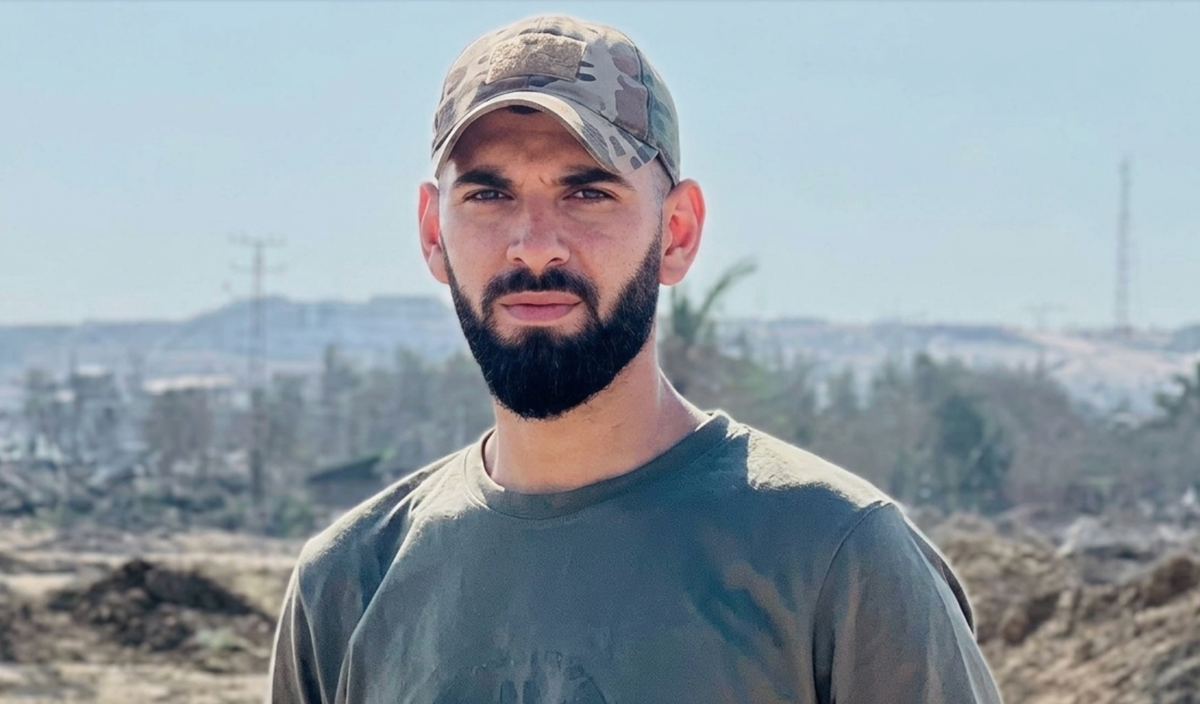
The Israeli military assassinated Al Jazeera Mubasher cameraman Ahmed Wishah, a little more than two months after targeting and killing his brother, who was also a journalist for the Arabic channel.
Immediately, the Israeli military baselessly claimed that Wishah had been “posing” as a photojournalist and was a “sniper operative” in “Hamas’ military wing.”
“Al Jazeera Media Network condemns the Israeli occupation army’s baseless accusations, which seek to justify its crimes against Al Jazeera journalists and cameramen in Gaza, most recently the killing of cameraman Ahmed Wishah,” Al Jazeera declared in a statement.
The network said that they considered the “smear campaign” against Wishah to be a “transparent and futile attempt to justify the deliberate targeting of journalists and cameramen whose only ‘crime’ has been their courageous determination to document and expose the genocide being perpetrated by Israeli occupation forces in the Gaza Strip.”
On June 20, Wishah was in a residential apartment in the Bureij Refugee Camp in central Gaza.
“An Israeli drone fired a missile at the house, killing him instantly along with several other civilians,” according to a researcher from the Palestinian Center for Development and Media Freedoms. “The victims were subsequently transferred to Al-Aqsa Martyrs Hospital in Deir al-Balah.”
With Wishah’s death, Israeli military forces have killed 12 Al Jazeera journalists, and overall, more than 260 journalists have been killed in Gaza since October 2023.
His brother Mohammed Wishah was targeted and killed by the Israeli military on April 8, 2026. An Israeli drone attacked his vehicle while he was traveling on a coastal road in Gaza. The Israeli military baselessly claimed that he was part of Hamas. Mohammed was an Al Jazeera Mubasher correspondent.
Ahmed Wishah was 25 years old. Al Jazeera English published a collection of tributes from colleagues that worked with him. Al Jazeera Mubasher correspondent Talal Mahmoud said he had “known Ahmed since the beginning of the war.”
“Given our shared work, we frequently gathered in that tent at Al-Aqsa Martyrs Hospital or al-Awda Hospital in Nuseirat camp, exchanging thoughts and discussing the details of our coverage,” Mahmoud recalled. “He would often accompany me on assignments, documenting the events we covered throughout the long months of this war.”
Khaled al-Shatli, who is a cameraman for Al Jazeera Mubasher, shared a moment from the final days of Ahmed Wishah’s life. "Just yesterday, he was bidding farewell to his friends and family in the Bureij camp, taking photos with them in what felt like a final goodbye.”
“I joked with him about his new clothes. He replied, ‘It’s an outfit I’m not used to, but perhaps something inside me pushed me to wear it.’”
Ahmed’s sister spoke at her brother’s funeral. “He was a lion, and more. He was a thorn in their side,” she said, referring to his reporting on the Israeli military’s destruction of Gaza.
Israel’s war on Al Jazeera has been part of a much broader campaign against Palestinian journalists in general. On May 19, Reporters Without Borders (RSF) shared interviews with five Palestinian journalists who were imprisoned and tortured by Israeli forces.
Shady Abu Sedo, a cameraman for Palestine Today, was initially detained at the Sde Teiman military base, which was the focus of widespread media attention in 2024 after Israeli whistleblowers spoke to CNN about torture and abuse at the camp. He was then taken by soldiers from Sde Teiman to the Ofer and Ketziot-Al Naqab prisons.
“At the end of these 19 months of torture, deprivation, interrogations and violence, some of it related to his profession, he remains, at 36, scarred by psychological trauma and physical aftereffects that prevent him from returning to work,” according to RSF. He was released in October 2025.
One of his Israeli military captors allegedly threatened to gouge out Sedo’s eye and then beat him in the face. He now has scabies, epilepsy, insomnia, and anorexia. “After the scenes I have witnessed, I can no longer stay at home within four walls, nor look at the sky without having a fit. If I don’t take sedatives, I suddenly start screaming.”
Sedo had been conducting interviews at Al-Shifa Hospital in Gaza before he was detained.
Al Jazeera has repeatedly demanded that urgent action be taken to protect journalists in Gaza, but thus far, nothing meaningful has happened to stop the Israeli military from assassinating or torturing journalists.
The United States government also continues to fund and arm the Israeli military. In early May, a weapons package worth nearly $1 billion was approved by the State Department for sale to the Israeli government.
Comments ()