
When The FBI Comes Knocking
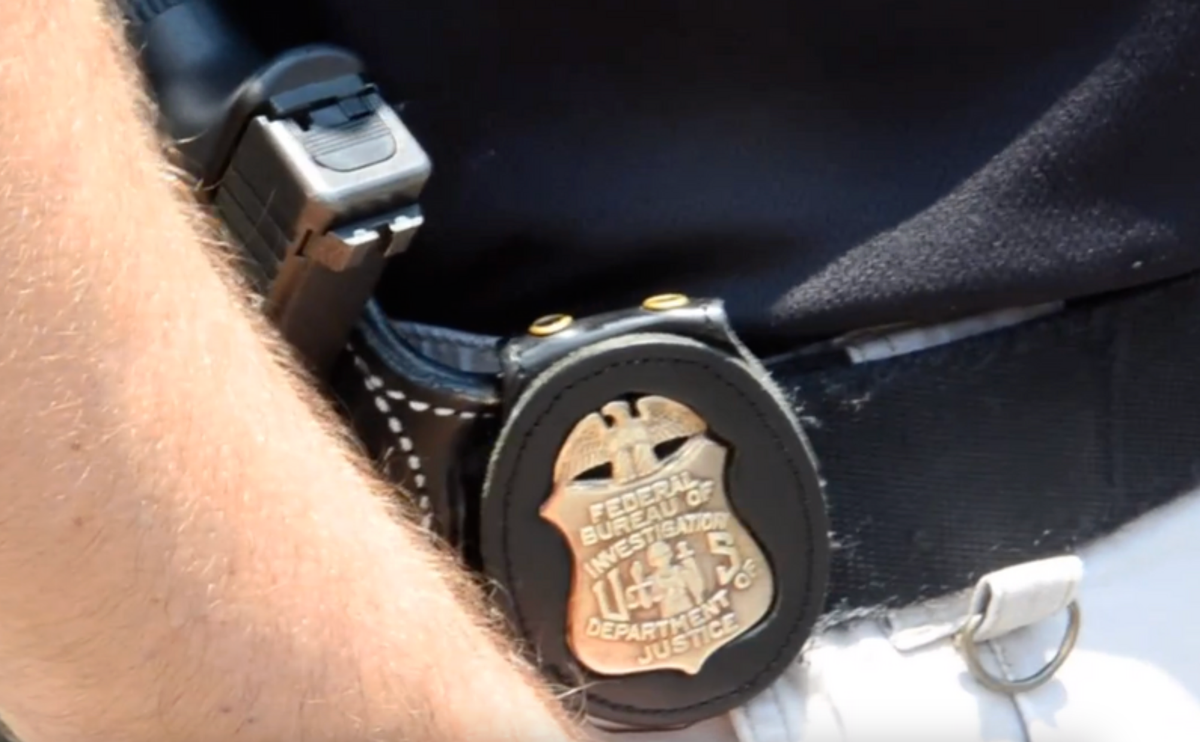
With the increased risk of the FBI appearing on our doorsteps, it’s worth recounting several recent examples of harassment and intimidation by the FBI against journalists.
The following is the exclusive monthly column for paid subscribers. Thank you for making it possible to publish The Dissenter Newsletter.
Along with criminalizing activists for mobilizing dissent, the FBI under director Kash Patel is increasingly engaged in operations that target journalists.
Perhaps, the most glaring example is the “criminal” leak investigation that was opened into Atlantic journalist Sarah Fitzpatrick for reporting on Patel’s “drinking habits and erratic conduct set off a chain of legal and institutional confrontations,” according to MS NOW.
MS NOW reported that FBI agents assigned to the matter were afraid of the “professional risk” to their careers if they searched for Fitzpatrick’s name in FBI databases and examined her social media. "They know they are not supposed to do this," an unnamed source asserted. "But if they don't go forward, they could lose their jobs. You're damned if you do and damned if you don’t."
This particular leak investigation did not involve any classified information, however, an insider threats unit in Huntsville, Alabama was tasked with retaliating against Fitzpatrick because Patel was exposed and embarrassed by media coverage.
Of course, the FBI has abused its power against members of the press countless times, especially when uprisings or social movements challenged the United States government. So with the increased risk of the FBI appearing on our doorsteps, it’s worth recounting several recent examples of harassment and intimidation by the FBI against journalists.
On February 4, the Eugene Weekly reported that the FBI visited the home of local photographer Robert Scherle and “asked him to identify protesters at ICE protests at the Eugene Federal Building.” Scherle told the U.S. Press Freedom Tracker that the visit represented an “implied threat” to his journalism, “just by the fact” that they were there.
The FBI raided the home of Washington Post reporter Hannah Natanson in January. Agents seized her electronics, and she lost access to at least 1,000 confidential sources. Agents spied on Natanson prior to raiding her home. While the Justice Department argued this was part of a leak investigation, the Pentagon contractor accused of leaking information had already been arrested.
Journalist Ken Klippenstein published a “manifesto" from the man who was accused of shooting two Israeli embassy staffers in Washington, D.C. FBI agents visited him at his home in Madison, Wisconsin, on May 22, 2025. “
"The visit didn’t surprise me, but its tone did: it was aggressive and threatening,” Klippenstein wrote.
One agent, according to Klippenstein, said, “We want to know about the timeline: how you knew about the manifesto before anyone else, and if you were in touch with the shooter beforehand.” He referred the FBI to his attorney and also mentioned that an FBI agent had visited him last year, too.
The first visit occurred in October 2024 after Klippenstein published a leaked dossier on Vice President J.D. Vance. As the U.S. Press Freedom Tracker documented, the FBI sent an agent from a “satellite office” in Middleton, Wisconsin. The agent said that Klippenstein was the “target of a foreign influence operation.” But Klippenstein already knew that, and he indicated that the dossier had likely come from an “Iranian cyberactor” in his report.
Klippenstein concluded that the FBI had delivered “what many would consider a chilling message: we know where you live, we know what you’ve done, we are watching.”
In 2023, after Fox News complained that they were hacked, the FBI raided journalist Timothy Burke's home in Tampa, Florida. The Justice Department accused Burke of acting as an economic cybercriminal because he "scoured" the internet and uncovered unaired portions of an interview between Tucker Carlson and Kanye West.
According to the Tampa Bay Times, FBI agents “took electronic devices and computers he used for his media business.” Burke's lawyers said the prosecution would "have a significant impact on how people in general access and use the internet, how they use shared passwords to access websites, and how online journalism is conducted.” (The case against Burke is still pending.)
The FBI visited TechCrunch senior editor Zack Whittaker’s home in New York on August 12, 2020. As Whittaker recalled, the Mexico government sought FBI assistance to uncover information that had obtained from confidential sources about a “hack at one of Mexico’s embassies.” He refused to answer questions and referred agents to his attorney.
Two weeks after the visit, Will McKeen, the supervisory special agent with the FBI’s Financial Cyber Crimes Task Force who had visited him, emailed. He requested an interview “about the story” that Whittaker had produced.
Whittaker had previously received “veiled and spurious legal threats,” but "seeing feds” on his doorstep ready to ask him questions about a story he had published was new. (The Reporters Committee for Freedom of the Press (RCFP) is now representing Whittaker in a Freedom of Information Act lawsuit for records related to the FBI visit and any information that agents may have collected about him.)
In May 2019, FBI agents joined San Francisco police and raided journalist Bryan Carmody’s property. According to the RCFP, authorities seized his equipment and detained and “questioned him for six hours “as part of an investigation to learn the identity of a confidential source who leaked an internal police report to Carmody.”
It was later learned that the FBI knew that Carmody was a journalist, but agents allowed questioning to continue. San Francisco police also turned off their body-worn cameras. Eventually, Carmody obtained a $369,000 settlement from the City of San Francisco after a court quashed the search warrants for violating California’s shield law.
While the Justice Department has a guideline requiring approval from the attorney general before a journalist is questioned, that was flouted in Carmody’s case.
There are further examples of FBI cooperation with federal agencies or police to target journalists. Earlier this year, Attorney General Pam Bondi directed federal agents to arrest Don Lemon, Georgia Fort, and later Shane Bollman. They were covering a protest at the Cities Church in St. Paul, Minnesota. All three were subsequently charged with crimes and had their electronics searched.
The arrests of Lemon and Fort sparked widespread outrage while the arrest of Bollman received less attention. RCFP condemned the use of federal agents from the Department of Homeland Security to arrest Bollman as an act of weaponizing “taxpayer dollars to deter reporting.”
In 2019, journalist Ali Watkins was asked about her confidential sources by a border agent named Jeffrey Rambo, who was apparently in contact with the FBI. The example is a bit more unusual, and it occurred within the context of a leak investigation into James Wolfe, who was the head of security for the Senate Select Committee on Intelligence. Importantly, Rambo may have played a role that allowed the FBI to circumvent guidelines for questioning journalists.
This only covers the last seven years of FBI attacks on press freedom—the tail end of President Donald Trump’s first term, President Joe Biden’s administration, and the Trump’s second term. However, these examples offer a way of understanding the bureau, which is a key component of the worsening climate for journalism and freedom of expression.
Comments ()