
US Military Partners In The Gulf Crack Down On Journalism During Iran War
The Gulf states that are cracking down on journalism during the war on Iran have something in common. They're US military partners.
Kuwait is considered a “vital” partner of the United States military. Prior to the war on Iran, the Persian Gulf state hosted around 13,500 U.S. forces at Camp Arifjan and Ali al-Salem Air Base.
“Only Germany, Japan, and South Korea host more U.S. forces than Kuwait does,” according to the Bureau of Political-Military Affairs for the U.S. State Department.
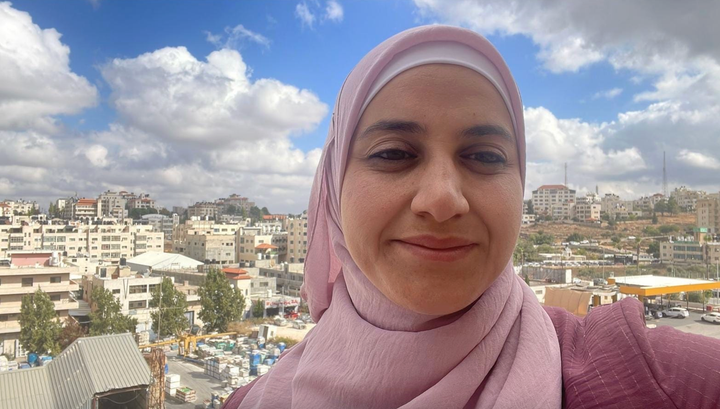
Now, the Gulf state has arrested and charged Kuwaiti American journalist Ahmed Shihab-Eldin with violating one of the country’s censorship laws.
The State Department could easily demand Shihab-Eldin’s release, and the monarchy that rules Kuwait would set him free. But it is also possible that officials in President Donald Trump’s administration have no problem with keeping a journalist like Shihab-Eldin in jail.
In fact, the U.S. military benefits from this kind of repression because it bolsters secrecy around cooperation between the U.S. and Kuwait. That includes friendly-fire incidents that may seem embarrassing.
As publicized by the Committee to Protect Journalists (CPJ), Shihab-Eldin was arrested on March 3 after he “shared publicly available videos and images,” including “a geolocated video” of a friendly-fire incident that was “verified by CNN.” The video showed a U.S. fighter jet crash near the Ali al-Salem Air Base.
On March 15, Kuwait enacted a law that was designed to protect the “supreme interests of military authorities.” It expanded the monarchy’s ability to criminalize anyone who “‘disseminates news, publishes statements, or spreads false rumors related to military entities’ with the intent of undermining confidence in them.” Violating the law may result in a 10-year sentence.
Kuwait reportedly accused Shihab-Eldin of spreading false rumors about the military. He also was accused of “harming national security” and “misusing his mobile phone,” which CPJ describes as “vague and overly broad accusations that are routinely used to silence independent journalists.”
Al-Wasat, a Kuwaiti newspaper, reported that specialized judicial circuits were established on March 31 for cases involving “state security” and terrorism. To “enhance the efficiency of the national security apparatus,” the special courts will “resolve cases with high speed.” (Shihab-Eldin will be prosecuted by one of these courts, according to Dropsite News.)
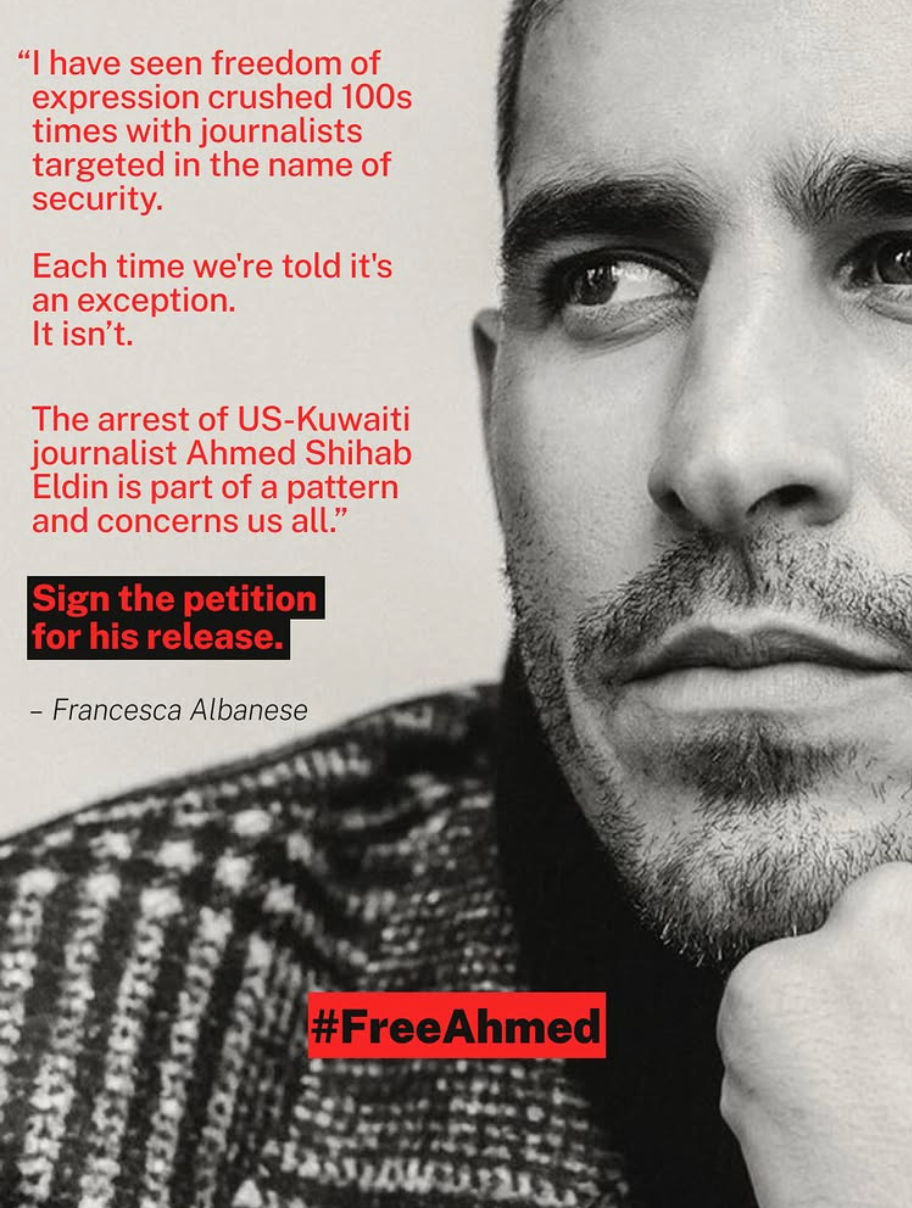
Shihab-Eldin is known for co-creating and co-hosting Al Jazeera English's "The Stream." He is of Palestinian descent, has appeared on CNN, MSNBC, and the BBC, first worked as a journalist at PBS, and has spoken out against Israel's genocide of Gaza.
Shihab-Eldin is not the only journalist to be targeted. CPJ highlighted an incident involving Yitzchak Horowitz, “a journalist for the weekly Haredi (ultra-Orthodox) newspaper BeKehila.”
On March 26, Horowitz was arrested in Kuwait on “suspicion of espionage after photographing U.S. warships off the Gulf coast. He said he was questioned for several hours about his identity, his ties to Israel, and whether he had a military background before being released.”
“Authorities across the region are using the escalating violence around Iran as a dangerous pretext to tighten restrictions on press freedom, especially in the Gulf states, several of which already rank near the bottom of RSF’s World Press Freedom Index,” declared Jonathan Dagher, who is the head of RSF’s Middle East Desk.
“Broad and loosely worded bans on covering events, in the name of security, violate [the right to public information] and expose journalists to arrest and violence,” added Dagher. “Press freedom is not a luxury: it guarantees the existence of all other freedoms and must be defended, especially against regimes that have all too often flouted it.”
To hide the extent of damage from Iranian missiles, Bahrain “tightly restricted” impact sites. RSF notes that journalists may only access sites after security forces complete their investigations.
Jordan has threatened to prosecute individuals who post videos or information about the kingdom’s military operations.
According to RSF, the interior ministry in Qatar “banned taking photos and sharing content” related to airstrikes. The attorney general in the United Arab Emirates issued a similar ban.
Finally, as RSF highlighted, the Kingdom of Saudi Arabia banned “sharing rumours or videos whose sources are unknown” and urged the public to trust “only official government sources.” Journalists have been blocked from visiting “alleged impact sites” to verify war-related damage.
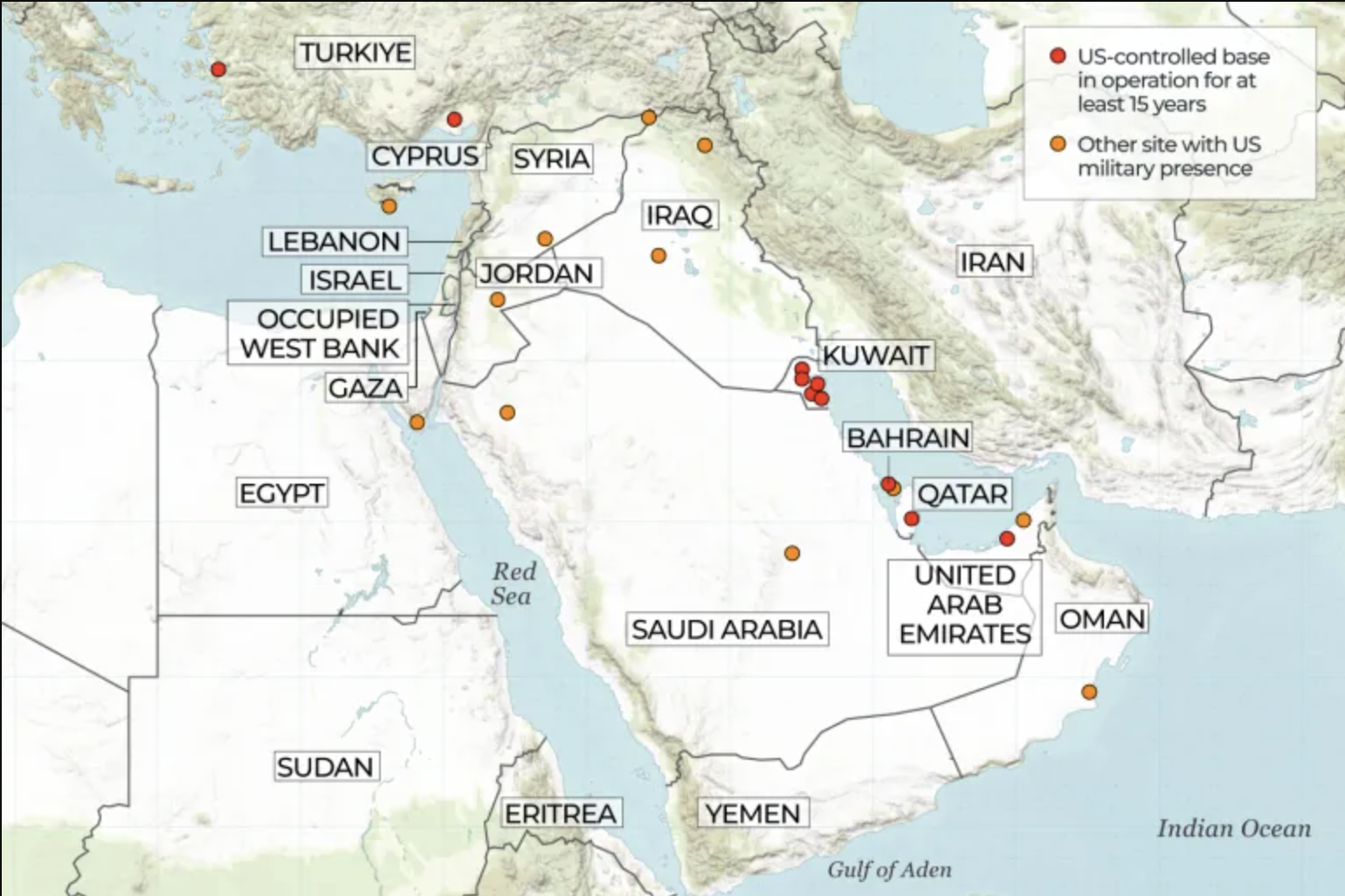
Each of the mentioned Gulf states, like Kuwait, are clients of the U.S. military.
Bahrain hosts the U.S. Navy’s Fifth Fleet. The “logistical and operational support” provided makes it possible for the U.S. military to “support freedom of navigation and the unrestricted flow of commerce and energy resources through the Strait of Hormuz.” (In other words, Bahrain is critical to the U.S. military blockade against Iran.)
Jordan is strategically important to U.S. foreign policy in the Middle East, according to the State Department. Since 2015, Jordan is the third largest recipient ($2.15 billion) of U.S. loans or grants that allow the country to purchase U.S. military equipment.
According to the State Department, Qatar “has contributed more than $8 billion in developing al-Udeid Air Base for use by the United States,” and the base hosts the headquarters of U.S. Central Command Forward, U.S. Air Force Central Command Forward, and U.S. Special Operations Command Central Command Forward.” It is also home to U.S. Central Command’s Combined Air Operations Center and the U.S. Air Force’s 379th Air Expeditionary Wing. “These contributions are indispensable to supporting U.S. military operations throughout the region.”
“The UAE hosts the Gulf Air Warfare Center at Al Dhafra Air Base, where approximately 3,500 U.S. personnel are based and which provides regionally focused air and missile defense training for around 2,000 participants from 10 nations every year,” notes the State Department. “UAE ports also provide critical logistical support for the U.S. Navy and collectively host more Navy ships than any other port outside the United States.”
U.S. military cooperation with Saudi Arabia is viewed as “necessary to protect Saudi Arabia, and the region, from the destabilizing effects of terrorism, countering Iranian influence, and other threats.”
All of these Gulf states have censorship laws that restrict the public’s access to information and violate the right to freedom of expression, which includes journalism. They serve the U.S. military as much as the authoritarian regimes behind the laws.
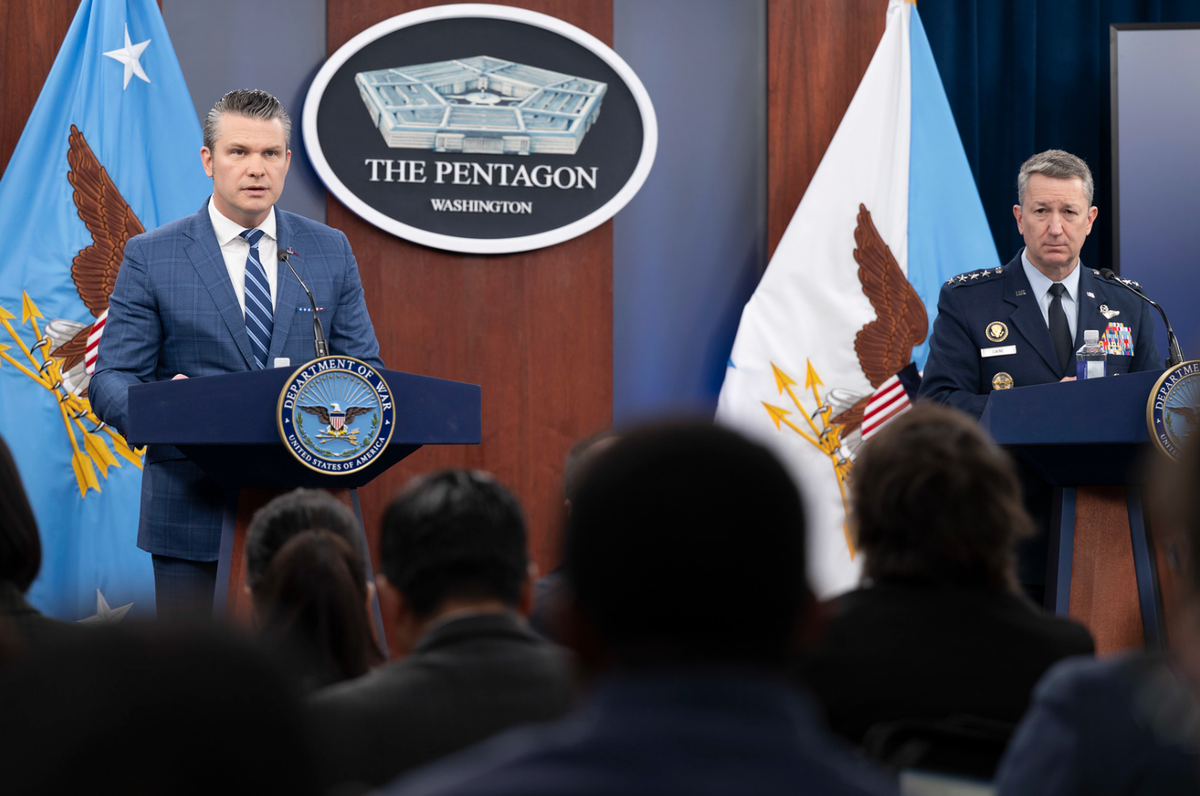
In fact, Pentagon Secretary Pete Hegseth has berated reporters for spreading rumors and undermining confidence in the military. He probably fantasizes about passing censorship laws in the United States that could be wielded against reporters, who refuse to only publish what he tells them and yield to his actions against the press.
Ahmed Shihab-Eldin must be freed immediately (here's the CPJ petition). Unfortunately, it's unlikely that any U.S. government official will raise their voice publicly or privately to demand his release. That might interfere war making in the Middle East.
Comments ()