
Reintroduced Espionage Act Reform Bill Honors Daniel Ellsberg
Rep. Rashida Tlaib reintroduces Espionage Act reform legislation. This time around the amendment contains Daniel Ellsberg's name.
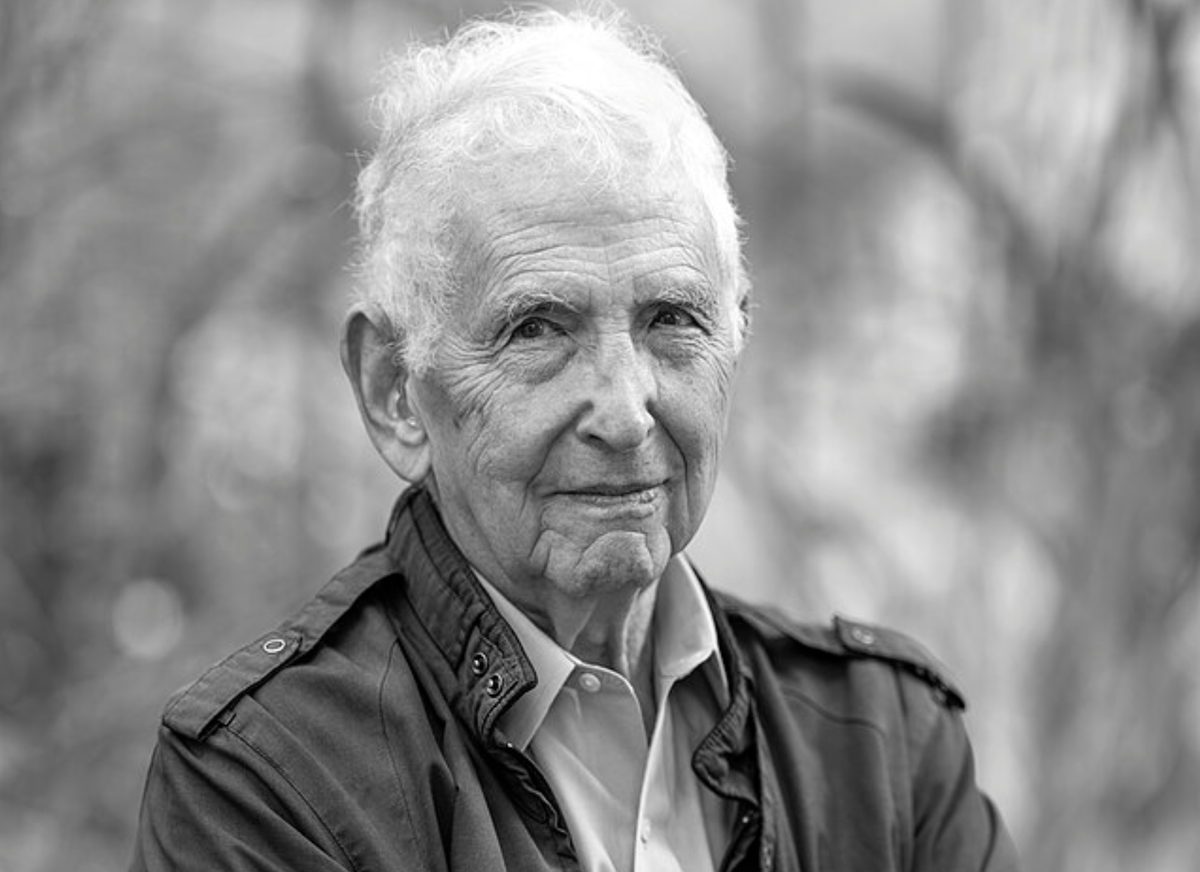
Pentagon Papers whistleblower Daniel Ellsberg maintained that an unauthorized disclosure could be a “a patriotic act and a service to the country, helping to save lives and preserve core principles of democracy.” But today it is far too easy for the United States government to wield the Espionage Act and suppress individuals, who dare to reveal or publish hidden truths.
On March 12, Michigan Democratic Representative Rashida Tlaib introduced the Daniel Ellsberg Press Freedom and Whistleblower Protection Act to “reform the Espionage Act” and “prevent its use and abuse against whistleblowers, journalists, and the American public for exposing government corruption and wrongdoing.”
“Alerting the public to government wrongdoing is not a crime,” Tlaib declared. “With whistleblowers, journalists, and civil liberties under significant attack and government decision-making shrouded in increasing secrecy, reining in the abuses of the Espionage Act could not be more urgent.”
Tlaib previously pursued efforts to curtail the Espionage Act. At the time, Ellsberg was still alive. In 2022, he supported Tlaib as she introduced the reform as an amendment to the National Defense Authorization Act.
“For half a century, starting with my own prosecution, no whistleblower charged with violating the Espionage Act of 1917 has had, or could have, a fair trial. These long-overdue amendments would remedy that injustice, protect the First Amendment freedom of the press, and encourage vitally-needed truth-telling,” Ellsberg said.
Again, Tlaib partnered with Defending Rights and Dissent (DRAD) to develop the legislation. The civil liberties organization held an online panel discussion with Tlaib, DRAD policy director Chip Gibbons, Freedom of the Press Foundation (FPF) executive director Trevor Timm, and Robert Ellsberg, Daniel’s oldest son. Lauren Harper, FPF’s Ellsberg chair on government secrecy, moderated the discussion.
Robert suggested that his father “would be delighted—as I am—that this bill is named after him.”
“These are exactly the kinds of changes that he advocated for a long time. He himself, as you noted, was perhaps the first person charged under elements of the Espionage Act, who was not accused of giving secrets to a foreign country or an enemy of the United States but to Congress, the press, and the American people."
“[My dad faced] 12 felony charges, 115 years in prison. Fortunately, he was not convicted because the charges were dismissed as a result of gross government misconduct as it was called; that is to say, crimes,” Robert recalled.
The reforms are supported several former military and intelligence professionals [PDF]: Lawrence Wilkerson, former chief of staff to Secretary of State Colin Powell, former State Department employee Matthew Hoh, and former drone technician Lisa Ling.
NSA whistleblower Thomas Drake, CIA whistleblower John Kiriakou, and CIA whistleblower Jeffrey Sterling, who were each charged with violating the Espionage Act, support the reforms as well.
In a memo prepared along with the bill, Gibbons described how the reforms "bring the law in line with modern First Amendment law and increase due process standards.”
“[It limits] the scope of the Espionage Act to those with a duty to protect classified information and, in some cases, foreign agents,” Gibbons emphasized. “This prevents the use of the law against publishers, journalists, or members of the general public.”
“The law would also protect whistleblowers by creating an affirmative public interest defense and requiring the government to prove the defendant intended to harm the US or benefit another nation (i.e. true espionage),” according to Gibbons.
Ellsberg frequently spoke out in support of whistleblowers, like U.S. Army whistleblower Chelsea Manning and NSA whistleblower Edward Snowden, who were unjustly prosecuted through the Espionage Act after they sought to expose corruption and criminal wrongdoing. He was personally bothered by the lack of an affirmative defense because he, too, had been denied the right to testify about why he disclosed the Pentagon Papers to the press.
Later, the Justice Department expanded its dangerous use of the Espionage Act and prosecuted WikiLeaks founder Julian Assange. Ellsberg spent his final years advocating against this attack on freedom of the press.
The Assange case remains the most high-profile Espionage Act prosecution in recent years, and yet, as Timm warned, President Donald Trump’s administration is open about the fact that it would like to use the Espionage Act against journalists. Attorney General Pam Bondi used an Espionage Act prosecution as a pretext to raid Washington Post reporter Hannah Natanson’s home and seize her electronics, which eliminated her access to over 1,000 sources.
Timm contended that the Espionage Act is “written so broadly” that “not only is every national security journalist in the United States guilty of this law virtually every day but everybody who reads the newspaper, who is holding the physical paper in their hand or is on their computer. Because so much of the national security and foreign policy worlds are classified.”
“Just by possessing stories in the New York Times or Washington Post you are arguably violating this law,” added. So the Espionage Act is “not just a loaded gun. It is a loaded army that is facing whistleblowers and journalists right now.”
Gibbons noted that many of the charges against Assange had involved “conspiracy liability” or liability for “aiding and abetting” the unauthorized disclosures of information. That turned “the journalist-source relationship into a criminal conspiracy.”
“Under that legal theory, any journalist anywhere in this country who gets classified information from a source has broken the Espionage Act,” Gibbons contended.
The amendment introduced by Tlaib seeks to address this abuse by ensuring that only employees or contractors who sign non-disclosure agreements are covered by the Espionage act. As Gibbons wrote in his memo, that means it would be “impossible to charge journalists, publishers, or members of the public” who share Times articles on social media.
Within the reform that grants a whistleblower the right to testify on the purpose of their disclosures, Gibbons made it clear that the amendment explicitly protects disclosures that relate to “violations of international human rights law, international humanitarian law (i.e. the laws of war), and the US Constitution.”
“As we all see, our government is committing horrific war crimes and crimes against humanity from Iran now to Palestine to Cuba while expanding mass surveillance and spying on Americans more now than ever before,” Tlaib concluded. “You don’t have to be a whistleblower or journalist to care about the fact that we have to be able to rein in the Espionage Act.”
The opening quote from Daniel Ellsberg comes from a new collection of writings by Ellsberg called "Truth and Consequence: Reflections on Catastrophe, Civil Resistance, and Hope." It was co-edited by his youngest son Michael Ellsberg and Robert Ellsberg wrote a foreword for the book. It is available here for purchase.


Comments ()