
Exposing Financial Censorship: Rainey Reitman On Her New Book, 'Transaction Denied'
Rainey Reitman's book, "Transaction Denied: Big Finance's Power To Punish Speech," exposes a pattern of financial censorship by Visa, Mastercard, PayPal, and other companies
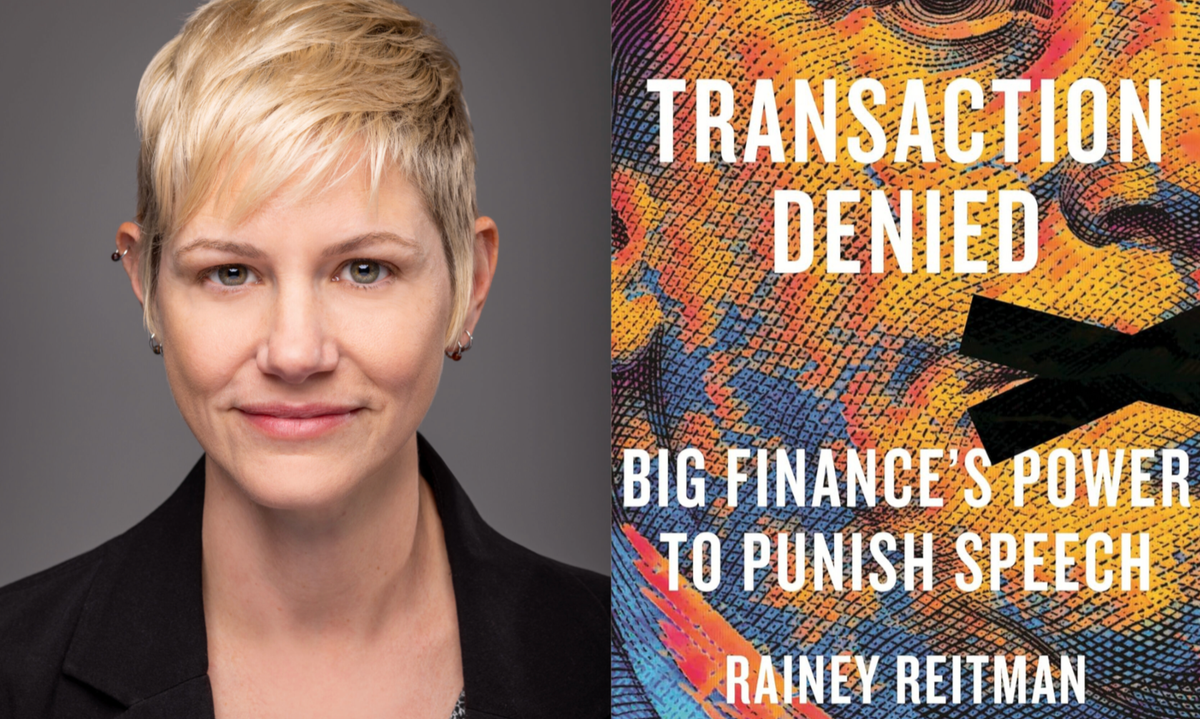
Civil liberties activist Rainey Reitman, who is the co-founder and president of the board of directors of the Freedom of the Press Foundation, spent over a decade researching how financial companies like Visa, Mastercard, Chase, PayPal, and Stripe suppress speech.
Reitman collected stories from individuals and organizations impacted by financial censorship for “Transaction Denied: Big Finance’s Power to Punish Speech,” a book that is available to order and will be published on April 7.
Ahead of the book’s release, Reitman joined Dissenter Newsletter Editor Kevin Gosztola to discuss “Transaction Denied” and outline why anyone concerned about press freedom and broader struggles for civil liberties must stand up against financial censorship.
The book exposes a pattern of extralegal punishment by payment processors and banking corporations. Reitman also weaves in her own personal narrative of dealing with censorship when she was engaged in the campaign to free United States Army whistleblower Chelsea Manning.
One of the most stark examples of financial censorship involved WikiLeaks when it was targeted by a banking blockade in 2010 and 2011, and Reitman was particularly inspired to help WikiLeaks circumvent this repression while the media organization was in the crosshairs of the U.S. government. In fact, as she recounts, the Freedom of the Press Foundation largely formed in response to the blockade.
Reitman highlights activists, journalists, Muslims, individuals engaged in sexual speech, and even cannabis business owners, who have been targeted. She urges financial companies to exercise neutrality and makes a compelling case for government intervention to end this repression.
You can purchase a copy of the book here. Half of the proceeds go to support the Freedom of the Press Foundation, and there is a website with details about upcoming book events in Berkeley, San Francisco, Brooklyn, and Washington, D.C.
Below the video is a transcript of the interview, which was edited for clarity.
GOSZTOLA: I'm really excited about the conversation. And we've crossed paths before. We've worked in the same space, but I'm a little ashamed that this is the first time I'm actually interviewing you or talking to you about these topics. I feel like I kind of owe you an apology.
I think anybody who listens here or reads this interview is going to find that this book relates to a lot that The Dissenter has covered in terms of journalism, the war on whistleblowers, and defending freedom of the press and the First Amendment, and making sure that people have access to these financial resources. So the first question to put out there, what led you to spend over a decade reporting, researching, and writing a book on financial censorship?
REITMAN: I realized we haven't actually done an interview before, and I think we were both sort of—I don't know if this is true for you—but I really entered into a lot of the digital rights battles through the whole massive issue around Wikileaks and the right to publish and the right to access information and Chelsea Manning's incredible leaks. And so I feel like we were perhaps never working together, but I think we were both compelled by this big question and this big moment in the nation and the world's history, which I felt was going to be this really fundamental court case about what are the rights of publishers.
Is the Espionage Act constitutional? All of this stuff. And I think one of the things I explore in my book is that in a lot of ways, all of us civil liberties advocates who had been working on that issue for so long, we didn't get that court case, right? We didn't have that huge constitutional battle.
And instead we had this totally different fight, which is that as soon as Wikileaks started publishing Cablegate, which were all the State Department cables from whistleblower Chelsea Manning, showing a lot of corruption and inappropriate activity by the U.S. government around the world, manipulation, fueling so many important news articles.
As soon as those started coming out, we saw a banking blockade go into effect from Visa, MasterCard and others, which basically made it impossible for Wikileaks to continue doing business the way they had been doing before—continuing to do their important work, publishing things. And instead, all of their resources became dedicated to fighting the blockade.
My book explores that issue, but not just for Wikileaks, I explore the larger concept of what happens when financial companies shutter the accounts of people engaged in legal forms of speech who have important stories to tell. I talk about it through several different lenses, sort of the themes I found, which were the concerns that journalists face, activists. I look particularly at Muslim community members.
I looked at adult creators, many of whom are engaged in legal forms of expression; for example, fiction writers in this space losing access to financial services. And then I have a chapter about the cannabis community, which I wanted specifically to talk about a business. And I thought they were a good example of a startup industry that was challenging existing business interests and facing a lot of financial censorship.
In all of that, I kind of go back and forth between my own story as an activist at EFF with the Chelsea Manning Support Network and then starting Freedom of the Press Foundation. And then I talk about the law and I talk about the whole policy framework that allows this sort of thing to unfold. So that's kind of the book overall, and I'm glad that you liked it.
GOSZTOLA: It's very well researched. It's clear when you read it that a lot of time was spent, and not just because you say that you spent a lot of time but also because you could tell that you thoroughly examined the issue. And in particular, I'd like you to help people understand what you mean when you speak about financial censorship. You write in the introduction that you felt like you uncovered a pattern. This is a pattern that involves silencing dissenting voices or unorthodox voices.
This typically involves “limiting their financial resources extralegally.” So what typically happens when somebody finds that they have been subject to this censorship.
REITMAN: I used the words financial censorship to specifically highlight the censorious nature of it all. So it always implies that there’s typically an act of speech involved, and I think pretty much every example in my book has some form of expression that is a legal form of expression. There's a couple of examples that maybe are on the edge of that, that I highlight as well.
For the most part, these are people who are engaged in legal speech, which means in the United States under the First Amendment the government wouldn't be able to punish them for it (directly or indirectly) . And yet, we find that financial companies can shutter the accounts of what might be controversial, unorthodox, or disfavored speakers.
So these could be political activists or journalists, and I think for your [audience] the journalists are perhaps the most compelling issue in the book. And what does that normally look like? So honestly, most of the time, they have no notice whatsoever, they wake up one morning, and for some reason, their bank accounts are not working, or their Stripe account is closed, or PayPal has frozen them. And they may get some kind of automated notification, or they may get nothing, right? They may have to call customer service. Often they can't get through to get any answers whatsoever.
And normally, they're stonewalled when they try to find out what happened. So figuring out if the censorship was connected to an act of speech can be difficult. Sometimes they could get it in writing, or they can get a specific answer, though that is rare.
For example, in the first chapter, I highlight an email that a voting rights activist shared, where one of the bank accounts that had refused to do business with her referenced the fact that it was because they were seeing her as a political activist, or a political account. They use the word political. And so we had it in writing there.
Another example later in that chapter—we had a Chase bank tell a Stop Cop City activist lawyer which had frozen her bank account that it was due to “negative media.” They put that in writing. She had been with Chase for years. She lost her bank account. She's a therapist in New York. Her entire therapy group that she was a signer on the account lost their bank account as well.
It was due to disparaging news articles that were written about her, her decision to participate in protests in in Atlanta, where some news organization had called her part of the Atlanta cell of Antifa. And so then that got written up. There are these automated tools that the banks use to search. Often they are third-party tools that search for the names of their clients in ways that are disparaging. Her name got flagged for negative media. She lost her bank account over it.
Most of the time, we don't get that kind of evidence. The banks are not required to tell you why they closed your account, the credit cards, all of them. Most of the time, it's pretty silent. It was really important to me when it was possible to get concrete proof to get that into the book so that people could could really wrap their their head around it. So those are some of the things that happen. Sometimes people were able to get their accounts reinstated.
I was involved with several campaigns when I was at EFF, that we were able to get accounts reinstated, but a lot of times they can't. And that just means they've lost an account, which sometimes could be the only time they lose an account. Or sometimes it's the beginning of a cascading series of account losses.
Journalists Who Have Faced Financial Censorship
GOSZTOLA: In the book, you highlight the examples of Joe Lauria of Consortium News, and then Mnar Adley and Alan MacLeod at MintPress News. Those who have followed The Dissenter will know those names.
In particular, I think you were interested in saying a bit about the fact that the payment processor that they were using had an interest apparently in the alleged presence of misinformation being published on their websites. How did that stand out compared to some of the other examples that you found while researching financial censorship?
REITMAN: Yeah, so Consortium News and MintPress News are two independent, smaller news organizations that particularly report on U.S. wars overseas, often from a very critical point of view. And some have accused them of occasionally publishing misinformation. So I spent a lot of time looking at these websites and talking about sort of the things that are typically on their website.
Consortium News in particular was writing things that were critical of U.S. engagement with the war in Ukraine and saying that it was not helpful and having a range of critical articles about it. Whereas MintPress writes a lot about what's happening in Gaza, and also the U.S.'s involvement there. So both of these news organizations, they lost their PayPal accounts, and they never got good explanations of why they lost those accounts.
But around the same time, like within a few months, PayPal changed their, it's basically their terms of service, that's not what they call it, to make it so that they would have the right to cut off accounts for anyone engaged in what they perceived as misinformation or spreading misinformation. This is not a direct quote. If you want the specific language, you got to read the book. And not only that, but that they would be able to deduct thousands of dollars from your account for every instance of misinformation getting spread.
This went viral on Twitter at the time. People were up in arms about it. Former higher-ups within PayPal even went out publicly and said that this was contrary to PayPal's values and completely inappropriate. There was a letter from members of Congress demanding PayPal give an explanation of what was going on and criticizing this change to their policy. PayPal walked it back, right? They said, oh no, that went out by mistake.
Let me tell you. You do not publish an update to your terms at a massive company like PayPal by mistake. It has to go through so many levels of review. I was very skeptical of this, like, oh, oops, we just randomly published this thing in our terms of service without anybody looking at it. Yeah, okay, maybe.
Nonetheless, they rolled it back. But these organizations that believed that they had been part of this sort of crackdown on so-called misinformation. They never got their PayPal accounts back. I think it's a particularly interesting story.
One of the things I try to highlight in my book is that we're all interested in ensuring that we get accurate information in the news. There's a real societal value for that, and I want to highlight that. At the same time, we need to hold space for the fact that financial companies really should not be the arbiters of that decision, that they are bad at it, that they don't have the right incentives, that they don't have the right expertise, and that nobody really wants them to be engaging in deciding what is and isn't misinformation on the internet.
Certainly, the way that they handled MintPress and consortium speaks to the fact that they didn't have an appeals process, didn't have somebody who was able to engage with these news organizations and help them understand kind of what decisions were being made and what were the factors in those choices. There's no transparency whatsoever.
I really don't think, even if you are concerned about misinformation online—Which is an important issue. We should be thinking about ways to address it, but financial companies are definitely the wrong way to be addressing that problem.
'Only WikiLeaks Faced This Blockade'
GOSZTOLA: I think that, in a way, what you're saying there could connect to what we saw when Senator Joe Lieberman was behind the scenes. We know that he was, or his staff at least, they were lobbying these different financial institutions to cut off WikiLeaks.
And part of it is, you know, if you want to be charitable towards these institutions, sometimes they think that, like, oh, something might actually be happening that is illegal, that I have to shut down. Or at least the language that they put out couches it in this. Before Elon Musk took over Twitter, the company adopted these regulations where they were going to be limiting people's ability to publish “hacked materials” on their website.
And they thought that that was something they needed to do because the government's telling them it's illegal. So sometimes there are people who reach out to these institutions and make claims of illegality. But then also, there's sometimes that, like, they really might be taken by this idea that something is happening that they have to stop. That maybe it is (supposedly) anti-US, and they don't want to be a part of it.
You mentioned earlier the negative media attention that maybe they don't want their financial institutions to somehow end up being written about as connected to these individuals or organizations. So go ahead and get into what took place with WikiLeaks and this banking blockade and how significant it was.
I don't think there's any other example as prominent before it that basically told us what we would be dealing with as the online news space ballooned and became such a tremendous part of our media ecosystem. [The blockade] really was a kind of harbinger of what could take place against us all when it came to financial censorship.
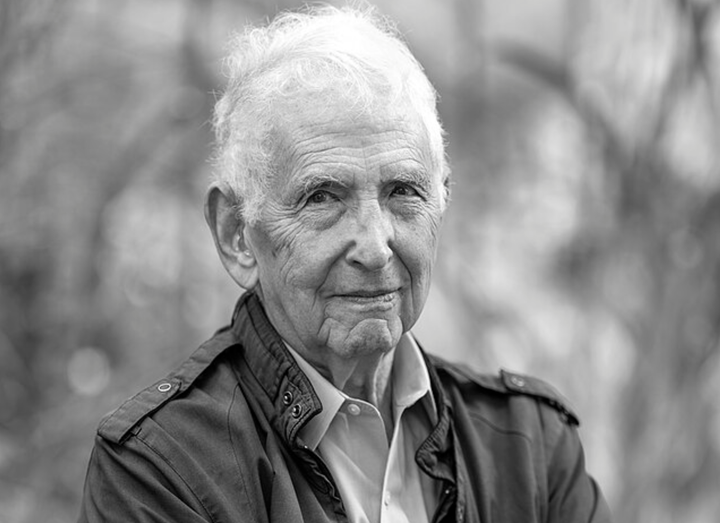
REITMAN: WikiLeaks was unprecedented, right. I don't think we could point to another example with a banking blockade at that level. But also we were in a different world for media publications, right? Like, if you think about, like, you know, even back during the Pentagon Papers case with [Daniel] Ellsberg, we were still in a world that was very much physical newspapers being delivered to people's homes with direct subscriptions.
It wasn't an online kind of experience where the vast majority of people were accessing information through their phones and through the internet. And they were very much beholden to a handful of credit card companies and financial intermediaries to ensure that that those websites could continue to exist and receive funds to keep themselves in business. So we kind of needed the shift to e-commerce and the shift to digital journalism first, and then we were able to see that with that shift came this particularly powerful form of punishing speakers who infuriated the U.S. government.
I remember when WikiLeaks started publishing. First the “Collateral Murder” video, which definitely had a huge impact on me and I think is worth revisiting, given that the United States is now in yet another overseas war. And then the “Cablegate,” and certainly the Guantanamo documents as well. That all of this kind of contributed to a lot of panic by the U.S. government over what was happening with WikiLeaks. But I think it's important to remember that WikiLeaks is a publisher, and they published in collaboration with a range of other newspapers at the time, including the New York Times and El Pais and Der Spiegel and others.
Only WikiLeaks faced this blockade, not these other publications. And in the United States, we have really strong protections for publishers, hard-won, hard-fought protections, so that they can publish classified information, including classified information that has been given to them, even by someone else who did break the law, provided that it does have some newsworthiness. So there are narrow circumstances around that, but like, we see classified information being published in major newspapers like the Washington Post, the New York Times, every single day.
If you were going to take every newspaper that has published classified information and charge them with something or say that they couldn't receive funds, like, what would even happen with online news organizations? They wouldn't exist. So nonetheless, members of Congress were a little confused on this point, and we did see Senator Lieberman and others, but Lieberman was definitely at the forefront of this, calling for organizations to cut off access to WikiLeaks. And there's some evidence that he did some direct outreach to financial providers.
But even if he didn't do direct outreach to financial providers, there was enough public admonition and press releases and such, asking them to do the right thing, asking all companies to do anything within their power to cut off access to WikiLeaks, that almost immediately we saw this huge banking blockade, which starved WikiLeaks for funds and made it so that they were basically unable to continue to do their work. Certainly, it was a very shocking moment in the fight for press freedom here in the United States, and a new technique for silencing speakers who had infuriated the U.S. government. So a very powerful moment.
The Collapse Of The News Industry
GOSZTOLA: When I think of what these payment processors are doing today, or what they can do, I always go back to WikiLeaks and the blockade as being that precedent. And just for the sake of context, it wasn't limited to even their financial resources. [The suppression] extended to servers and extended to different tech platforms that [WikiLeaks] wanted to use that were also kicking them off and saying they couldn't have access anymore. Although that's not really the focus of your book, it is important to see that there was outside pressure that was combined with this push to have financial censorship imposed on WikiLeaks.
And we're recording this interview in the year that is the 20th anniversary of when WikiLeaks was founded. So it is a good time to reflect on what we've all seen, what we've endured, what was good about it, and maybe any lessons. We should consider all that happened when there were government crackdowns or financial institutions trying to stop them and how that offers people real world lessons on how to navigate that kind of thing.
Now let me ask, how do you feel about the way that there's been this decline in journalism? Anybody working on freedom of the press has seen how we've lost thousands upon thousands of physical newspapers. We've seen journalists laid off. I don't know what the total is right now, but there's been thousands upon thousands of journalists that have been laid off over the last 10 to 15 years.
So many of them now, without those organizations that have been their homes, go out and do this work freelance and independent. I've always been freelance and independent. I never really had a newsroom, but so many of these people through their own experiences or suffering ordeals and unfortunate circumstances end up needing to go out there and work independently.
Do you feel like that somehow plays into the sharp impacts of financial censorship of how defenseless journalists are to defend against being censored?
REITMAN: I think you're completely right about the difficulties that journalism is facing currently. We have areas which is massive news deserts, and we have a seasoned journalist, a phenomenal journalist at the Washington Post like Joseph Menn, others who are just losing their jobs as part of these huge layoffs, people with expertise built over decades. And at the same time, I have talked to some journalists who are still practicing and in industry positions, and what's required of them is intense.
It's like you need a story a day, and then you need six social media posts, and then you need to engage with anybody who responds to any of your comments. These journalists are working all the time. They're making no money, and then they could lose their job at any moment. And I think this connects inextricably to the problems of democracy, where people are ending up facing paywalls every time they want to get to really high-quality journalism that's investigative and well-researched and thoughtful and nuanced.
Instead, people are turning to AI-generated slop on news sites that are really not very useful at all, and that are informing people who are then voting for elected officials. And I think we've also seen a lot of backlash against news organizations that are kind of against the mainstream, that are promoting different ideas, that are willing to go out on a limb and criticize those in power.
And you are right that a lot of people are moving to their own platforms, like Substack or to maybe just their own newsletter, and it's difficult for them to find an audience. It’s difficult for them to make ends meet. It's difficult for them to make enough money from subscribers in order to afford to live and also be a journalist, which is a huge problem.
And then on top of all that, as we'll discuss, a lot of folks can face pressure or whatever from a financial company, could lose access to a service that they require and need in order to continue to stay in business. And there is a real issue with the U.S. government engaging in certain pressure tactics on financial companies. I tried to document it with the known examples in my book.
It's often called jawboning, when some government official is using their position to pressure private corporations. It's often used in the context of financial companies to act on their behalf. And in some cases, jawboning is frankly, it's illegal, it's unconstitutional, and sometimes it's a form of coercion.
We've seen a case that went all the way to the Supreme Court around this. But there's other times when it's softer, right? Or when maybe the financial companies think that the government would like them to do something, or there might be an implied preference. And compliance officers at a lot of these companies, they want to stay on the good side of regulators. They want to err on the side of caution.
And so they're quick to shutter accounts—either because they think the government wants them to do it, or maybe they just have an aggressive interpretation of what the other banking partners they work with have in their terms of service. Or maybe they've decided to update their own terms of service, or whatever. There's all sorts of different reasons why they may shutter accounts.
One of the things I try to make really clear in my book is that these companies don't have a lot of incentives to care about free speech, and to care about individual accounts. For them, it's just a very small line item when they're serving thousands and thousands and thousands of customers. I
It doesn't make a difference to them at all except when you can, for example, raise enough of a public stink about something to get media attention.
Censored For Cannabis Hyperlinks
GOSZTOLA: So let's get to the example of Jackie Bryant. She was covering the cannabis industry. They’re blogging about cannabis and the legalization of marijuana. And can you tell people what happened to Jackie and why we both find this alarming? I found it alarming as I was reading how this person was treated.
REITMAN: Jackie Bryant is a cannabis journalist. And I'll be honest—I didn't realize how huge the cannabis journalism space is. But it's just kind of like other spaces that have dedicated journalists, like tech journalism, or journalists who work on cars, or, you know, there's just, it's a topic that has tons of industry happenings, lots of political issues coming up, lots of medical things that people are writing about, and a really engaged readership.
And so, Jackie was writing for City Beat, which is a publication down in San Diego that ended up getting bought. And then she moved on to Substack. And she had an award-winning blog on Substack. I typically don't read cannabis publications, but I was reading hers. It was fascinating and engaging. And I was learning a lot about the medical aspects of it, and it was also funny sometimes.
Jackie had her Stripe account frozen and tried to appeal and find out what had happened. In order to receive payments for your Substack newsletter, you need a Stripe account. And when her Stripe account was frozen, she couldn't get paid for her newsletter. Stripe wouldn't answer any of her questions. And so, then she went to Substack.
Of course, she had a very popular Substack newsletter. You know, they're making money off of her. They wanted to find out what was happening as well. Substack intervened on her behalf, and said, hey, what's going on here and finally got some answers.
Stripe said—I’m summarizing here, not quoting directly—that they had terms of service against cannabis and marijuana. And that Jackie in writing about it as a journalist was linking to various websites where people could find out more or maybe make purchases related to this sort of thing. And that if Jackie wanted her Stripe account reinstated, she would have to go through line by line in all the articles she had written and remove all sorts of different hyperlinks, which is just so offensive on so many levels.
This idea that a payment processor is doing that level of detailed granular editing of a journalist's work and trying to tell them to remove hyperlinks, which frankly serve as, you know, as citations in the modern web for modern journalism that's online [is offensive]. And of course, Jackie refused. She was like, that's censorship. I'm not going to do that. And she ended up saying, I'd rather have an unpaid newsletter than, you know, cave into this censorship request.
She had another journalist, Clare Sausen, who found out about what was happening to Jackie and wrote a really detailed article about it.
Within hours of that article going live, Stripe recanted their position and said, oh, never mind, Jackie. Turns out we've reviewed your account. And after months of her trying to get this resolved, they finally agreed to reinstate her account. So she has a paid newsletter as well.
And I feel like every element of this really speaks to some of the specific problems we see with financial censorship. [She’s] a journalist. She was not selling any cannabis. She wasn't making any money off of it. She was writing articles about it. She tried to find out why she had lost her account and was getting stonewalled—no information. A financial company literally tried to suggest granular edits to her journalism.
And then, the only way she got it resolved was by, you know, massive publicity around it. Unfortunately, that is often like the recipe for these cases, the ones that get resolved positively and get their accounts reinstated. And I do want to say Stripe did do the right thing eventually, which at least is a lot better than what you see in a lot of these other examples.
Breaking the Blockade Against WikiLeaks
GOSZTOLA: Let’s end by talking about our friends and colleagues and associates over at the Freedom of the Press Foundation, which you're on the board of directors. And one of the parts of your book that was tremendous for me was learning this backstory of the Freedom of the Press Foundation.
It took me back to the time when I was working for FireDogLake. And I have to throw out right now that it definitely caught me when I was reading the introduction, and you mentioned that you saw that there was a post at FireDogLake related to the Chelsea Manning Support Network, and how you were having trouble with financial censorship, and there was a petition to have people say they objected to the way that the Support Network was being censored.
People may not remember that the Chelsea Manning Support Network did have this issue, but I do remember. It's not as vivid as the banking blockade against WikiLeaks, but it was something that the Support Network had to deal with in supporting Chelsea Manning. If we just give it an umbrella, those who are trying to fight for political prisoners often do find themselves in these predicaments where they're faced with that.
You observed what was happening with WikiLeaks and the banking blockade, and you got to meet someone who I know, who I actually crossed paths with in New York City when I was an intern at The Nation Magazine. That was Trevor Timm, who is now the Executive Director of Freedom of the Press Foundation. He was working underneath James Goodale, who is the former General Counsel for the New York Times, involved in the Pentagon Papers.
Trevor and I were connecting all the time while I was learning online journalism, and he was polishing up his work on freedom of the press and legal issues with Jim. And so, please share how Freedom of the Press Foundation formed and then how it stepped up to play this role that we need because as you say there really aren't a lot of advocacy organizations that are dialed in and working on financial censorship. But this organization, if there is financial censorship against journalists, will take positions and stand up for those people as part of the larger issue of press freedom.
REITMAN: Yeah, thank you. I love this question. So, you know, I was at EFF. Trevor was at EFF, and a group of us were very concerned about the banking blockade against WikiLeaks and the way it was strangling that organization and basically forcing them almost out of existence— instead of going through like a legal process or a court process, where our attorneys and other attorneys could have been engaged in that battle.
And Trevor actually came up with this idea that we could start a separate nonprofit that would accept donations not just for WikiLeaks but for a range of worthwhile media organizations that were doing great work. MuckRock, for example, was one of our first organizations that we helped to fund. So the reason it needed to be a separate organization is we knew that any organization that tried to intervene and provide financial support to WikiLeaks could likely face its own banking blockade.
If, for example, EFF had wanted to step into that role, we could have faced a banking blockade that would have frozen all of our other very important work like suing over NSA mass surveillance and suing over a lot of other important topics and a lot of the other advocacy work we were doing.
So basically we decided to setup a separate entity, a nonprofit organization where the core issue of what we're trying to do was right there in the name, Freedom of the Press Foundation. And it was designed from day one to be fearless and to be willing to take on any battle and to also be able to basically be flexible so that whatever new threat there was to press freedom, the organization could evolve to meet it, which is exactly what Freedom of the Press Foundation did.
We started with a crowdfunding campaign for a range of very fantastic press freedom-related organizations. We ran several crowdfunding campaigns. We always included WikiLeaks in those campaigns.
So we had this moment when we launched where we were like, okay, are we going to face a banking blockade ourselves? And then for whatever reason, Visa, MasterCard, all the other ones, they didn't come after us. So we were able to obtain funds and ensure that they ended up with WikiLeaks if people had asked us to send them in that direction. And then from there, we actually maintained that donation pathway for years until the WikiLeaks banking blockade was resolved.
And now today, Freedom of the Press Foundation has evolved in all sorts of amazing ways. For example, Freedom of the Press Foundation provides digital security training for journalists so that they can protect their sources and encrypt all of their information so that if government comes knocking, they won't be able to get access to important source material without having the cooperation of the journalist. We've also done work to document and track every instance of a journalist who has faced an attack here in the United States.
Kevin, I just found out that you're in our Press Freedom Tracker, which I'm interested to hear. I'm not happy that you faced your own attack as a journalist, but I'm happy that we have a documentation of it on our website.
And then, Freedom of the Press Foundation also maintains SecureDrop, which is free and open source software originally developed by the late Aaron Swartz that allows news organizations, including major news organizations here in the United States, to securely receive documents from whistleblowers in ways that don't jeopardize the personal information of that whistleblower so that the next Chelsea Manning can get her information to a news organization, knowing that she isn't going to be sacrificing her future due to poor security practices on the part of the newsroom.
That is wonderful, but it also takes a lot to maintain that. And in all of these instances, like Freedom of the Press Foundation, which is, you know, it's more than 10 years old now, and it's got like more than 40 employees. It's always been unbelievably fearless and willing to evolve to face whatever the threats will be. And that just makes me incredibly happy. I've been on the board since the inception, and I'm now the board president. And I'm very happy to say that half of the author proceeds of my book go to benefit Freedom of the Press Foundation.
So I tell the story of it in the book, and then I hope that my small contribution can help the organization continue to spread the word about its important mission.
Advocacy Organizations Should Never Feed Into This Censorship
GOSZTOLA: That’s amazing, and I thank you because anybody who gets to the back of the book and sees the recommended reading will find a list of books. And you were kind enough to include “Guilty of Journalism,” my book on Julian Assange. And so thank you for putting that in there, among all these other great books that are listed that really can fill out everyone's understanding on what's happened over the last 10 to 20 years when it comes to freedom of the press.
Before I conclude, I probably should ask, what can a person do who is facing financial censorship? Are there a few things that you recommend people do immediately that can aid them in their challenge? Or what would you say to someone?
REITMAN: I’m afraid that I'm not going to have a hopeful answer. I'll tell you what I like to say to this, which is that my book is not a book about individual solutions. It's about a pattern that's going to require government or at least corporate intervention to change this problem, even if we can fix it for one person. That is just frankly not enough when we've got really core values about the First Amendment, about freedom of expression, and about the role of private corporations, financial corporations, in deciding who should and shouldn't be an online speaker.
I'm not interested in telling people to just get multiple bank accounts. No, I'm not interested in that. I'm interested in shining a light on this practice overall and helping financial companies understand what a pivotal role they're playing as part of democracy, and that when they engage in censorship practices, it hurts that democracy and it impacts society in ways that they may not even been thinking about, and also educating lawmakers about that topic.
I have resisted, and I have been asked many times to put together a guide for people facing financial censorship, and I always come back to—this isn't about an individual problem. This is about a societal problem.
GOSZTOLA: Then let’s end with this question. How important is it that organizations engaged in advocacy recognize that they should make fighting financial censorship a priority, and also be certain that in their advocacy work that they aren't feeding into it by advocating certain actions that would encourage financial censorship?
REITMAN: Yeah, that's a great question. One of the things about this topic that I think is really interesting is there's actually not that many organizations who are working directly on this or who understand their work as connected to this issue. I think it often comes down to a political polarization, where people think about their particular interest or their particular constituency and want to defend the rights of that group. [They] don't think about the larger societal values of access to information and the rights of speakers to engage in online discourse.
What I really hope with this book is to help people start to rethink that and also to help activists, including advocacy organizations, really think about priorities and tactics. When advocacy organizations, for example, try to pressure financial companies to cut off the accounts of legal speakers who they disagree with, that can have real consequences. We know that financial companies are very vulnerable to this type of attack.
We've seen some anti-pornography groups trying to pressure Visa and MasterCard to shut off all services to pornography websites so that nobody would be able to have pornography available, or it was certainly not paid pornography, including legal stuff, including stuff that is completely legal in the United States. Then if you go beyond that, you start seeing, well, financial companies, they're not really great at figuring out what is and isn't legal adult content, and maybe they'd start shutting off access to medical information, access to important anatomical information, things that are necessary for people who are trying to learn about health care access.
I have several examples in my book of people losing access to accounts who really should not have been swept up by a financial company. I urge advocacy groups to think about financial infrastructure as a type of infrastructure, and that there is a benefit to our society in having it be neutral and having it be widely accessible for a whole range of reasons, and that financial companies, again, they don't have the right incentives. They don't have the right expertise to be weighing in on online speech debates and basically getting to pick winners and losers and decide who gets to speak and who doesn't.
It's not the role of financial companies, and they do a terrible job of it. So advocacy organizations, think about that, and to the extent you're thinking about pressuring a financial company to shutter accounts, I urge you to read my book and at least give it a second thought, and think about joining this larger fight for financial access and freedom of expression and the rights of online publishers.
Comments ()