
In Their Heads: Why US Detains Espionage Act Defendants Before Trial
Aurelio Perez-Lugones is the latest individual charged with violating the Espionage Act to be jailed before trial because of what the government says in his mind.
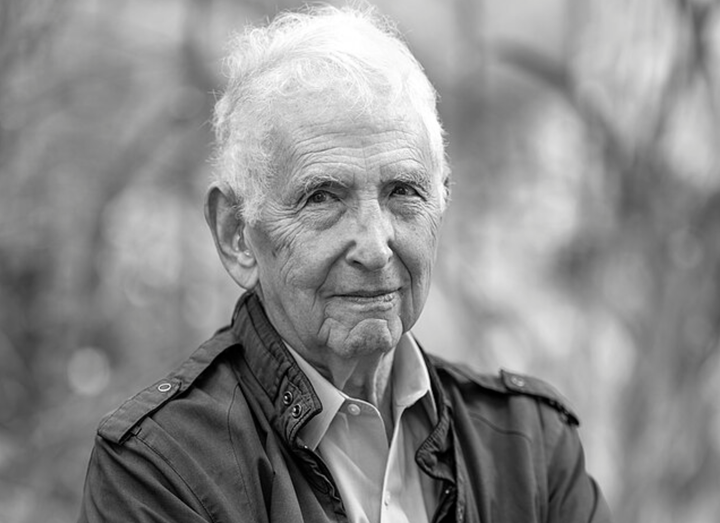
Aurelio Perez-Lugones, a Pentagon contractor charged with violating the Espionage Act, was detained before trial after the United States Justice Department argued that he has classified memories that must be protected.
On January 9, the system administrator for a company in Laurel, Maryland, was arrested on January 9 and charged with the unlawful retention of “national defense information.” An FBI affidavit alleges that Perez-Lugones printed screen shots from a classified intelligence report related to a “foreign country”—Venezuela—and took it home with him.
Attorney General Pam Bondi, FBI Director Kash Patel, and other Justice Department officials claim that Perez-Lugones leaked classified information to Washington Post reporter Hannah Natanson. The FBI raided Natanson’s home on January 14, but as of January 20, the U.S. government has not alleged in any court filing that Perez-Lugones disclosed information without authorization to a member of the press.
Nevertheless, in a January 13 motion [PDF] filed in the U.S. District Court for the District of Maryland, prosecutors argued, “[FBI agents] seized documents containing national defense information from the Defendant’s car and home. However, the Government cannot seize everything in his head.
“The Defendant has held a security clearance for over 25 years and the Government cannot ensure the safety of the country and U.S. military personnel without detention,” prosecutors added. “Only detention would provide the government a way to monitor whether the Defendant uses any of his knowledge to threaten national security.”
Magistrate Judge Charles Austin rejected this argument and ordered the release of Aurelio-Lugones. “To the extent that Mr. Perez knows anything in his mind and has retained those things, those things don’t appear to be the basis of the government’s allegations, at least at this time. In the future that could change. But the record before me now involves documents and systems that he no longer has access to.”
“[T]he government executed a search warrant. And so, the facts presented to me suggest that any criminal activity and any threats to safety have come from information…that’s not stored in his head, that’s information that’s set forth in documents,” the magistrate judge concluded.
But Chief Judge George L. Russell reversed this decision and ordered Perez-Lugones to remain in detention until trial.
It is not the first time that the government has argued someone accused of violating the Espionage Act should be held in detention because they have classified memories. In 2017, during President Donald Trump’s first term, prosecutors offered a similar argument in the case against Reality Winner.
At Winner’s detention hearing on June 8, 2017, Jennifer Solari, the assistant U.S. attorney for the Northern District of Georgia, said [PDF], “The defendant had routine access to some of the nation's most protected secrets for more than 6 years.”
“We don't know how much more she knows and how much more she remembers,” Solari added, “but we know she is extremely intelligent. So we would have to imagine she's got quite a bit of very valuable information in her head.”
It worked. U.S. Magistrate Judge Brian Epps was worried bout how much Winner knew “from all the time” that she “had a top secret security clearance both before and after her time of military service” and “who she might tell.” He ordered Winner to remain in detention.
Later, at another detention hearing on September 29, 2017 [PDF], Solari asked FBI Special Agent Justin Garrick, “Is it safe to assume then that she knows things in her head that if disclosed could cause exceptionally great damage to national security?” Garrick answered yes. Winner was yet again denied bail.
Harold T. Martin, a former NSA contractor, was accused of stealing classified documents over a period of 20 years and convicted of unlawful retention of “national defense information.”
The government argued [PDF] that it was “readily apparent to every foreign counterintelligence professional and nongovernmental actor that [Martin] has access to highly classified information, whether in his head, in still-hidden physical locations, or stored in cyberspace—and he has demonstrated absolutely no interest in protecting it.”
"This makes the Defendant a prime target, and his release would seriously endanger the safety of the country and potentially even the Defendant himself,” prosecutors further stated.
Magistrate Judge A. David Copperthite agreed with the government. In his order for Martin’s detention [PDF], Copperthite wrote that he presented a “serious risk of danger to the public due to his information, knowledge he possesses.”
In 2023, when Air National Guardsman Jack Teixeira was charged with leaking classified documents that related to the war in Ukraine, U.S. spying on allies, and other military and security matters, the Justice Department invoked both the Winner and Martin cases so that Teixeira was denied bail.
Prosecutors declared, “The government cannot erase the knowledge the Defendant has acquired by virtue of his access to—and apparent study of—classified information over the course of at least a year. Put simply, there is nothing a court can do to ensure the Defendant’s compliance with his conditions of release other than take the Defendant at his word.”
CIA analyst Asif Rahman, who disclosed documents on Israel’s plans to strike Iran, was charged with violating the Espionage Act in October 2024. The government’s argument for detention again focused on classified memories.
“[A]fter years of working in some of the most classified spaces of the CIA focused on multiple regions around the world, it is impossible to know how much classified information the defendant now possesses in his mind alone,” prosecutors declared. “He has shown what he is willing to do with that information: disclose it for his own motivations to the potential harm of the United States, including potentially through social media and messaging applications that transmit information instantaneously.
For each of these examples, the Justice Department is not referring to classified documents. They are speaking about potential knowledge of information inside of a person’s head and asserting control over those memories.
U.S. military prosecutors previously claimed [PDF] in a much more extreme context that Guantanamo Bay prisoners’ memories of CIA torture and abuse were classified. They insisted that the torture techniques used against them were “state secrets and censored prisoners from sharing their experiences to shield the CIA from accountability.
The government is obviously not claiming authority over Espionage Act defendants’ memories to hide torture and abuse. But there is still something drastic about jailing individuals because of what may potentially be inside of their heads.
By persuading the courts to detain any Espionage Act defendant charged with mishandling classified information, “Top Secret America” generates fear around questioning the classification of information in these cases.
It not only prevents the defendants from speaking to the press about the nature of allegations against them, but it also effectively ensures that a massive system that hides rampant waste, fraud, abuse, and illegality remains intact.


Comments ()