
Defying Court, DHS Seized Logs Of 10,000 Calls And Texts From Journalist
Lawyers for journalist Georgia Fort, who faces a political prosecution, demand that a court order the government to destroy call and text logs from her phone
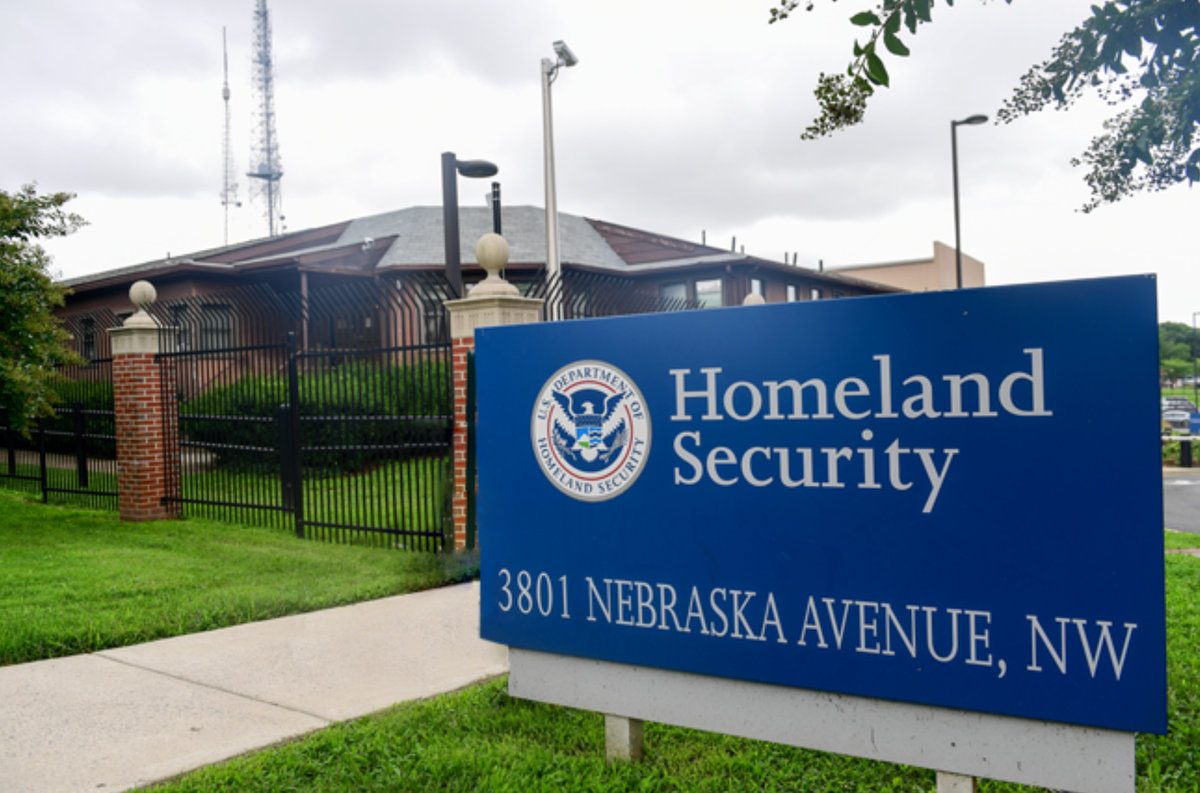
The Department of Homeland Security circumvented a magistrate judge’s orders and seized records of 10,000 calls and text messages from journalist Georgia Fort.
Earlier this year, Attorney General Pam Bondi directed federal agents to arrest Fort, Don Lemon, and later Shane Bollman—all journalists who were covering an ICE protest at the Cities Church in St. Paul, Minnesota. They were subsequently charged with crimes and had their electronics searched.
Defense lawyers for Fort filed a motion in U.S. court for the “return or impoundment of call and text logs” and requested a hearing. It revealed that the government had “issued a customs summons” to T-Mobile for logs, “without any notice to her.” This amounted to an “end-run around” Magistrate Judge John F. Docherty, who had denied requests for warrants sought by prosecutors.
“[Fort] was particularly shocked to see that the government had obtained six months’ worth of information given its representation ‘that this is a simple case that involves a conspiracy that commenced and was completed in a matter of days,’ with ‘[t]he core offense’ occurring over ‘approximately two hours,’” according to the filing. “Counsel was similarly surprised to see such discovery from a journalist given that the government had already obtained “phone extractions” from 14 other defendants, including the leaders of the protest, calling into question the government’s further need for call and text information from Ms. Fort.”
As part of discovery, the government collected and produced “more than 40,000 pages and hours of video surveillance data.” But Fort’s attorneys maintain that little of it has anything to do with Fort.
While T-Mobile provided records to the government on April 12, Google received a similar administrative subpoena for information about Fort’s YouTube channel and declined to provide records.
The Guardian’s Sam Levine reported that DHS invoked an authority that grants the agency “broad power to inspect records in order to determine whether duties and taxes are being correctly levied on imported items. However, as Chris Duncan, a former lawyer for DHS told the outlet, “This is an improper use of the subpoena under any circumstances. This is not a customs case; it is not a customs violation. They are not investigating a customs violation.”
“It’s outrageous conduct on so many levels. It’s hard to know where to begin,” Duncan added.
The report from Levine made it clear that this was not the first time that DHS had used a customs summons to try and obtain access to user data without a warrant. A DHS inspector general concluded in 2017 that the agency’s use of these summons was “inconsistent and, in some cases, improper.” And with tacit support from the Justice Department, DHS is likely abusing this authority to gain access to the records of unions, nonprofit organizations, and other reporters.
Fort asked the U.S. District Court for the District of Minnesota to “either impound or direct the destruction of all copies of the logs.” She also asked the court to “certify” in writing that they no copies or information derived from this data and that the court instruct the government to abide by court orders and the law, which includes notifying Fort “before seeking her journalistic records.”
On August 12, the Reporters Committee for Freedom of the Press and a coalition of media organizations urged the court to preserve the First Amendment and dismiss the charges against Fort and Lemon.
“The statutes under which the journalists were charged—the Freedom of Access to Clinic Entrances (“FACE”) Act,” a “conspiracy against rights criminal statute…cannot be applied to their newsgathering conduct,” the coalition argued.
As the coalition maintained, the government has to establish that “a defendant subjectively intended to deprive the covered individual of the protected right.” Neither Lemon nor Fort were present were there to deprive anyone of access to a place of religious worship. They were at the church to “cover a news story.”
“Under the government’s reading of the statutes, prosecutors could use that broad and vague language to target journalists for merely asking questions of protesters or bystanders convened in public spaces outside of a church—First Amendment-protected activity that occurs all the time,” the coalition further contended. “And it should be beyond a doubt that the act of asking questions of witnesses to a newsworthy event, whether the questioner is a journalist or a passer-by, is not a crime.”
In addition to the fact that the prosecution is a politically motivated attack on the First Amendment, prosecutors again attempted to deceive a judge while trying to subpoena records from a journalist.
Docherty denied the government access to records about Fort’s YouTube channel, and as part of his denial, he emphasized that he was concerned about the request not only on First Amendment grounds but also because the government neglected to bring up the Privacy Protection Act.
He referred to the search warrant application, which the FBI obtained in order to target Washington Post reporter Hannah Natanson and seize her electronics. In that application, Assistant U.S. Attorney Gordon Kromberg, who signed it, omitted the Privacy Protection Act.
In 1978, the U.S. Supreme Court ruled in Zurcher v. Stanford Daily that the Fourth Amendment did not prohibit a search warrant to search the premise of an innocent "third party," like a newsroom. Congress passed the Privacy Protection Act around two years later to strengthen First Amendment protections for journalists.
Magistrate Judge William Porter indicated that the court "had never received such an application and, at the time it approved the warrant, was unaware" of the Privacy Protection Act, according to Magistrate Judge William Porter. (Porter was upset that the government left it in the dark, however, he did next to nothing to ensure misconduct would not happen again.)
The most troubling part about all of this is that Fort may not be the only journalist who has been secretly subpoenaed in this manner, and telecommunications companies and social media platforms may or may not reject the government's requests.
ACLU attorney Nathan Freed Wessler concluded, “Without knowing how many of these subpoenas there are and what they’re being used for, there’s no way for courts or lawmakers or the public to put checks on executive branch abuses.”

Comments ()