
Court Voids Trump's Executive Order That Defunded NPR, PBS
Judge Randolph Moss blocks the Trump administration from further "implementing or enforcing" the order that defunded NPR and PBS

A United States court declared that President Donald Trump’s executive order, which ceased funding for NPR and PBS, was “unlawful” and violated the media organizations’ First Amendment right to freedom of speech.
Judge Randolph Moss for the U.S. District Court in the District of Columbia issued a permanent injunction blocking the Trump administration from “implementing or enforcing” the executive order.
On May 1, 2025, Trump issued an executive order that was titled “Ending Taxpayer Subsidization of Biased Media.” It indicated that Trump did not believe NPR or PBS provide a “fair, accurate, or unbiased portrayal of current events to taxpaying citizens.” Therefore, the government would end all funding for NPR and PBS.
NPR, PBS, and several NPR and PBS affiliate stations sued Trump and the following government agencies: the Office of Management and Budget, the Treasury Department, the Education Department, the Homeland Security Department, the Federal Emergency Management Agency, and the National Endowment for Arts.
The lawsuit alleged that the Trump administration had engaged in “viewpoint discrimination” and violated the First Amendment.
“Regardless of any policy disagreements over the role of public television, our Constitution and laws forbid the President from serving as the arbiter of the content of PBS’s programming, including by attempting to defund PBS,” PBS argued.
The Corporation for Public Broadcasting (CPB), which distributed federal funds to over a thousand public radio and television stations, sued the government. However, in January, the CPB dissolved because Congress eliminated $1 billion in funding. That made their claims moot.
Putting the Trump administration’s unlawful action into perspective, the judge noted that the government agencies sued by NPR and PBS had failed to “cite a single case in which a court [had] ever upheld a statute or executive action that bars a particular person or entity from participating in any federally funded activity based on that person or entity’s past speech.”
“Perhaps that is because neither Congress nor any prior Administration has ever attempted something so extreme, or perhaps it is because any prior effort to do so has failed,” Moss added.
Moss also emphasized the fact that the Trump administration had singled out NPR and PBS while continuing federal funding for an array of “national and local producers and distributors.” That further supported the evidence that the media organizations were unconstitutionally defunded.
The executive order “seeks to exclude NPR and PBS from receiving federal grants or other funding because they have provided more positive coverage of [Trump’s] political opponents than of his party and allies, because their news coverage, in his view, tips left, and because they were critical of him,” the judge summarized.
“On this record, there can be no doubt that the Executive Order does not target Plaintiffs merely because they have a viewpoint or consistent perspective and therefore fail to live up to some yet-to-be-attained platonic ideal of ‘unbiased’ journalism, but because he views their speech as unfavorable to him and the Republican party.”
“To be sure, the President is entitled to criticize this or any other reporting, and he can express his own views as he sees fit,” Moss stated. “He may not, however, use his governmental power to direct federal agencies to exclude Plaintiffs from receiving federal grants or other funding in retaliation for saying things that he does not like.”
NPR called the ruling a “decisive affirmation of the rights of a free and independent press,” and PBS said the media organization was “thrilled” with the decision, which declared the executive order unconstitutional.
FCC Chair Brendan Carr, who has been dubbed the “Censorship Czar” by Free Press, told a bragged about defunding NPR and PBS during his appearance at the Conservative Political Action Conference (CPAC) in Texas. “President Trump is taking on the fake news media, and President Trump is winning.”
But as the Freedom of the Press Foundation (FPF) pointed out, “virtually all of the administration’s ‘wins’ in reshaping the media that Carr and Trump have bragged about” violate a key principle:“the government can’t circumvent the Constitution by conditioning benefits on censorship where it can’t censor directly.”
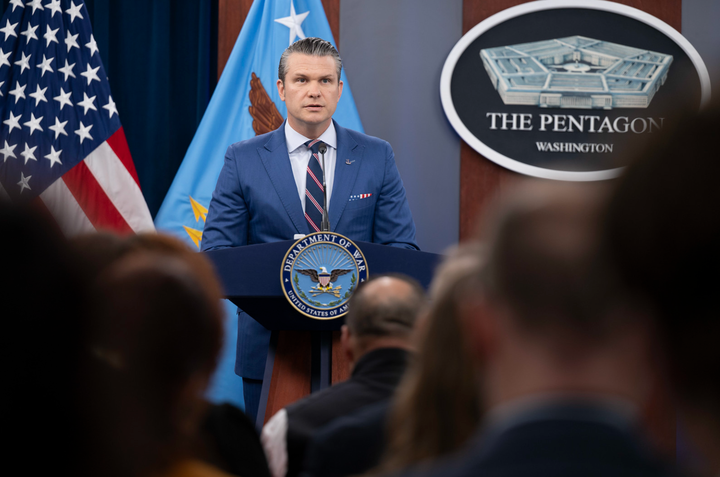
“That goes for publicly funded media, but it also goes for Brendan Carr’s FCC conditioning broadcast licenses or merger approvals for private media companies on editorial concessions to please Donald Trump, Pete Hegseth conditioning access to the Pentagon on journalists forfeiting established rights, or Trump himself steering transactions like the Paramount-Warner Bros. Discovery merger to supporters of his who promise him ‘sweeping changes’ to bend the news to his liking,” said FPF advocacy director Seth Stern.
While much more is needed to save publicly funded media, the court decision at least gives those who believe in public broadcasting a shot at surviving the slow death imposed on radio and television stations in hundreds of communities.
It also shows, as Stern put it, that more news outlets should sue the Trump administration rather than capitulate to political power. Because they would win.

Comments ()