
Whistleblower Law Safe From US Supreme Court—For Now
The United States Supreme Court declined to hear pharmaceutical corporation Eli Lilly’s appeal against the constitutionality of the False Claims Act.
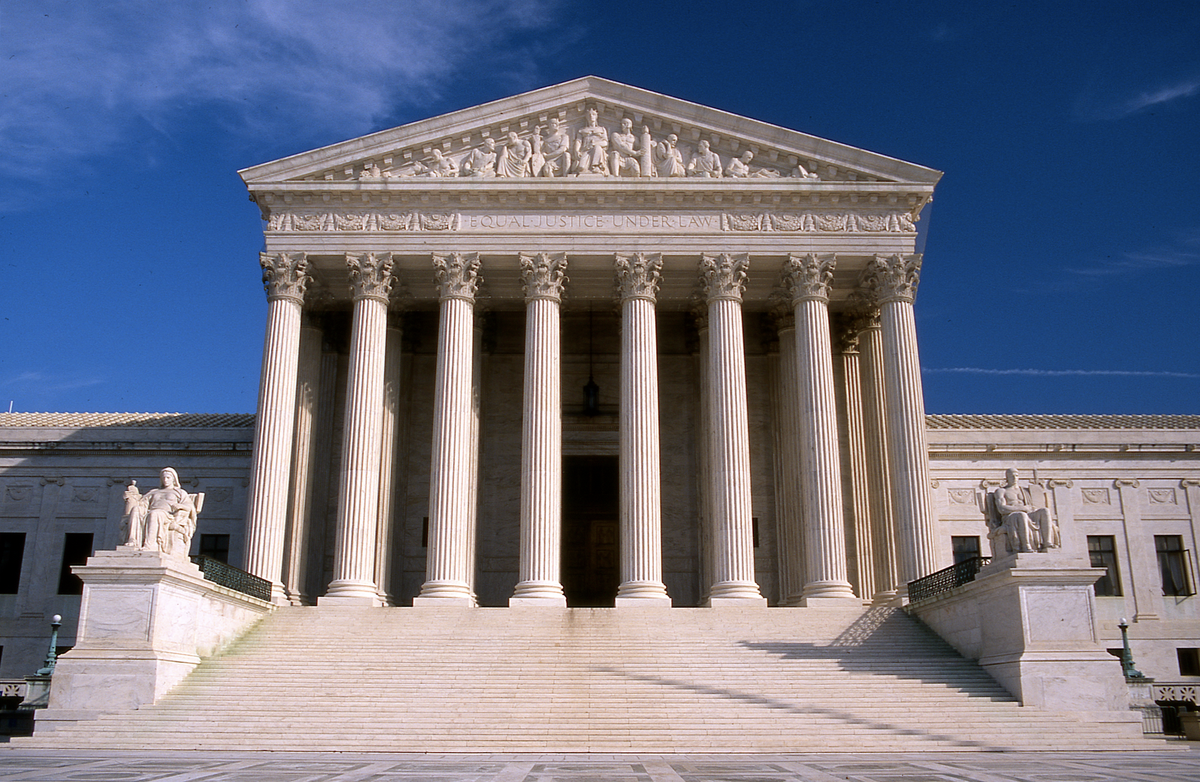

The United States Supreme Court declined to hear Eli Lilly’s appeal against the constitutionality of the False Claims Act, which it pursued in order to avoid accountability for Medicaid fraud.
In 2022, a jury ordered the multinational pharmaceutical corporation to pay $61 million after whistleblower Ronald Streck alleged that the company had underpaid rebates that drug manufacturers must pay as part of Medicaid. Since damages were trebled and interest accrued, Eli Lilly was instructed to pay over $220 million.
Walden Macht Haran & Williams, the firm that represented Streck, said that the judgment was apparently the “first jury verdict against a pharmaceutical company” under the FCA.
President Abraham Lincoln signed the first FCA in 1863 during the U.S. Civil War. As Tom Mueller recalled in his book “Crisis of Conscience: Whistleblowing In An Age of Fraud,” the law was intended to not only “stop army and navy contractors from stealing taxpayer dollars but also to push complacent or complicit government agencies to act.”
The FCA enables whistleblowers to act as “relators” and seek civil penalties or rewards from companies that have defrauded the government. They file a sealed complaint in court and provide a copy to the Justice Department. Federal prosecutors then may elect to “intervene,” or take up the case. If prosecutors pass on the case, whistleblowers are often free to privately pursue the lawsuit, and that’s what Streck did in this case.
But in recent years Supreme Court Justices Clarence Thomas, Brett Kavanaugh, and Amy Coney Barrett have sympathized with corporations like Eli Lilly and openly called for an “appropriate case” that could address whether the law violates the U.S. Constitution.
Back in 2023, the Supreme Court ruled in Polansky v. Executive Health Resources, Inc. that the government could override whistleblowers and dismiss FCA lawsuits that prosecutors do not support.
Thomas offered a lone dissent that expressed his belief that the FCA exists in “something of a constitutional twilight zone.” His argument was that “executive power” belongs solely to the president and so only the president and those acting on his behalf may sue companies for fraud.
Eli Lilly seized upon the dissent from Thomas in their appeal to the Supreme Court. Likening whistleblowers to “private bounty hunters,” the corporation quoted Thomas and argued that relators operate “free of executive supervision.”
“Three Justices have recently voiced these concerns,” lawyers for Eli Lilly stated, referring to the Polansky case. They argued that it creates a “trap for manufacturers” and “cannot be reconciled with the Constitution’s structural protections of liberty or bedrock principles of due process.”
Lawyers for Eli Lilly also maintained that their appeal would be an “excellent vehicle” to challenge the FAC, as it “vividly” illustrated the “real-world problems” with the law. “The government declined request after request to clarify its ambiguous regulations, then stood idly by while Streck accepted Congress’s invitation to usurp the Executive’s enforcement role and punish Lilly for conduct that the government itself was unwilling to say violated the law.”
However, the Seventh Circuit Court of Appeals ruled that Eli Lilly had an “objectively unreasonable” view of the Medicaid law that they were supposed to follow, and even went so far as to insist that this amounted to “evidence of a culpable state of mind.”
While the Supreme Court rejected Eli Lilly’s appeal, the court may still consider another case known as Zafirov v. Florida Medical Associates, LLC. In 2024, U.S. District Judge Kathryn Kimball Mizelle became the first district court judge to rule that FCA provisions allowing whistleblowers to bring claims are unconstitutional.
As Whistleblower Network News reported, whistleblower Clarissa Zafirov alleged that “Florida Medical Associates and others submitted false claims to Medicare by misrepresenting their patients’ medical conditions.” However, Mizelle ruled that “Zafirov’s role as a self-appointed qui tam relator—pursuing claims on behalf of the federal government without being appointed by the President, a department head, or a court—violates the Appointments Clause of Article II of the Constitution.”
Mizelle is a judge in the U.S. District Court for the Middle District of Florida, and she was appointed by President Donald Trump during his first term. Essentially, she embraced Thomas’s chief argument against the FCA.
Zafirov’s appeal was heard by the Eleventh Circuit Court of Appeals near the end of 2025. The appeals court has yet to issue a ruling.
Judge Federico Moreno said that if the court struck down the FCA provisions it might “create chaos,” though “sometimes the Constitution creates chaos.”
So far, during Trump’s second term, the government has encouraged rather than opposed whistleblower lawsuits under the FCA. The Hoyer Law Group cheered the Supreme Court’s decision to not hear Eli Lilly’s appeal and noted that, “Nearly 1,300 whistleblower lawsuits were filed in fiscal year 2025."
“The Department of Justice is on pace to exceed that number again in 2026,” the legal firm added. “The DOJ recently launched a new initiative, FOCUS (Fraud Oversight through Careful Use of Statistics), specifically designed to strengthen its partnership with whistleblowers who use data analysis to identify fraud. That initiative, announced on April 30, 2026, is a clear signal that the government is investing more, not less, in False Claims Act enforcement.”
Though the legal firm, which represents whistleblowers in FCA cases, recognized that Supreme Court justices “may simply be waiting for the Eleventh Circuit to weigh in before deciding whether to address the constitutionality” of the law.
*Further background: US Supreme Court May Take Aim At Whistleblower Law
Comments ()