US Prosecutor Faces 'Disciplinary Complaint' For Authorizing FBI Raid Against Reporter

US Prosecutor Faces 'Disciplinary Complaint' For Authorizing FBI Raid Against Reporter
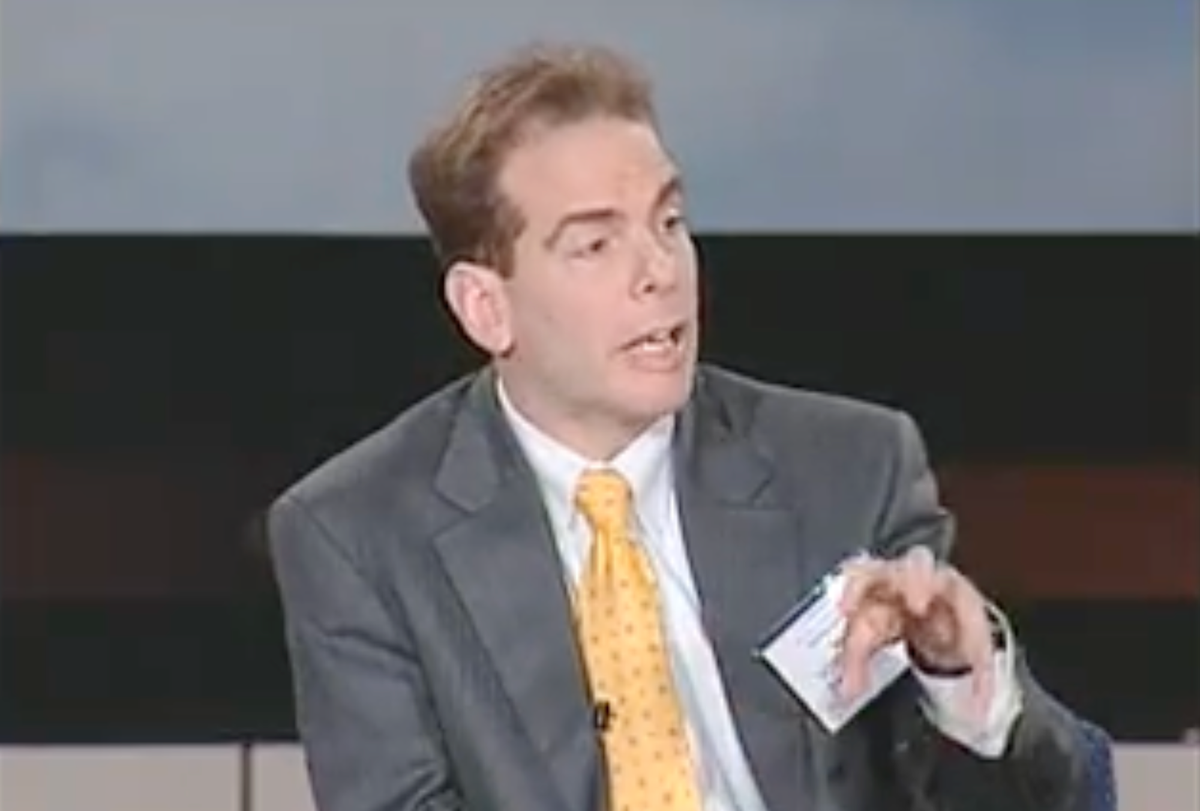
Gordon Kromberg in 2008 (Screen shot from Reynolds National Center for Courts and the Media. Fair use included for the purpose of news and commentary.)

The Freedom of the Press Foundation (FPF) filed a "disciplinary complaint" against the federal prosecutor who signed off on the search warrant, which led to the FBI raid against Washington Post reporter Hannah Natanson. 

“Assistant United States Attorney Gordon Kromberg and the government omitted a federal law that should have prohibited the raid of Hannah Natanson’s home when applying for a search warrant,” declared FPF advocacy director Seth Stern. “That choice now threatens to expose Natanson’s sources and cripple her ability to report, while also sending a warning shot to journalists and whistleblowers nationwide.”

Meanwhile, Natanson and the Washington Post continue to fight in court for the return of electronic devices that were seized by the FBI on January 14 as part of an Espionage Act prosecution against Pentagon contractor Aurelio Perez-Lugones.

On January 21, the U.S. District Court in the District of Virginia granted the Post’s motion to halt “review” of devices that agents took in the raid while the court considers whether to order the government to return Natanson and the Post’s property. 

FBI assistant director Roman Rozhavsky recalled in a declaration [PDF] that the FBI took “Natanson’s laptop, a silver MacBook Pro with a black case, and Natanson’s cell phone, an Apple iPhone 13.” They were found in the upstairs of her home, “along with a Handy branded audio recording device and a Seagate portable hard drive.” 

“The iPhone was found powered on, sitting on a charging stand with a cable, and a notification visible on its display indicated the iPhone was in ‘Lockdown’ mode,” Rozhavsky noted. 

Natanson’s personal laptop, voice recorder, and terabyte hard drive were all powered off. But her work laptop, a silver MacBook Pro, was “powered on inside a red backpack in the kitchen.” It had “Touch ID” enabled so FBI agents approached Natanson and instructed her to unlock the laptop. 

“The FBI assisted Natanson with applying her right index finger to the fingerprint reader which immediately unlocked the laptop,” according to Rozhavsky. “As the FBI left the front of her residence, Natanson asked, ‘what laptop is that?’” 

When the FBI processed Natanson’s devices, the bureau was unable to “extract” any data from her iPhone because it was in “Lockdown Mode.” (Apple designed this mode to help users protect against “sophisticated cyber attacks” by limiting the phone’s functions.) 

Rozhavsky said, “Similarly, the personal MacBook Pro could not be imaged yet.” The FBI also could not obtain a “full physical image” of her work MacBook Pro because her user profile lacked administrative privileges. 

However, through her work laptop, the FBI was able to access several Signal chat messages that were set for auto-deletion. Agents took “photographs, and where necessary, audio/video recording of the contents of the various conversations.” (Rozhavsky claims only messages and attachments received on or after October 1, 2025, were photographed and recorded.) 

Of course, the Post, Natanson, and press freedom groups maintain that the FBI should never have obtained any access whatsoever to Natanson’s devices. 

FPF argued in its complaint [PDF] against Kromberg that the Privacy Protection Act prohibits searches searches of a reporter’s devices unless there is “probable cause to believe” that the journalist committed a crime, including violating the Espionage Act.

But the “basis for the search” indicated on the search warrant application [PDF] was to search for “evidence of a crime” and “fruits” of the alleged crime, not to arrest a person who allegedly committed an offense. 

“As several experts note in the article, Kromberg’s signature of the warrant application appears to violate Virginia Rules of Professional Conduct, Rule 3.3, ‘Candor Toward the Tribunal,’ which provides that a lawyer shall not knowingly ‘fail to disclose to the tribunal controlling legal authority in the subject jurisdiction known to the lawyer to be adverse to the position of the client.’”

FPF added, “The rule recognizes that the need for candor is heightened in a proceeding with no opposing counsel present to bring adverse authority to the court’s attention.”

Kromberg was the federal prosecutor, who told the British courts that the U.S. government could argue WikiLeaks founder Julian Assange had no First Amendment rights because he was a foreign national. That backfired, and essentially forced the Justice Department into a position where they had to seek a plea deal with Assange to salvage their case.

He also prosecuted drone whistleblower Daniel Hale during President Donald Trump’s first term, despite the fact that high-rank Justice Department officials under President Barack Obama declined to approve Espionage Act charges against him. 

The Post believes [PDF] that the FBI must return “non-responsive data” that is protected under the Privacy Protection Act. But the government insists that the “Privacy Protection Act does not provide a basis to return the devices now (or ever)” [PDF].

Furthermore, the government says that it has taken the step of segregating First Amendment- and Privacy Protection Act-related information, even though that is not required. It has asked the court to “dissolve” the standstill order and deny the Post’s request that asks the court to search Natanson’s electronics and determine which materials are relevant to Perez-Lugones’ prosecution. 

“That approach is unwarranted as the Government intends to design a filter protocol to ensure that privileged materials are shielded while also protecting classified information and segregating materials within the scope of the warrant,” the government argues. 

Finally, the Post told the court the Justice Department should have issued a grand jury subpoena to Natanson the same way it issued a similar subpoena to the Post on the day of the FBI raid. (The subpoena that the Post received allegedly sought “the same items as those particularized in the search warrant—records of communications with Perez-Lugones and records received from him.”)

FBI Says Natanson 'Misled' Investigators

To justify the decision to seek a search warrant instead of a subpoena, the government maintains that Natanson could not have been trusted to preserve documents and separate “classified information” and other evidence relevant to Perez-Lugones’ case. 

 “As the Rozhavsky Declaration explains,” the government stated, “Natanson misled investigators about the devices that were seized. She misrepresented to officers that the devices could not be unlocked with biometrics, possibly in order to prevent the Government from reviewing materials within the scope of the search warrant. The record confirms the correctness of the Government’s choice to proceed with a search warrant.”

However, there is no evidence that Natanson ever acted in bad faith. She did not use biometrics to lock any of her personal devices and says that she did not remember the fact that her work laptop had a biometric login enabled. 

“When FBI agents asked me to use biometrics to log in to the laptop, I did not expect that a biometric login would unlock the device because the laptop’s fingerprint reader previously did not work for me and my regular practice was to use passwords,” according to Natanson [PDF].

The Reporters Committee for Freedom of the Press (RCFP) has pointed out, “Only a fraction of the information the Department seized is even imaginably relevant to its stated basis for [the raid]: the leak investigation of a government contractor who has already been identified, charged, and arrested.”

“But unless this Court acts, federal agents apparently intend to rummage through their haul—freely examining unrelated newsgathering material and doing irreparable damage to the confidentiality on which effective reporting depends—as soon as this litigation concludes," RCFP adds. "Sources whose communications with Natanson have nothing to do with the [Justice] Department’s probe, but whose disclosures may well have angered the [Trump] Administration, face an imminent risk of exposure to those same officials."

This is clearly an abuse of power, and the effort to suppress a reporter, who had amassed 1,000+ sources in the federal government, is why FPF has demanded accountability for Kromberg’s actions. 

“Disciplinary bodies cannot look the other way and ignore misconduct that threatens the First Amendment, particularly from an administration with a long history of misleading judges and everyone else,” Stern concluded. “When prosecutors abuse their power to facilitate efforts to silence reporting and intimidate news sources, disciplinary authorities must hold them accountable and impose real consequences.”