
DOJ Targets Fort Bragg Whistleblower With Espionage Act Prosecution
The case against Courtney Williams is the second Espionage Act prosecution against a media source during Trump's second term.
The FBI arrested Fort Bragg whistleblower Courtney Williams and charged her with violating the Espionage Act when she communicated and shared information with journalist Seth Harp.
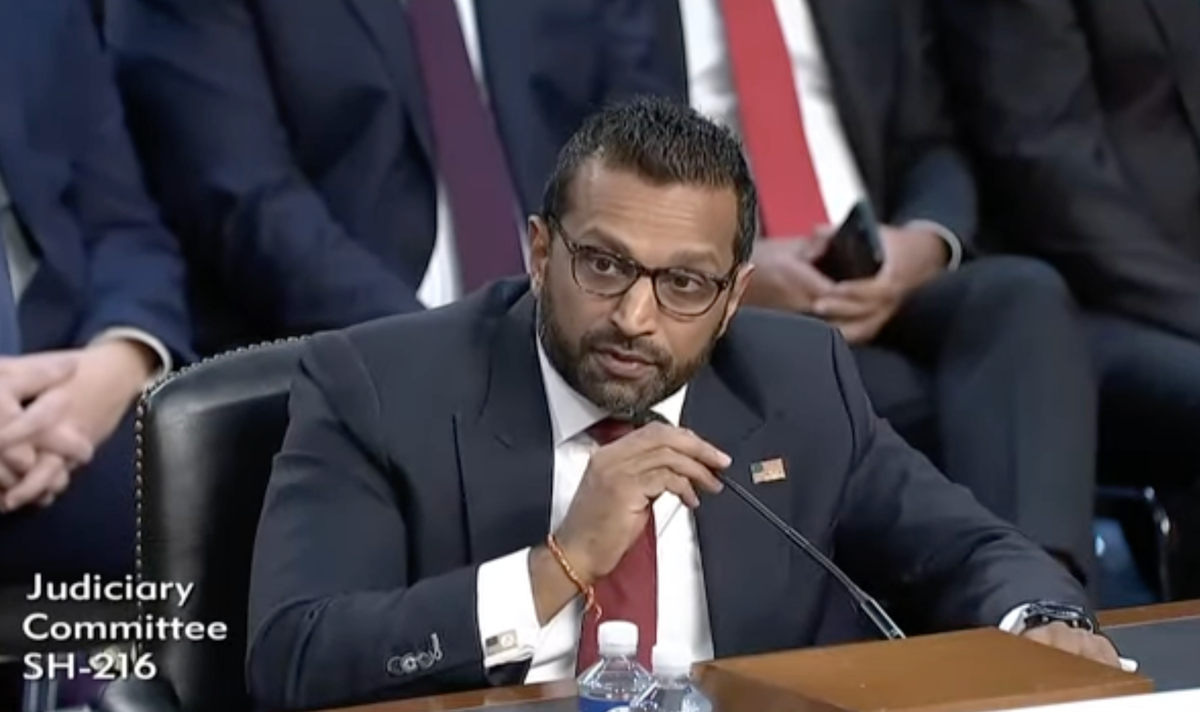
FBI Director Kash Patel cheered the arrest and attack on freedom of the press. “Let this serve as a message to any would-be leakers: we’re working these cases, and we’re making arrests. This FBI will not tolerate those who seek to betray our country and put Americans in harm’s way.”
Williams was officially charged on April 3 and taken into custody on April 7. She remains in jail ahead of a bond hearing set for April 13 that will determine if she remains in pretrial detention.
The case against Williams is the second Espionage Act prosecution against a media source during President Donald Trump's second term.
Three months ago, Representative Anna Paulina Luna proposed a subpoena against Harp and then referred Harp to the Justice Department for prosecution. Harp shared information from a public profile on Duke University’s website that identified a Delta Force commander, whose men were reportedly involved in kidnapping Venezuela President Nicolas Maduro.
Nonetheless, Luna claimed in a letter to Attorney General Pam Bondi that Harp had “knowingly obtained, retained, and disseminated information that was closely held by the United States government and classified or classifiable at the time of disclosure. The publication of this information was not incidental or inadvertent; rather, it involved the deliberate attempt of identification of a specific individual whose anonymity was essential to the lawful execution of sensitive military operations.”
The Justice Department never pursued charges against Harp because journalism is not a crime, and it is not illegal for a reporter or writer to publish classified information. However, at some point, federal prosecutors in the national security division combed through Harp’s acclaimed book, “The Fort Bragg Cartel: Drug Trafficking and Murder in the Special Forces” and singled out Williams, who spoke to him.
Williams was a “signature reduction specialist” for a “special military unit” (SMU) at Fort Bragg in North Carolina. According to an excerpt of the book that was posted at Politico, “she served as the custodian of a controlled repository of valid but fictitious passports, identity documents and financial instruments,” which were issued to operators in the Delta Force unit known as the G Squadron. She was part of the unit from 2010 to 2016.
According to Williams, an intelligence squadron commander humiliated her after she asked to deploy overseas with the unit. He “laughed hysterically” and said, “You were hired for your assets,” and gestured at his chest. “If they want you to deploy with them, it’s because they all want to fucking run a train on you.”
The same commander, a lieutenant colonel, also allegedly engaged in sexual harassment, summoning Williams to his office and forcing her to bend over so he could see if her underwear showed through her white pants.
“Williams filed a grievance at the squadron and unit level, but nothing was done,” Harp recalled. “The next time she came up for a performance review, she received a mediocre rating. Now she was really angry. ‘My work,” she said, ‘was immaculate.’ She appealed the performance review, submitted a complaint with [US Army Special Operations Command’s] inspector general and eventually filed a discrimination claim with the Equal Employment Opportunity Commission [EEOC].”
Whistleblower retaliation allegedly escalated after Williams spoke up. As a mother, any time that she had to take care of her sick daughter she could be marked as “AWOL.” Finally, the unit revoked her security clearance in 2016 because of the fact that she was challenging sexism and harassment that was rampant.
'This Is Going To Be More Of A Nightmare For My Children Than Not'
The book was published on August 12, 2025, along with the article from Politico. That day Williams allegedly texted Harp to express frustration.
“After quickly reading through everything I will just say I wish you had sent me a copy of what was to be published prior to publishing. Other than a few factual errors, I would definitely have been concerned with the amount of classified information being disclosed,” Williams wrote.
Williams seemed to believe that she had gone on background to offer Harp a “better general understanding” of how the unit operated. She worried that she had revealed a “TTP,” or tactic, technique, or procedure, and because it was sent out under her name that gave the government a “chance to legally persecute her” and a colleague or acquaintance.
“I’m taking deep breaths, but have a feeling this is going to be more of a nightmare for my children than not,” Williams added.
In another text message chain with her mom, Williams apparently said, “I might actually get arrested, and I don’t even get a free copy of the book.” After her mother asked why, she clearly stated “for disclosing classified information.”
The FBI affidavit in support of the criminal complaint indicated that the Politico article detailed “Williams’s allegations of mistreatment” in the unit. Her position and duties in the unit were described as well.
An “original classification authority” reviewed the information related to her position, duties, and discrimination complaint and concluded that the information was “classified” at the “secret” level. It was not to be shared with any “foreign governments, foreign nationals, foreign or international organizations, or non-US citizens.” It contained information about “TTPs utilized by the SMU to execute sensitive operations.”
To further the FBI’s investigation, the national security division obtained phone call detail records between Williams and Harp. The length of each phone conversation was noted.
On January 17, 2022, Williams and Harp allegedly spoke to each other for 144 minutes and 27 seconds. They talked on October 25, 2022, twice—for 123 minutes and 30 seconds, and then 165 minutes and 12 seconds.
While the FBI did not obtain the content of the calls, FBI Special Agent Jocelyn Fox asserted that she had “probable cause to believe that Williams and the Journalist discussed Williams’s employment at the SMU and associated information during those consistent and extensive phone conversations.”
'Pure Speculation' Behind The Allegations
The complaint specifically criminalized Harp for soliciting classified information, something that the Justice Department, Director of National Intelligence, Homeland Security Department, and the Pentagon have regularly done under Trump.
Approximately 180 text messages between Williams and Harp were reviewed. Fox called attention to a text message from early 2022. “[Harp] identifies themselves as a journalist and states that they are seeking information about the SMU to support upcoming articles and an upcoming book.”
In 2025, dozens of journalists refused to sign a loyalty pledge issued by Pentagon Secretary Pete Hegseth, which unconstitutionally demanded that they refrain from soliciting information from officers or they would be deemed a “security risk” and lose their media access.
The FBI affidavit refers to another text message on November 2, 2022, from Harp that involved “the return of an external storage device via a self-addressed, prepaid envelope.” Fox presumes that the storage device contained classified information that was included in the article and book.
“I'll save an FBI tactical team the trouble of kicking my door down at 4 am,” Harp wrote in response to this part of the affidavit. “The jump drive contained a public EEOC complaint that was too large of an electronic file to send by email.”
“As a lawyer, I'm astonished by the lack of specificity and pure speculation in this indictment,” Harp added.
Fox further speculated on the transmittal of documents to Harp, noting that Williams had saved “10 batches of documents” that were marked for “the journalist.” However, it is not clear that the FBI has any evidence that Williams sent any of the batches to Harp.
Ellis Boyle, the U.S. Attorney for the Eastern District of North Carolina, proclaimed, “We trust our war fighting individuals to cooperate as a team to protect our military and country. We will pursue criminal charges to keep these warriors safe whenever we find leakers exalting their own feelings over the safety of the United States.” (Williams’ “feelings” were that sexual harassment should not be tolerated in the military.)
"When the government retaliates against a whistleblower instead of addressing the illegality she exposed, it tells you all you need to know about the administration’s priorities,” declared Seth Stern, advocacy director for the Freedom of the Press Foundation. “It also underscores why the Pentagon’s unconstitutional efforts to limit journalists’ access to everything except ‘authorized’ information are so absurd. Does anyone think Pete Hegseth or his authorized PR flacks would have voluntarily disclosed these abuses to their briefing room of stenographers?”
Ask anybody who has read ‘The Fort Bragg Cartel’ which they think is the real threat to national security: Seth Harp’s sources, or the rampant corruption and criminality they allowed him to document,” Stern added. “The administration knows the answer to that question, and that’s why it wants to punish whistleblowers and chill investigative reporting.”
Chip Gibbons, policy director for Defending Rights and Dissent, said, “As we have long warned, the Espionage Act enables the surveillance of journalists even when they are not allegedly the target of the criminal investigation.”
“The flimsy indictment appears to be based mostly on speculation, further creating the inference that this is retaliation against a public critic of the U.S. military and an attempt to surveil a reporter."
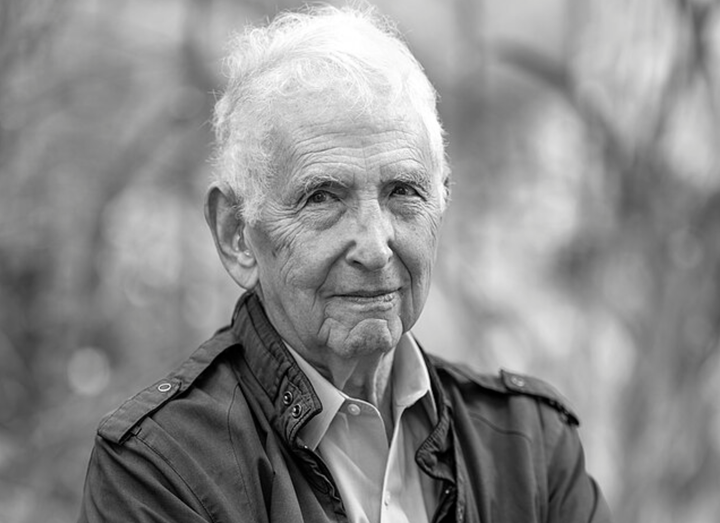
Gibbons worked on the Daniel Ellsberg Press Freedom and Whistleblower Protection Act, which was introduced by Representative Rashida Tlaib in March and would curb the abuse of the Espionage Act against whistleblowers, journalists, and citizens. He urged Congress to pass the legislation immediately to prevent future retaliatory cases, like the one pursued against Williams.
Comments ()