
Court Rejects Perdue's Effort To Dismantle Whistleblower Review
A United States court rejected an effort by poultry manufacturer Perdue Farms to eliminate the Labor Department’s process for reviewing whistleblower claims

A United States court rejected an effort by poultry manufacturer Perdue Farms to eliminate the Labor Department’s process for reviewing whistleblower claims.
Whistleblowers Rudy Howell and Craig Watts, who had contracts with Perdue, alleged that the corporation retaliated against them when they raised concerns about animal welfare and other health and safety hazards.
On June 27, 2024, the U.S. Supreme Court issued a 6-3 decision against the U.S. Securities and Exchange Commission (SEC) and its regulatory authority to penalize securities fraud. The court held that the SEC’s in-house tribunal violated the Seventh Amendment “right to a trial by jury.”
Perdue saw the Jarkesy decision as an opportunity to protect itself from present and future whistleblower claims that might be pursued against the corporation. It argued that the claims had to be adjudicated by a U.S. court because judicial powers are supposed to be vested “exclusively in the judicial branch.”
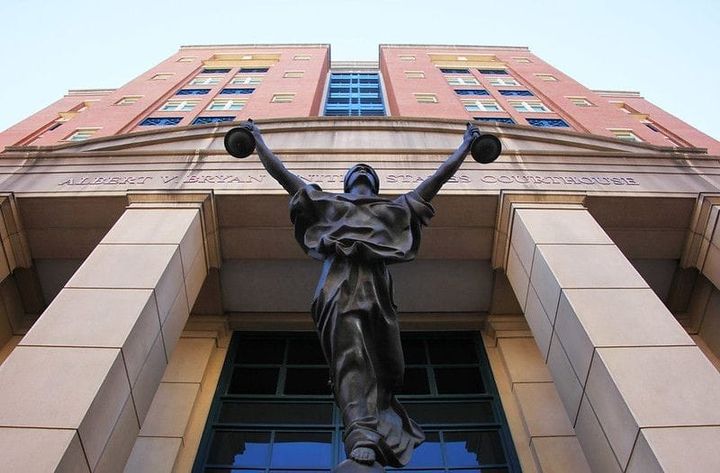
But Judge Louise Flanagan in the U.S. District Court for the Eastern District of North Carolina dismissed Perdue’s argument.
“Watts and Howell’s claims are essentially for front and back pay, money they would have earned if not wrongfully withheld from them for alleged retaliation for whistleblowing. These remedies are, thus, equitable,” Flanagan declared [PDF]. “All their remedies are for sums they would have received, or for compensation for injuries they would not have incurred, without plaintiff’s allegedly wrongful conduct. These are remedies aimed at ‘restor[ing] the status quo.’"
Both whistleblowers alleged that Perdue had violated employee provisions of the Food Safety Modernization Act (FSMA), which bears similarity to the Sarbanes-Oxley Act that was passed in 2002 after major corporate criminal scandals involving Enron and WorldCom.
As Flanagan emphasized, the Jarkesy decision was dependent on the notion that the SEC engaged in an “overwhelmingly punitive” process that tied the “availability of civil sanctions to the need to punish the wrongdoer, not the need to restore the victim.” But this is not how the FSMA functions.
“[T]he FSMA lacks any of these features, or indeed any link to retribution, deterrence, or recidivism at all. As noted, the available remedies are all restorative, and the penalty is limited to the aggregate amount incurred by the complainant, thus tying relief to the restoration of the complainant, not punishment of the wrongdoer,” according to Flanagan.
Thus, the Labor Department’s process for reviewing whistleblower claims does not “implicate” the Seventh Amendment right to a jury trial.
Perdue asserted that Labor Department administrative law judges, who review whistleblower retaliation claims, are “unconstitutionally appointed.” However, the corporation never claimed or argued that there was any “defect” in the Labor Department’s “appointment procedures.”
Stephani Ayers, who is the acting director of litigation at the Government Accountability Project (GAP) and lead counsel for Watts and Howell, called the decision a “major victory” for “every worker who risks their livelihoods to expose practices that endanger the public.”
“Perdue Farms attempted to dismantle the very system Congress put in place to protect whistleblowers. The court's ruling preserves a critical avenue of justice and ensures that retaliation against whistleblowers will not be shielded behind constitutional smokescreens,” Ayers added.
The two whistleblowers represented by GAP filed their complaints with the Occupational Safety and Health Administration (OSHA) in the Labor Department in February 2015—more than a decade ago.
Administrative proceedings in Watts’ case had been scheduled for April 14, 2025, which Perdue prevented from taking place by filing their anti-whistleblower lawsuit.
Watts, according to GAP, was concerned [PDF] that Perdue was growing chickens in “poor conditions” that increased the “chickens’ risk of contamination or infection with salmonella, e-coli, and other bacteria, thereby rendering them a threat to consumers who purchase and eat them.” He allegedly that the corporation had failed to stop the “spread of diseases among the flocks placed on his farm.”
In 2019, Howell similarly observed that he had to slaughter an “uncharacteristically high numbers of sickly birds." He "culled" 148 birds in one farm house on June 27, 2019. Other growers were having the same problem. Plus, he complained about unsanitary conditions in transport cages and threats to animal welfare.
When Perdue took no action, Howell invited advocates for animal welfare, including Kelly Guerin of We Animals Media, to record footage of his birds. That was when Perdue allegedly moved to terminate his contract.
Comments ()