
University of Alabama Shuts Down Two Student Magazines
University administrators claim a July memo from Attorney General Pam Bondi requires them to suspend the publications.
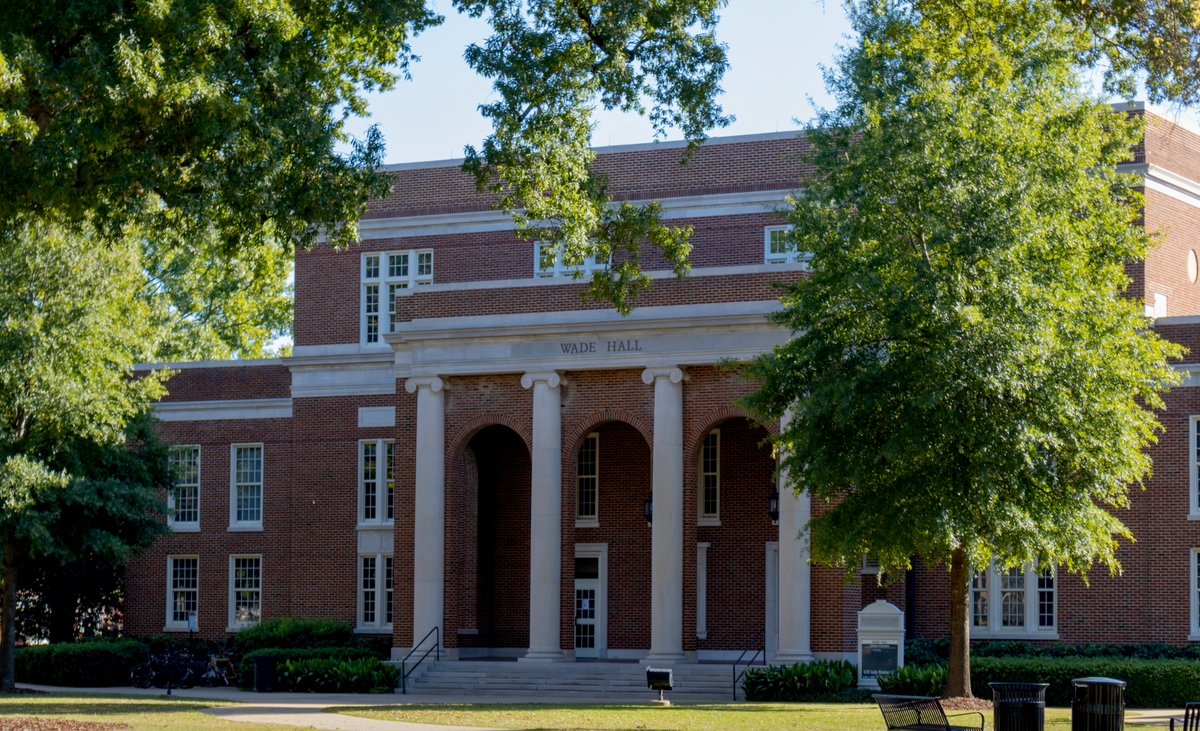

Administrators at the University of Alabama shut down two student-led publications and claimed that a memo from Attorney General Pam Bondi required them to censor journalism.
On July 29, Bondi issued “non-binding suggestions” for “federal funding recipients to comply with antidiscrimination law.” The intent was to discourage diversity, equity, and inclusion (DEI) policies, and Bondi specifically stated that “unlawful proxies” could jeopardize funding.
Bondi also insisted that universities may not direct funds and other resources to organizations “primarily because of their racial or ethnic composition rather than other legitimate factors.”
The magazines, Alice Magazine and Nineteen Fifty-Six, were suspended on December 1. Alice Magazine is a fashion and wellness magazine that primarily focuses on women. Nineteen Fifty-Six is a magazine largely focused on “Black culture, Black excellence and Black student experiences at the University of Alabama.”
As the university’s student newspaper The Crimson White reported, “Steven Hood, vice president of student life, told the staff of each magazine on Monday night that because the magazines target primarily specific groups, they are ‘unlawful proxies.’”
Alex House, a university spokesperson, claimed Bondi’s memo required the university to “ensure all members of our community feel welcome to participate in programs that receive University funding from the Office of Student Media.” (Both magazines received university funds.)
The same spokesperson maintained that the university “will never restrict [their] students’ freedom of expression,” and the they were simply responding to the “compliance landscape.” However, no one enrolled or working at the university complained about the magazines. No one sued the university to force “compliance.”
It is difficult to understand why the university took action against students several months after the memo was issued by Bondi.
Mike Hiestand, senior legal counsel for the Student Press Law Center, stated, “The Supreme Court has made clear that viewpoint discrimination is off-limits, and it’s difficult to imagine a more straightforward example than a university openly acknowledging it. By shutting down only the magazines that primarily serve women and Black students — while leaving other publications alone—it looks a lot like they are targeting a particular point of view.”
The center urged the university to immediately “restore” the magazines.
Similarly, the Foundation for Individual Rights and Expression (FIRE) sent a letter to university administrators. “No federal antidiscrimination law requires the university to silence these publications, and its choice to do so is a violation of their clearly established First Amendment rights.”
“The decisions about what to publish belong to the student editors of Alice Magazine and Nineteen Fifty-Six, and there can be no doubt that administrative action against student media in response to what they publish betrays UA’s obligation to protect free expression.”
Gabrielle Gunter, the editor-in-chief of Alice Magazine, told The Crimson White, "It is so disheartening to know that so many of us have put so much hard work into these magazines that are now being censored."
"Alice is what got me into journalism, and it breaks my heart that there will no longer be spaces like Alice and Nineteen Fifty-Six where students can learn to create beautiful, diverse magazines that honor all types of identities."
Kendal Wright, editor-in-chief of Nineteen Fifty-Six, expressed her sadness. "This publication has cultivated incredibly talented and budding Black student journalists and brought our community on campus together in such a beautiful way."
The letter from FIRE clearly outlines the unlawful nature of the University of Alabama’s viewpoint-based discrimination:
UA explicitly justified its punitive actions by pointing to the viewpoints expressed by the magazines, which the Supreme Court has called “an egregious form of content discrimination.” By suspending these magazines based on their target audiences—in other words, the magazines’ viewpoints—UA is “cast[ing] disapproval on particular viewpoints of its students[.] And, in doing so, UA “risks the suppression of free speech and creative inquiry in one of the vital centers for the Nation’s intellectual life, its college and university campuses.” Further, by leaving other student media untouched, UA has concretely demonstrated that it favors those viewpoints over those communicated by Alice Magazine and Nineteen Fifty-Six.
FIRE demanded that the university respond to their letter by December 10 and reverse this “brazen attack on the student press” by ending the suspensions against the two publications.
“It has been an exceptionally tough year for universities and for student media—at Indiana University, Central Oklahoma University and so many others—and moments like this are precisely when educational institutions should be standing up for free speech and a free press,” Hiestand further emphasized.
Back in October, The Dissenter covered the brazen censorship at Indiana University, where administrators shut down printing of the school’s student newspaper The Indiana Daily Student. (Three weeks later, administrators responded to alumni pulling funding and reinstated the print edition.)
The same month the University of Central Oklahoma also halted printing of the school’s newspaper The Vista. It had been published for 122 years, yet the university interfered with the editorial independence of the newspaper and retaliated against students’ coverage of news on campus. Ultimately, students launched a new publication The Independent View.
Columbia University student journalists were threatened with disciplinary action, including suspension, for reporting on student demonstrations in support of Palestinians and against Israel’s genocidal campaign against Gaza.
Plus, Secretary of State Marco Rubio and Homeland Security Secretary Kristi Noem have targeted noncitizen student journalists for deportation.
The student newspaper at Stanford University said this has resulted in a “dramatic decrease in the number of international students willing to speak” to reporters and a loss of international staff, who no longer wished to write articles about protests or political events on campus. (The Stanford Daily sued Rubio and Noem.)
The right of students to report is under assault, and yet as Hiestand said, “[T]oo many administrators are using the moment to silence student speech they don’t like.”
Comments ()