
Trump’s War On Journalism: Officials Proudly Defend Raiding A Journalist’s Home
President Donald Trump’s administration proudly defended the FBI raid of Washington Post reporter Hannah Natanson’s home. Officials insisted that Natanson should have “returned” classified information that she allegedly received while invoking President Barack Obama’s attacks on freedom of the press to excuse their intensified assaults on the rights of journalists.
The firm support from Attorney General Pam Bondi, FBI Director Kash Patel, and the Trump White House was emblematic of an administration that has repeatedly singled out reporters as enemies of the United States. In fact, the administration has long wanted to abuse “law enforcement” to force newspapers and media outlets to reveal their sources.
Bondi adopted new guidelines in April that encouraged the use of subpoenas and other investigative tools against journalists to stop leaks. She condemned her predecessor, Attorney General Merrick Garland, for favoring “overly broad procedural protections” for his “media allies.”
On January 14, Bondi, Patel, and Pentagon Secretary Pete Hegseth took aim at a reporter who had spent the past year contributing to the Post’s “most high-profile and sensitive coverage” of the federal workforce.
Natanson had “posted her secure phone number to an online forum for government workers and amassed more than 1,000 sources, with federal workers frequently reaching out to her to share frustrations and accounts from their offices,” something that undoubtedly must have enraged Trump officials.
FBI agents, according to the Post, “searched her home and her devices, seizing her phone, two laptops and a Garmin watch. One of the laptops was her personal computer, the other a Washington Post-issued laptop.”
The search warrant that authorized the FBI raid—and remains sealed—was part of an investigation into a system administrator named Aurelio Perez-Lugones, who had a top secret clearance and worked for a Pentagon contractor. He was accused of violating the Espionage Act on January 9.
Shortly after Natanson’s home was raided, the Post disclosed that it had received a subpoena demanding the media organization “hand over any communications between the contractor and other employees.”
But an FBI special agent’s affidavit [PDF] in support of a criminal complaint contains no allegations against Perez-Lugones that involve unauthorized disclosures to a reporter. He is only charged with “unlawful retention of national defense information.”
A Justice Department official reportedly told various news media that at the time of his Perez-Lugones’ arrest he was “communicating with the Washington Post reporter on his mobile device and in the chat there was classified information.”
Again, Perez-Lugones was arrested before the raid. On January 12, the U.S. District Court for the District of Maryland held a detention hearing. No additional charges were filed.
The FBI affidavit claims that Perez-Lugones printed screen shots from a classified intelligence report related to a “foreign country” and took it home with him. Trump later referred to this case, saying the “leaker on Venezuela” was in jail.
Natanson’s name appeared on an exclusive report on events that led up to the U.S. military operation that kidnapped Venezuela President Nicolas Maduro. That report was published on January 9—the same day that Perez-Lugones was taken into custody. She also contributed to an article published on November 11: “If Trump attacked Venezuela, these sites could become targets.”
Bondi Says Reporters Should Face Legal Action For Soliciting Information
As of January 16, nothing in public court records definitively tied Perez-Lugones to Natanson.
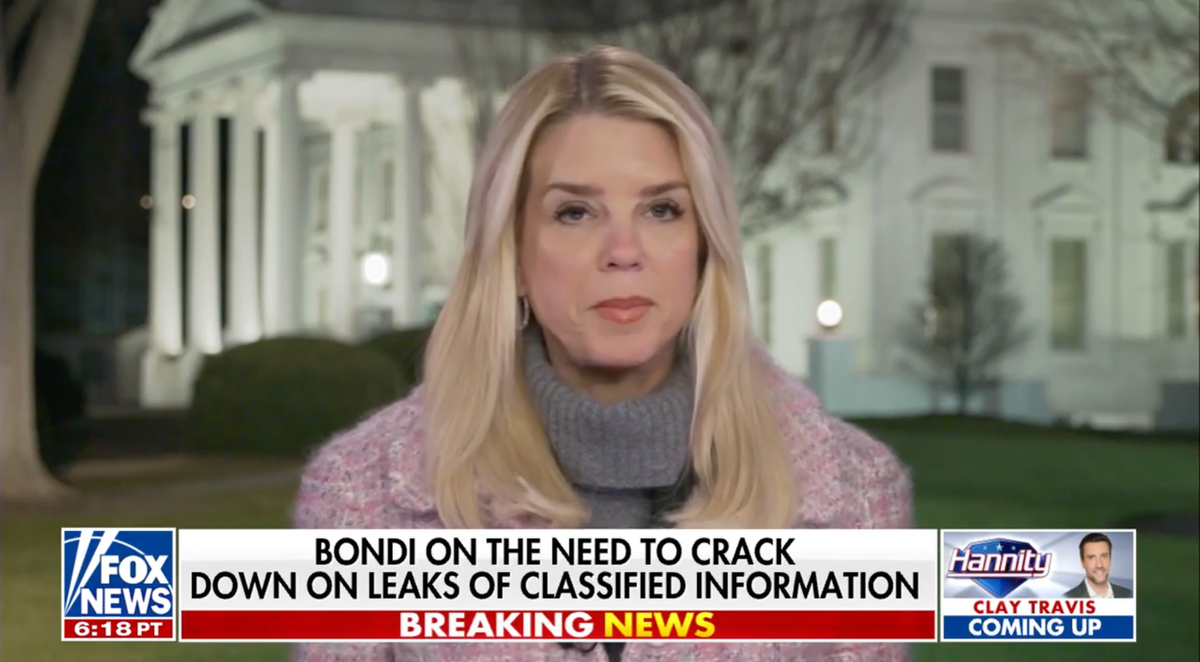
Nevertheless, Bondi appeared on “Hannity” on Fox News and boasted about her decision to rescind “Garland’s memo that reporters will not be subpoenaed. We will not look at reporters’ phones.” She said “this IT guy” is “charged with leaking classified information involving a foreign adversary,” which was false.
Hannity tried to help Bondi make the case for FBI raids of reporters’ homes, saying he could understand the need for for this “if the press was soliciting classified materials.” Bondi said “yes.” This anti-press attitude is in line with the case the Justice Department initiated against WikiLeaks founder Julian Assange during Trump’s first term.
Yet as journalism professor and historian Mark Feldstein, the author of “Poisoning the Press: Richard Nixon, Jack Anderson, and the Rise of Washington’s Scandal Culture,” has stated:
Good reporters don’t sit around waiting for someone to leak information. They actively solicit it; they push, prod, cajole, counsel, entice, induce, inveigle, wheedle, sweet-talk, badger, and nag sources for information—the more secret, significant, and sensitive, the better.
Anderson made this argument in a witness statement that he submitted to help Assange fight extradition to the United States.
Hannity suggested Natanson may not have known that the material she received was classified. “If the reporter had no idea it was classified, we have the right to have that returned,” Bondi replied. It should be returned to the “Department of War,” which is “where it belongs.”
There is no law that requires journalists or the news media to “return” information. News organizations decide whether to publish information, not the government. Assistant general counsel for the New York Times once said, as long as the information is “truthful, newsworthy, and you didn’t illegally obtain it” then any statute against publication is probably unconstitutional.
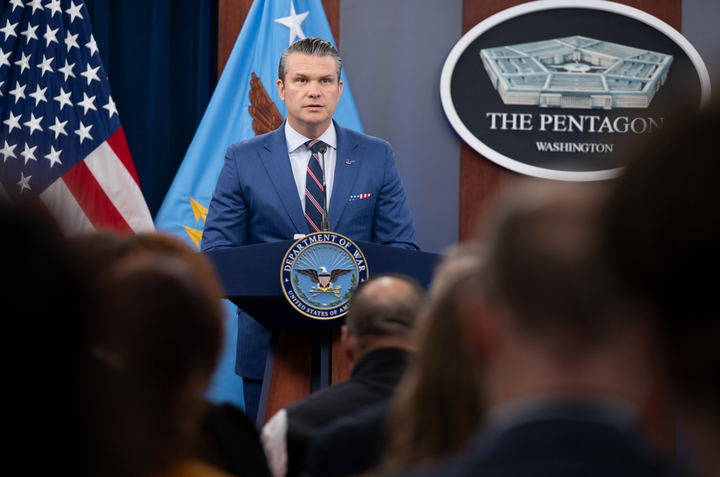
But the Trump administration has long treated reporters who solicit information like they are criminals. The Pentagon's media policy, which was developed at the direction of Hegseth, initially stated, "Any solicitation of [military] personnel to commit criminal acts would not be considered protected activity under the 1st Amendment."
'A Basic Tenet Of Journalistic Integrity Not To Publish'
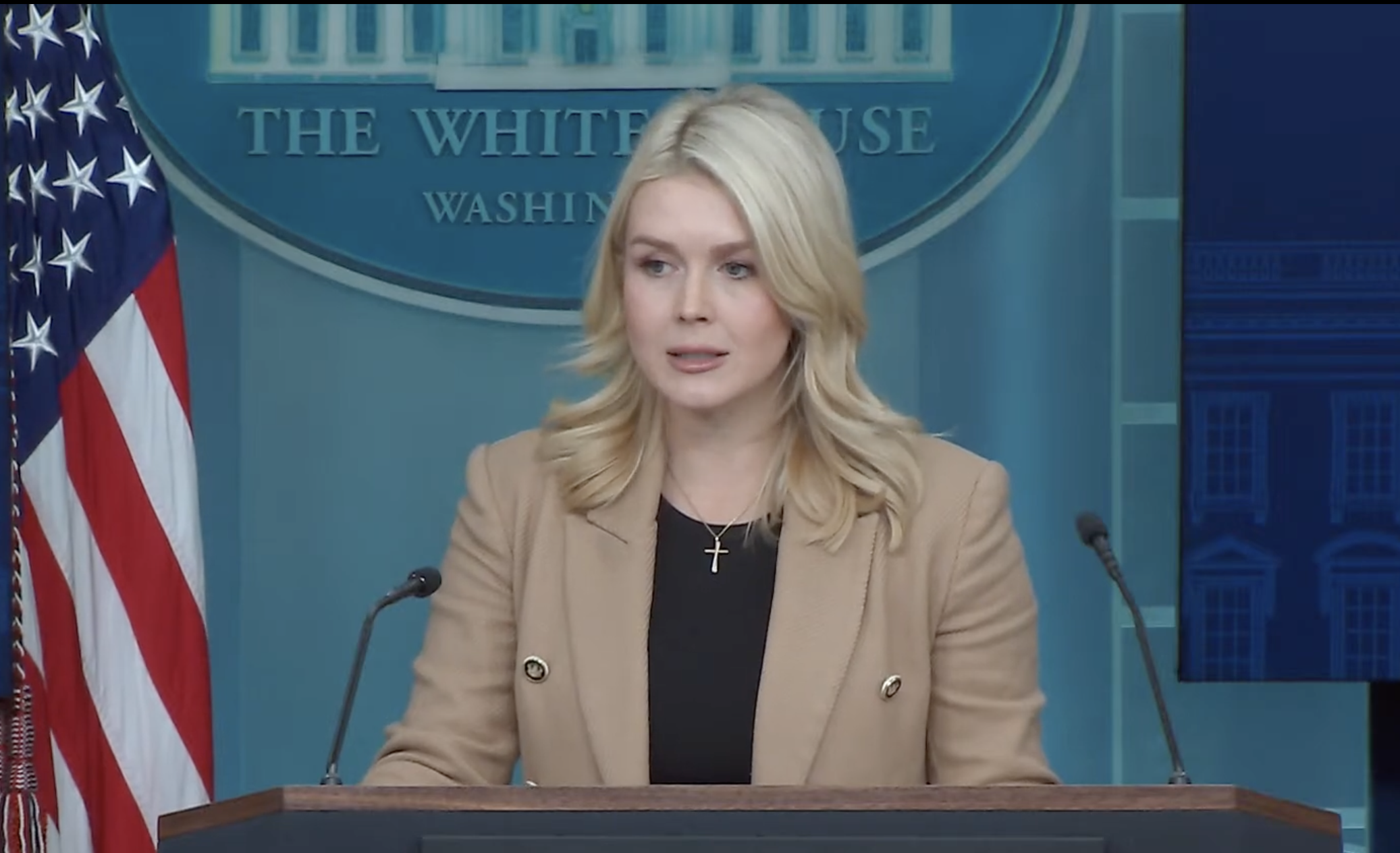
Back in June, when Trump was angry that the news media was publishing information about U.S. military strikes on Iran, White House Press Secretary Karoline Leavitt accused reporters of “helping people commit felonies by publishing out-of-context leaks.”
The day after the FBI raid Leavitt said “a contractor at the Pentagon” had chosen to “unlawfully leak classified and very serious information to this Washington Post reporter. Hence why the reporter’s home was looked into by the FBI, rightfully so.” (Note: The FBI affidavit had not named the government agency that Perez-Lugones worked for as a contractor.)
“[L]egal action will be taken against anyone, whether it’s a member of the press or whether it’s an employee for a federal agency who breaks the law. If you break the law, and if you endanger our men and women in uniform, you are going to be held accountable full stop,” Leavitt declared.
When reminded of the precedent set by the Pentagon Papers and asked if journalists have the right to publish classified information, Leavitt answered, “I think it’s a basic tenet of journalistic integrity not to publish information that could directly endanger the operational security or the brave men and women who are serving this country in uniform and putting themselves in harm’s way to protect not just the people of this administration, but all of you in the press and all of their fellow Americans as well.”
Except if it’s true that Natanson received information from Perez-Lugones related to U.S. military action against Venezuela, that was not undertaken because there was an imminent threat to the safety and security of Americans. It was pursued to help U.S. oil companies steal fossil fuel reserves from Venezuela and overthrow a regime long opposed by elites in Washington.
Patel: I Don't Want To Hear From The 'Hypocrites'
As the Trump administration kept the FBI raid shrouded in secrecy, FBI Director Kash Patel went on John Solomon’s show on the right-wing online news network Real America’s Voice. He asserted there wasn’t anything extraordinary about what the FBI did to Natanson.
“The Obama administration prosecuted more people for the disclosure of classified information made by public and media outlets to the tune of—wait for it—more than every other presidency combined,” Patel said. “They also went after the [Associated Press] and seized 20 devices and phones without a search warrant. And then there’s what they did James Rosen. So look I don’t want to hear about, from the hypocrites that are saying we’re doing this first off, ever, kind.”
The AP never had any devices seized by the FBI. What the FBI did was obtain phone call detail records for 21 phone lines that belonged to the AP. While Patel is correct that a Democratic president wielded the Espionage Act in an unprecedented manner and undermined freedom of the press too, it is not fair to say that the same journalists, news outlets, media associations, and press freedom groups were not outraged.
Patel said the contractor had leaked “classified information that jeopardized our warfighters,” which once again is not yet an allegation in the Espionage Act case against Perez-Lugones. He emphasized that a federal district court judge had signed off on the search warrant, meaning there was “legal probable cause” for raiding Natanson’s home and seizing her devices.
Yet U.S. courts often believe that they must be extremely deferential to the FBI if they invoke “national security.” Trump alluded to this when he was angry about leaks on Iran. “If [the Justice Department] wanted, they could find out easily. You know, you go up and tell the reporter, ‘National security: Who gave it?’ You have to do that. And I suspect we’ll be doing things like that.”
The basis for the search warrant is sealed, which means at this point there is no way for the press or public to know whether the federal judge reviewed the search warrant application appropriately. It’s possible the Trump administration provided information to support a search warrant that was not based in provable facts.
Most likely, the FBI raid was part of a fishing expedition. It doesn’t matter whether the Trump administration is able to access Natanson’s devices and access chats with her sources. Officials know that there are 1,000 sources or more, who will clam up, watch their backs, and probably stop talking to the news media.
The Trump administration may eventually identify several of the alleged sources and bring cases against them. Or the administration may retaliate against the alleged sources by firing them or revoking security clearances.
Regardless, journalists see the FBI raid as “a jarring new step aimed at limiting news organizations’ ability to gather information that the government does not want to be made public.”
That’s the goal of the Trump administration—to spread fear and stop journalists and their sources from informing citizens. And it can be traced back to not just Obama but also President Richard Nixon's administration.
Like Seth Stern, advocacy director for the Freedom of the Press Foundation, and Chip Gibbons, policy director for Defending Rights and Dissent, concluded, "The normalization of invading newsrooms, in violation of federal law and based on the flimsiest of pretexts, has now spread to the highest levels of the federal government (assuming prosecutors followed their own guidelines, the Natanson raid should have been approved by Pam Bondi, the attorney general, herself)."
"Combined with the decades-long attack on whistleblowers and national security journalists under a law that treats them no different from enemy spies, it’s a deadly weapon to be wielded against the free press, especially by a president who muses about journalists being beaten, jailed, and even raped in prison."
Comments ()