
Reporter Raided By FBI Lost Contact With Over 1,000 Sources
Washington Post reporter Hannah Natanson says the FBI’s seizure of all of her devices has eliminated her “ability to collect information and publish news stories.”
“I no longer have access to my more than 1,200 Signal contacts or communications with any of my sources. I literally cannot contact them without access to my devices. Nor can I review my past messages with them on Signal,” according to Natanson.
Natanson also shares that the FBI essentially obtained “access to the Post newsroom” because she used Ellipsis on her computer. Ellipsis is a content management system that “provides an enormous window into The Post’s journalism, with all stories in progress.”
The FBI raided Natanson’s home in Virginia on January 14. Agents seized her work laptop, personal laptop, iPhone, a terabyte hard drive, and Garmin running watch. The search warrant that the government obtained indicated that the raid was connected to an Espionage Act prosecution against a Pentagon contractor named Aurelio Perez-Lugones. (Perez-Lugones was finally indicted [PDF] on January 22 for allegedly disclosing classified information to Natanson.)
A week after the raid, the Post urged the United States District Court for the Eastern District of Virginia to intervene and stop the FBI from analyzing her electronics. They argued [PDF] the “wholesale seizure of a reporter’s confidential newsgathering materials violates the Constitution’s protections for free speech and a free press and should not be allowed to stand.”
U.S. Magistrate Judge William B. Porter granted [PDF] the Post’s motion for a “standstill order” that day, but he did not order the return of property that the FBI seized.
Porter outlined a schedule for hearing argument over the Post and Natanson’s motion for the return of all “seized newsgathering materials.” The government was instructed to stop reviewing any of the materials that law enforcement seized until the court authorizes the government to resume its review.
Natanson wrote a declaration [PDF] in support of this request, and it is a stunning firsthand account of the impact that this repressive action has had on a journalist.
“I have stopped receiving tips through my Signal, which was a primary source for story ideas for myself and for the Post newsroom,” Natanson states.
Natanson estimates that on average she received “somewhere between dozens and over 100 tips” from her sources each day. Now, the number of tips that she receives per day is zero.
“At the time of the seizure,” Natanson was “working on three short-form stories which I expected to publish soon, along with four medium-term stories, four long-term, sensitive stories, one audio project, and two narrative/investigative story series intended to span 2026.” But she has “been unable to work on or publish any of those articles since the seizure.”
Natanson continues, “Without access to my devices, I cannot contact my sources. Even if I am ultimately able to reconnect with my sources, there is a substantial likelihood that they will be deterred by the government's seizure of my devices from communicating with me in the future.”
“The longer my devices remain in possession of the government and I am not able to contact my sources, the greater the likelihood that my sources will be reluctant to speak with me in the future. If my sources become aware that the government has access to, or is reviewing, my source information, the harm to my newsgathering efforts will be even greater,” Natanson reasonably contends.
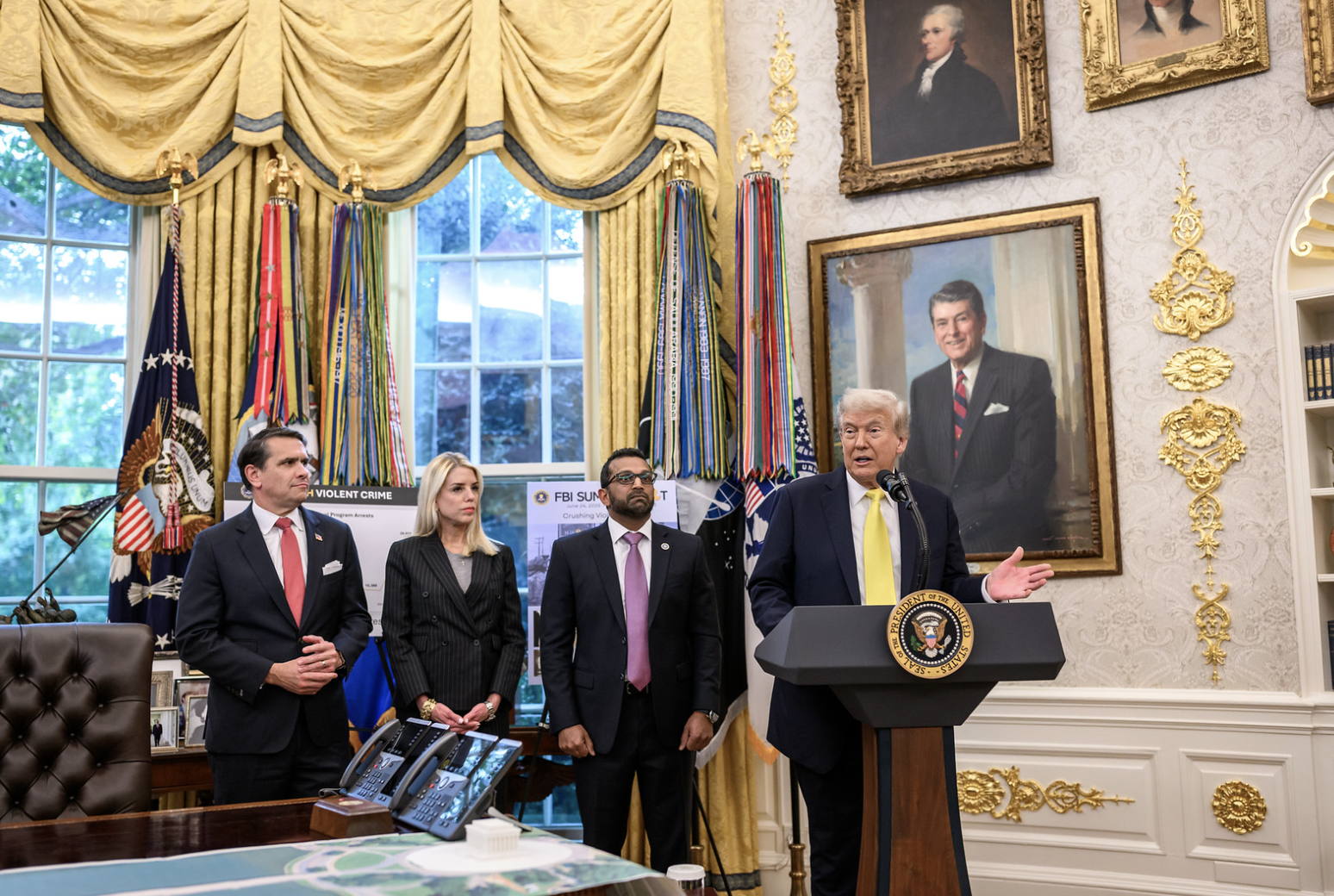
In 2025, Natanson distinguished herself as a contributor to the Post’s “most high-profile and sensitive coverage” of the federal workforce. She “posted her secure phone number to an online forum for government workers and amassed more than 1,000 sources, with federal workers frequently reaching out to her to share frustrations and accounts from their offices.”
That must have enraged the Trump administration, which has repeatedly treated journalists like Natanson as enemies of the United States.
Natanson informs the court in her declaration that she “never communicated” with Perez-Lugones “via any platform other than Signal or phone,” which confirms that he was a source. However, it doesn’t confirm whether Perez-Lugones provided her with any classified information.
Drawing attention to the extraordinary breadth of material that likely extends beyond the scope of the search warrant, she makes it clear that her email accounts and voice recorder contain no communications with Perez-Lugones.
“Given the huge volume of materials the government seized, any government review of the materials will necessarily expose information relating to confidential sources, unpublished newsgathering, and other journalistic work product that has nothing whatsoever to do with Perez-Lugones,” Natanson declares.
When the FBI seized Natanson’s electronics, they gained access to “more than 30,000 emails” from the past year that were stored locally on her Post computer. She believes that she was logged into her Proton and Google accounts. The agents likely obtained access to “confidential information derived from sources and notes on story concepts and ideas” that she had maintained.
On Slack, the FBI likely gained access to several channels with messages from Post staff. One of the channels had messages from “reporters sharing confidential information about sources and stories” and another had similar posts from editors on confidential sources.
Natanson’s phone contained text messages with confidential sources, and her voice recorder had recordings with confidential sources, too. The personal Gmail account that the FBI gained access to has “medical information” and “financial information” that could be of interest to a government that views the press as a threat to their administration.
Aside from Natanson’s own electronics, she also shares that she often communicated with reporters and editors about confidential sources and information, including sources that were not her own (i.e., my colleagues’ sources). Communications with Post lawyers about sourcing and stories were on her devices as well.
Overall, by targeting a journalist in this manner, the Trump administration obtained a roadmap to the Post’s reporting that would be invaluable to disrupting and deterring any impact that the stories may have had on the administration (notwithstanding support for Trump in the Post’s opinion pages and from the Post’s billionaire owner Jeff Bezos).
Bondi gleefully rolled back media guidelines in April that had discouraged the use of subpoenas and other investigative tools against journalists when conducting leak investigations. She saw this as necessary to the administration’s war against journalists, who would dare to investigate and question the actions of the administration.
The Post argued, "If the government remains free to rummage through the seized data, the government will effectively burn 1,100 of The Post’s sources and censor their untold stories. This is on top of the inevitable deterring effect that future sources may feel about communicating with Natanson or, potentially, other Washington Post reporters, if it appears to the public that the government can simply confiscate reporters’ devices at will."
Seth Stern, advocacy director for the Freedom of the Press Foundation, made it pretty clear. “[The raid] was a fishing expedition intended to intimidate and retaliate against a journalist who had managed to cultivate sources all over the government. The judge was right to block it until a full hearing, at which time he should block it permanently.”


.jpg)
Comments ()