
Report Calls Attention To Capitalism's Destruction Of The Press And Media System
The history and analysis laid out by the Roosevelt Institute is a worthwhile plea for a radical shift that enables “a truly democratic information ecosystem”
With Netflix’s bid for Warner Bros. Discovery, and Paramount’s hostile offer for Warner Bros., a report from the Roosevelt Institute calls urgent attention to the way in which media consolidation and deregulation has impacted freedom of the press.
The Roosevelt Institute, a progressive think tank, contends that the press clause in the First Amendment has all but disappeared. Instead, it is now widely accepted in government that the First Amendment defines the “freedom of private entities to operate without public accountability, rather than the right to know—citizens’ affirmative right to freely accessible, trustworthy, and democratically essential information.”
“The Political Economy of the US Media System” [PDF] was authored by Victor Pickard, a media professor at the University of Pennsylvania, and Bilal Baydoun and Shahrzad Shams of the Roosevelt Institute, whose work for the Roosevelt Institute focuses on defending democracy.
As the authors outline, “[T]he structure of our laissez-faire media system—touted as a bulwark against the tyranny of state-run media—has not protected against threats from the state. Both public and commercial media outlets today face serious threats from the Trump administration beyond regulatory action alone, as it has pursued lawsuits widely believed to be ideologically motivated against the BBC, CBS, the New York Times, and the Wall Street Journal and defunded the Corporation for Public Broadcasting.”
“The administration has launched what amounts to a systematic campaign against press freedom, combining legal harassment, access restrictions, funding cuts, and rhetorical attacks to undermine independent journalism. While Trump himself has long delegitimized the press as ‘fake news,’ the current assault, backed by the power of the federal government and all the resources at its disposal, is an escalation that threatens the institutional foundations of American journalism.”
The authors maintain that part of this escalation involves “rule by deal over rule of law,” where “commercial logics that animate our media system” subject media companies to “political jawboning, threats, and attacks.”
In 2004, media scholar and media reform advocate Robert McChesney declared, “Unique problems accompany constitutional protection of a free press.” He pointed out that these problems “tend to be shunted aside when the discussion is framed solely in terms of free speech.” That serves market capitalism, however, the report addresses how this is inconsistent with “both the intent of the framers and the history of the US press system.”
The authors focus their attention on the U.S. Supreme Court. Justices have time and time again nested press rights under the speech clause or failed to even grapple with the state of press freedom.
Under Chief Justice John Roberts, the court has “interpreted the Speech Clause not as a tool for empowering everyday people to speak their mind and enjoy access to a diversity of viewpoints, but as a vehicle for advancing deregulatory, corporate causes.”
A prime example is the lawsuit brought by the National Republican Senatorial Committee. Co-filed by then-Representative J.D Vance, according to the Lever News emphasizes, the U.S. Chamber of Commerce argues “party-coordinated contribution limits violate their free speech rights.”
“Precluding coordination by parties and their candidates undermines the availability and accuracy of electoral communication,” the U.S. Chamber of Commerce declared. “In this way, free association, free expression, and free enterprise are deeply intertwined.”
To the report’s authors, this represents a negative approach to the First Amendment that fails to fully protect press rights. This approach serves powerful corporate interests by declining to affirm any government obligation to enact policies that would “foster a speech environment or press system that supports a vibrant and inclusive democratic society.”
“In prioritizing the expressive rights of corporations over the informational rights of citizens, viewing the press as functionally the same as an individual speaker, the court has entrenched a deregulatory logic that structurally favors concentrated media power and commercial gatekeeping,” the report additionally states.
This dynamic fuels pressure on media organizations and makes companies vulnerable to threats from FCC Chair Brendan Carr, who has weaponized regulatory action to suppress journalism and silence those who speak out against the Trump administration.
It was the “neoliberal revolution” that by the 1980s led the FCC to allow “market forces” to effectively determine what was in the public interest. FCC Chair Mark Fowler referred to a television as nothing more than a “toaster with pictures” and “recast the media audience from citizens fulfilling the role of self-government to consumers of a good like any other.” All of which was backed by the U.S. Supreme Court.
The Telecommunications Act of 1996 brought about one of the most intense periods of media consolidation in the history of the telecommunications industry. That set the stage for the corporate libertarian policies promoted by Trump's FCC.
But in the era of President Franklin D. Roosevelt, the FCC actually had the “Mayflower rule” that “prohibited broadcasters from engaging in political or partisan editorializing.” There were “structural limits on ownership and contracts” that were aimed at ensuring the media played a constructive role in democracy. Media ownership rules weren't a tool for extracting political favors, and the Supreme Court even upheld such public interest regulation in NBC v. United States in 1943.
Anti-communism hysteria combined with corporate libertarianism, as Congress and the FBI scrutinized members of the FCC. “The leading progressive at the FCC, Clifford Durr, effectively resigned from the agency in 1948 in protest over President Harry S. Truman’s loyalty oath order.”
The Mayflower rule was replaced in 1949 after political attacks. The new rule was known as the “Fairness Doctrine.” It was imperfect, yet much like public broadcasting in the United States it was relentlessly opposed by a right-wing conservative faction until Reagan eliminated it entirely.
Trump proudly defunded public media, particularly the Public Broadcasting Service (PBS) and National Public Radio (NPR). It’s a predictable outcome, given how Republicans waged a decades-long culture war to discredit and curtail public service broadcasting.
As McChesney outlined in 1997, “[T]he attack on public service broadcasting is part and parcel of the current attack on all non-commercial, public service institutions and values.”
“Neoliberalism is not merely a set of economic principles; rather, it is implicitly a theory of democracy. And the democratic system that works best with a market-driven economy is one where there exists widespread public cynicism and depoliticization, and where the mainstream political parties barely debate the fundamental issues."
“Or, as the Financial Times has put it, the best political system is one in which the capitalist control of society is ‘depoliticised,’” McChesney further asserted.
Media oligarchs have wildly succeeded in expanding their dominance and power in a manner that threatens the stability of the press and media system. Just look at what private equity has done to destroy local journalism in communities throughout the country.
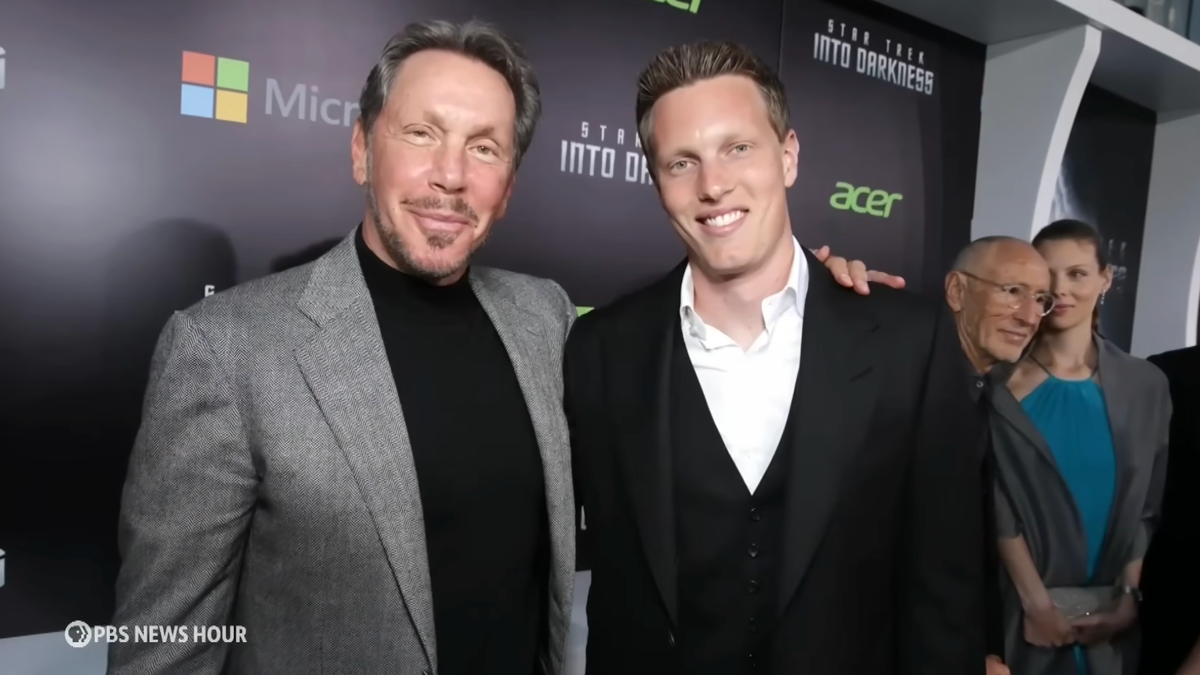
Already in 2025, media oligarchs Larry Ellison and David Ellison took control of Paramount Global when their company Skydance merged with Paramount. There should be some call from within the FCC against the Ellison family's attempt to own even more of the media system, but the opposite is happening. (The Associated Press reported that "an investment firm run by Trump’s son-in-law Jared Kushner" is pushing for the deal.)
The history and analysis laid out by the Roosevelt Institute is a worthwhile plea for a radical shift that enables “a truly democratic information ecosystem”—one where corporate capture of media is as alarming as the potential for state control to erode liberties.

Comments ()