
No 'National Security' Defense For Trump Banning Press, Judge Rules
Judge brushed aside any notion that the "free press" had to be banned to protect "national security"
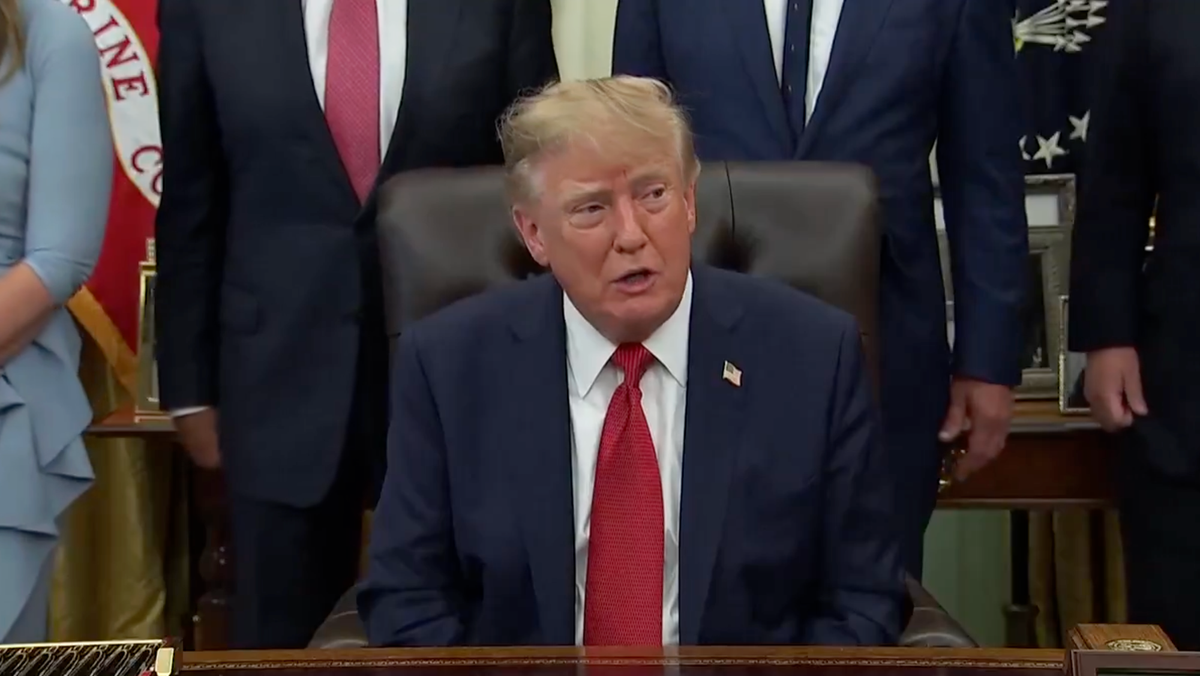
Judge Timothy Kelly ordered President Donald Trump’s administration to “return, reinstate, and restore the White House ‘hard pass’ press credentials held by employees of CNN, MS NOW, and POLITICO.” The order will remain in effect for 14 days and while Kelly reviews the case.
Hours after the decision, journalists from each of the outlets attempted to access the White House and were "turned away." A request for an emergency hearing [PDF] additionally indicated that "Secret Service agents confiscated the [hard passes] of journalists whose hard passes had not previously been confiscated."
“The administration was rightly given the back of the hand by Judge Kelly for claiming routine reports harm ‘national security,’ but court orders are just paper unless they’re enforced," stated Freedom of the Press Foundation advocacy director Seth Stern. "Enough is enough. Government officials who continue to deny journalists’ access to the White House in defiance of Kelly’s order should be held in contempt."
“And it’s long past time for judges to start aggressively sanctioning DOJ lawyers when they make frivolous national security arguments to turn Trump’s petty grievances against the press into government policy. That way, we won’t get to the point where Secret Service agents are defying court orders to carry out the president’s authoritarian whims," Stern added.
Trump announced on September 18 that he had banned the news media outlets. Their correspondents were subsequently denied access to the White House, and the outlets sued Trump and several White House officials.
The day that the ban was announced Trump said, “Very simple ban. I don’t want them in my office. I don’t want them here. I would say the ban will go as far as you can.” (He also joked about “having more bans going than any human being.”)
Kelly brushed aside any notion that the “ban on the free press” (as Trump actually referred to it) had anything to do with “national security.”
“For one thing, nothing in the record that predates this suit suggests that the revocation of Plaintiffs’ hard passes was motivated by national security concerns,” Kelly declared in his decision [PDF]. “Certainly, that is not what President Trump said when he announced that he was ‘banning” Plaintiffs from the White House—instead, he focused on the alleged lack of truthfulness and negativity of Plaintiffs’ reporting.”
Kelly continued, “And even the justifications provided to Plaintiffs after this case was filed are ambiguous about the true purpose of the revocations: while Defendants’ letters to Plaintiffs mention national security concerns, they purport to identify reporting that ‘threatened national security and/or spread falsehoods,’ leaving open the possibility that all the stories fall into the later bucket, rather than the former.”
The Trump White House desperately tried to concoct some kind of national security justification for blatantly violating the First Amendment rights of journalists. Officials submitted a filing [PDF] that claimed they had followed a process and issued "letters" that provided proper "notice” to the outlets.
According to the “letters,” “CNN disclosed ‘top-secret’ construction details related to the East Wing bunker.” “MSNOW reported on an alleged leak investigation,” which, “if it existed, would be nonpublic sensitive law enforcement information.” “Politico published a document detailing funding for the White House ballroom containing intricate descriptions of how the Secret Service would invest in security improvements.”
The “letters” allegedly emphasized that publishing “sensitive security information, and misinformation about national security information, diverts White House resources and those of the national security team in particular, which must evaluate whether the leaked information is classified, the source of any leak, and the security implications of any such disclosure.”
But Kelly pointed out that the Trump White House offered “no declarations or other support—classified or unclassified—explaining how any of the reporting in their letters to Plaintiffs damaged the national security.”
Remarkably, according to Kelly, declarations were submitted but they merely provided “general background about classified information.” They were from “senior officials in the Department of Defense who have no direct knowledge of how reporters operate in the White House, or about any of the facts at issue here.” In fact, the reporters identified in the letters, in most cases, “did not even hold hard passes.” [Emphasis added by Kelly.]
As far as due process, the White House provided no “fair notice” of the conduct that would lead to a loss of access privileges prior to revoking the hard passes.
Officials even renewed CNN correspondent Betsy Klein’s hard pass “several months” after the outlet published the reporting, which allegedly risked “national security.” No “formally articulated standards” were followed when revoking the passes.
Throughout the past decades, from the case against Pentagon Papers whistleblower Daniel Ellsberg to the unprecedented prosecution against WikiLeaks founder Julian Assange, the government has frequently relied on flimsy national security claims to retaliate against media sources and stifle investigative journalism.
While the Trump administration is apparently defying the order, the hasty effort to invoke national security flopped because the administration is so brazenly hostile to the press and has a flippant attitude toward First Amendment protections, due process, and the rule of law.
Comments ()