
Most Press Arrests In 2025 Resulted In Zero Criminal Charges
The vast majority of journalists or media professionals arrested in 2025 were released and never charged with any criminal offenses, according to an analysis from the US Press Freedom Tracker.
The vast majority of journalists or media professionals arrested in 2025 were released and never charged with any criminal offenses, according to a year-end report from the United States Press Freedom Tracker.
Thirty-two journalists were detained or arrested and primarily while covering protests. That number was down from 50 detentions or arrests in 2024.
Still, Stephanie Sugars, a senior reporter for the Tracker, emphasizes that each detention and arrest should be regarded as “a warning flare that something fundamental is shifting in how authorities police information and those who gather it.”
Seventeen reporters were arrested or detained without charge. It was the month with the highest number of “detentions in a single month since April 2021. Crucially, each affected journalist was deprived, at least temporarily, of their ability to observe, document and report,” according to Sugars.
In particular, the Tracker documented "at least 10 journalists," who “were detained” in Los Angeles on June 9. They were kettled “by police, encircled and led out of the protest area with their hands behind their backs.”
Arrests in both L.A. and Chicago largely stemmed from ICE or border patrol agents, and two U.S. courts responded by issuing injunctions against agents to curb attacks on journalists.
U.S. District Judge Hernán Vera found that agents in L.A. had “unleashed crowd control weapons indiscriminately and with surprising savagery.”
During a hearing in Chicago, where evidence of attacks against journalists was presented, U.S. District Judge Sara Ellis made it clear. The “lawlessness” was coming from ICE agents, not journalists or even demonstrators.
Independent journalist Crystal Heath was one of the journalists arrested while covering an ICE protest in June. As the Tracker reported, prosecutors declined to pursue criminal charges. But that could change next year before the “statute of limitations runs out, and she was advised to call each month to confirm whether her case had been reactivated.”
“It’s outrageous how the whole court system and apparatus has allowed these sort of charges to continue to hang over my head, allowing this sort of stifling of our First Amendment [rights] to continue,” Heath told the Tracker.
Another example that Sugars highlights is Dave Decker, a freelance photojournalist for “FRONTLINE” on PBS.
In October, Decker was assaulted in the Chicago suburb of Broadview, where an ICE detention center is located. Illinois State Police tackled him and tried to arrest him after he was hit with a baton multiple times.
Decker traveled to Miami in November to cover an protest at an ICE facility in Miami. He told the Tracker that he was arrested by sheriff’s deputies and held in tight flex cuffs for eight hours (three of those hours his hands were behind his back).
Unlike the Illinois State Police, when officers realized that he was press, that did not end the abuse. Sugars emphasizes that his status as a journalist made no difference to them.
Sugars further outlines the extent of the impact on Decker’s work as a freelance photojournalist:
For Decker, in his Miami arrest, first there was the potential damage to his equipment, including the two cameras and five lenses around his neck, worth around $16,000. Then there was the unexpected financial toll; the photojournalist had to pay a total $1,250 for bonds on the two charges and another $600 to retrieve his car from an impound lot.
Most frustrating by far, Decker told the Tracker, was his inability to get his photos and videos to the three outlets he had been on assignment for that day. “News is only news for a couple hours, when it’s breaking like that,” he said.
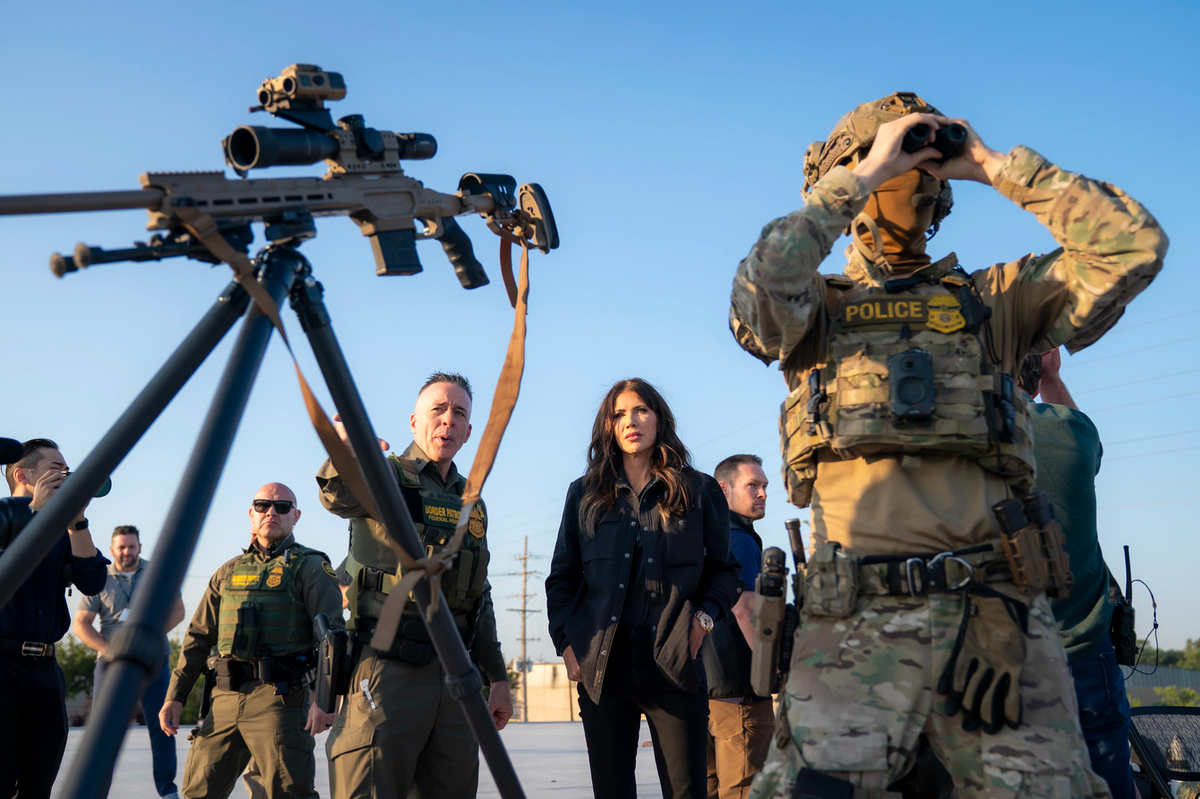
The systematic attacks on journalists covering protests were encouraged by President Donald Trump’s administration. Department of Homeland Security Secretary Kristi Noem insisted that documenting or videoing ICE agents could be considered “violence.”
ICE agents repeatedly treated the presence of reporters, as well as demonstrators, as a threat and claimed that merely being in the vicinity of them constituted “interference” with a law enforcement action. This is all in spite of the First Amendment right to record police.
Next year, we can expect routine incidents against standard newsgathering that occur under any presidential administration. Like the journalists at Redbankgreen in New Jersey, who were charged with crimes for refusing to unpublish details related to an expunged arrest. Or journalist David Flash in Fort Davis, Texas, who was handcuffed and removed from a county commissioners court meeting. Incidents like that will happen again.
But the most substantial threat to freedom of the press will still be ICE, the Border Patrol, and aligned local and state police forces, and that threat will extend beyond arrests and detentions to include efforts to deport noncitizen journalists, which chillingly happened in the case of Mario Guevara.
Comments ()