
Florida Senate Demanded Newspapers Destroy Report On Insurance Companies—Or Face Prosecution
Both the South Florida Sun Sentinel and Orlando Sentinel did exactly what media outlets should do when faced with such intimidation.
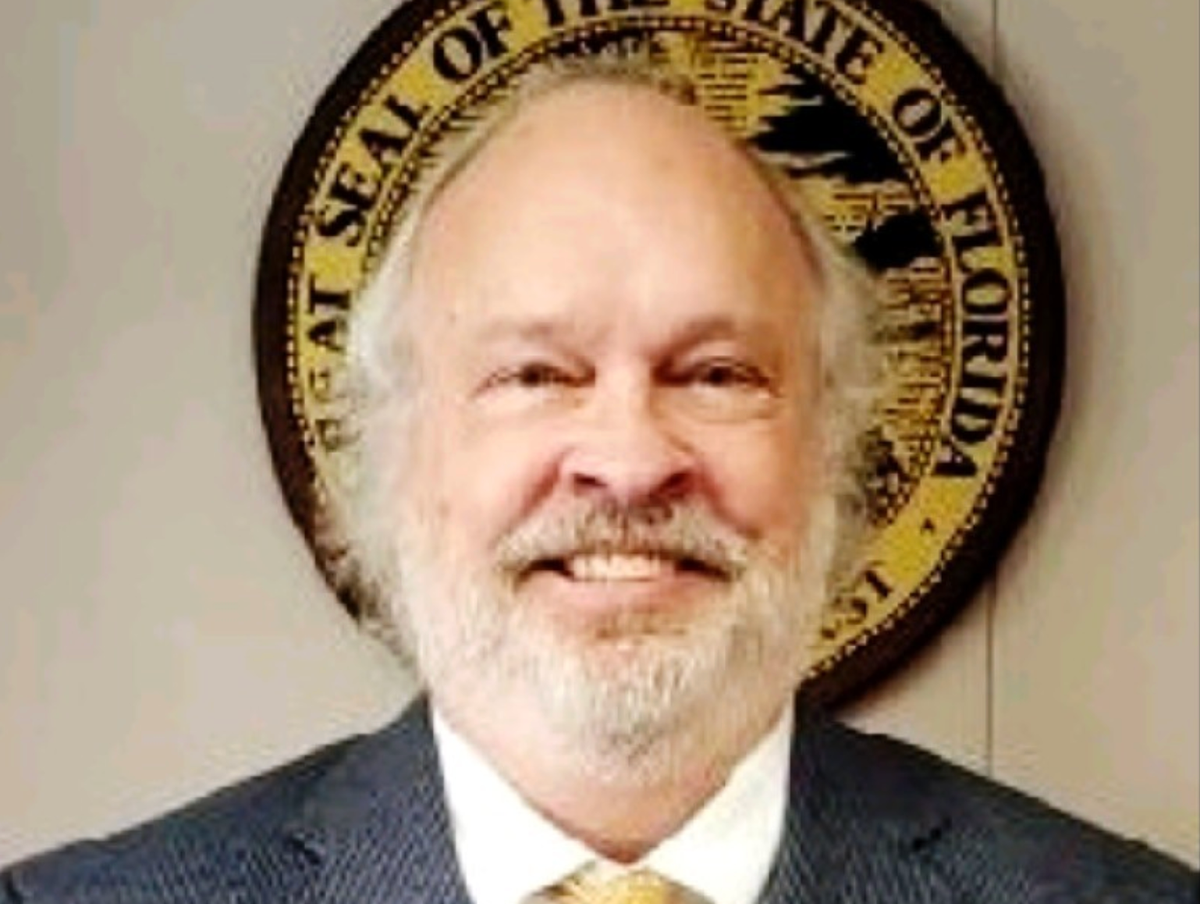
The legal counsel for the Florida senate threatened to prosecute the South Florida Sun Sentinel and Orlando Sentinel if the newspapers did not destroy a report on insurance company corruption. The report was obtained through a public records request.
Both newspapers did exactly what media outlets should do when faced with such intimidation. They invoked the Pentagon Papers case, published a copy of the report, and directly challenged the state’s trade secrets law.
According to the newspapers, the “long-hidden state report” details “property insurers' payments of millions to sibling companies whose profits remained secret.” The analysis from 2022 cost the state $150,000. It was compiled by Risk & Regulatory Consulting, LLC for the state’s Office of Insurance Regulation (OIR).
“The news organizations counted at least 17 companies in the analysis, individually or as part of an insurance group, which publicly reported operating losses while also paying their affiliated companies more than they claimed to have lost. Insurers regularly stamped that affiliate income as a ‘trade secret.’”
“In the study,” insurance companies “claimed $432 million in losses from 2017 to 2019, while paying fees to their affiliates that generated $1.3 billion in net income.”
Under Florida law, insurers’ payments to affiliates are supposed to be “fair and reasonable,” yet what that means is not clearly defined. However, the report shows “20 insurers were paying affiliates at a rate that was presumed to not be fair and reasonable.”
"This report was obtained legally through a public records request and has information that's important for everyone making homeowners insurance decisions," stated Roger Simmons, executive editor of the Orlando Sentinel, and Gretchen Day-Bryant, executive editor of the Sun Sentinel. "Instead of destroying it or hiding it, as the Florida Senate requested, we believe it's in the best interest of our readers—and Florida residents—that the report be made public so everyone can have access to its information.”
The OIR provided a “heavily redacted copy of the report” to the newspapers in response to a public records request and cited Florida’s trade secrets law to justify the censorship. “But an unredacted copy was attached to an email the Senate provided in response to a separate public records request,” according to the Sun Sentinel.
Senate counsel Tom Thomas claimed that the release of the document was an “inadvertent administrative oversight” and demanded the newspapers destroy the report or face "civil or criminal legal implications."
The Sun Sentinel editorial board responded, “It is a well-traveled road for U.S. journalists, seeking to pry secrets loose from the government. Most famously, the massive report known as the Pentagon Papers was kept secret, to conceal how Americans were misled by their own government in Vietnam.”
“Back then, the Supreme Court ruled for the public's right to know. The decision reiterated the court's long-standing principle that ‘any system of prior restraint of expression comes to this court bearing a heavy presumption against its constitutional validity.’"
“Two justices, Hugo Black and William O. Douglas, wrote that every moment's enforced delay in publication was a ‘flagrant, indefensible and continuing violation of the First Amendment,’” the editorial board added. “If state Senate lawyers have never read that decision, now would be a good time.”
Unfortunately, there are similar examples of officials violating freedom of the press after a so-called “inadvertent” disclosure of information.
In 2022, the 12th Judicial Circuit State Attorney’s Office in Florida obtained an emergency injunction to bar the Sarasota Herald-Tribune from publishing the names of two deputy officers who were involved in a fatal shooting. They killed a man “while carrying out a court-ordered eviction at the Palm Place Condominium in Sarasota.”
The names, according to the Herald-Tribune, were shared “by the State Attorney’s Office “in response to a routine public records request for a letter in which prosecutors had ruled the shooting was justified.”
After the newspaper “sought additional information regarding the case,” the state attorney’s office and sheriff’s office asked a judge to violate their First Amendment right to publish the names. (The court later dissolved the order to restrain publication.)
That same year, the city of Los Angeles sued journalist Ben Camacho and the Stop LAPD Spying Coalition after it tried to “claw back” headshots of LAPD officers that had been legally provided to Camacho.
The city eventually agreed to a settlement with Camacho and the Stop LAPD Spying Coalition for $300,000 in legal fees.
Camacho told the U.S. Press Freedom Tracker, “[The city] attempted to make an example out of me by going against bedrock press freedom rulings like the Pentagon Papers. It did not work this time, but it does not mean they won’t try again.”
Robert Lewis and Jason Paladino were with UC Berkeley’s investigative reporting program in 2019, when they legally obtained “a list of about 3,500 past and present law enforcement officers and thousands of police applicants in California” who had committed crimes. It was provided by the California Commission on Peace Officer Standards and Training (POST).
Attorney General Xavier Becerra (and potentially the next California governor) threatened to charge the two journalists with misdemeanors “unless they destroyed the records, insisting they [were] confidential under state law and were released inadvertently.”
John Temple, the director of UC Berkeley’s investigative program responded, “[W]e have an attorney general threatening the press for doing its job, which doesn’t seem much different than a president who labels the press the ‘enemy of the people.’”
Comments ()