
Coalition Demands That Congress Withdraw Journalist Subpoena
“By issuing this subpoena, Congress is undermining one of the most cherished American freedoms," the coalition stated.
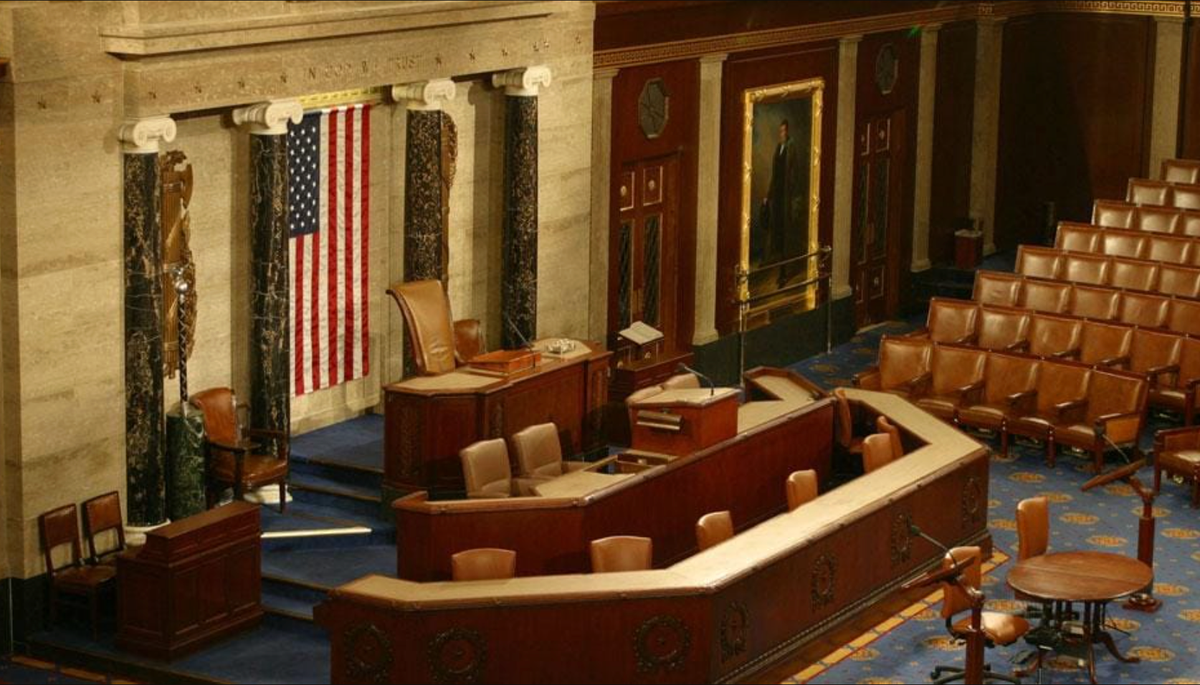
A coalition of media associations, press freedom groups, and civil liberties organizations urged members of Congress to withdraw a subpoena against journalist Seth Harp. They also called out Republican Representative Anna Paulina Luna, who proposed the subpoena and then referred Harp to the Justice Department for prosecution.
“The subpoena has few parallels or precedents in recent history and poses a grave danger to the First Amendment’s guarantee of press freedom,” the coalition declared in a letter [PDF] addressed to the House of Representatives.
“Luna’s comments on social media have made clear that she lacked a legitimate legislative purpose for proposing the subpoena. In one post explaining the subpoena, she claimed the purpose was for Harp to ‘face accountability’ as ‘the media has gotten away with too much for too long and I’m sick of it.’”
The coalition continued, “Instead of being part of a legislative inquiry, these comments indicate the subpoena is rooted in animus towards our free press.”
Defending Rights and Dissent, the American Civil Liberties Union, the Freedom of the Press Foundation, Reporters Without Borders, PEN America, the Society of Professional Journalists, the National Coalition Against Censorship, and other organizations signed the letter to Congress.
As The Dissenter previously reported, the House Committee on Oversight and Reform subpoenaed Harp to testify before Congress after he identified a Delta Force commander Luna explicitly accused Harp of “doxxing” the high-ranking officer, whose military unit was apparently involved in the operation that kidnapped Venezuela President Nicolas Maduro.
“Harp, in fact, shared publicly available information, including a professional headshot from Duke University, of a high-ranking colonel believed to be in the chain-of-command for the controversial military action,” the coalition clarified. “He was not believed by Harp to be an actual participant in the on-the-ground operation. This information was published after the operation was complete.”
Indeed, Harp posted, “This is the current commander of Delta Force, whose men just invaded a sovereign country, killed a bunch of innocent people, and kidnapped the rightful president.”
Harp is the author of “The Fort Bragg Cartel: Drug Trafficking and Murder in the Special Forces,” an acclaimed book that exposed over a dozen cases of Army officers involved in drug trafficking at the base where the Green Berets, Special Forces, and Joint Special Operations Command are headquartered.
In a letter asking Attorney General Pam Bondi to prosecute Harp, Luna baselessly claimed that Harp “knowingly obtained, retained, and disseminated information that was closely held by the United States government and classified or classifiable at the time of disclosure. The publication of this information was not incidental or inadvertent; rather, it involved the deliberate attempt of identification of a specific individual whose anonymity was essential to the lawful execution of sensitive military operations.”
Yet as Harp and the coalition supporting him made clear, the Delta Force commander had an online biography posted on Duke University’s website.
Luna listed an array of laws that she insisted Harp had violated, including the Espionage Act and the Computer Fraud and Abuse Act. (Remarkably, she did not ask Bondi to prosecute Harp for violating the Intelligence Identities Protection Act, even though she seems to believes he personally “revealed” the identity of the Delta Force commander.)
“None of the statutes that [Luna] cites are remotely applicable to the case of a journalist who identifies a high-ranking military officer at the center of a massive breaking news story,” Harp responded. “This is a brazen attempt to intimidate and silence the press but is legally toothless.”
Harp also posted, “I encourage the lawyers out there to review the statutes she cites. There is no way that a prosecutor could make even a prima facie case against me under any of them— and that's without even touching my constitutional [First Amendment] defense or invoking press freedom.”
“The Fort Bragg Cartel is so good they are trying to put me in prison,” Harp later quipped. “Read the book that has the right-wing war machine shook to the core.”
Believe it or not, Luna opposed the Justice Department and its efforts to extradite WikiLeaks founder Julian Assange to the U.S. for a trial on Espionage Act charges.
Luna knows that the First Amendment gives journalists a right to publish classified information. However, because Harp opposes the military incursion in Venezuela, she apparently does not think that he should be afforded his right to freedom of the press.
“None of the information published by Harp was classified,” the coalition emphasized. “It was neither national defense information within the meaning of the Espionage Act nor did it pertain to the identity of a covert agent as defined by the Intelligence Identities Protection Act.”
“There is zero question that Harp’s actions were fully and squarely within the protections of the First Amendment, as well as outside the scope of any federal criminal statutes."
“By issuing this subpoena,” the coalition concluded, “Congress is undermining one of the most cherished American freedoms. We urge Congress to reverse course and rescind this dangerous, unconstitutional subpoena.”

Comments ()