
They Executed Him For Wielding A Camera
Alex Pretti, a 37-year-old ICU nurse who worked at a Veterans Affairs hospital, was executed in Minneapolis by U.S. Border Patrol agents while exercising his First Amendment right to film their actions.
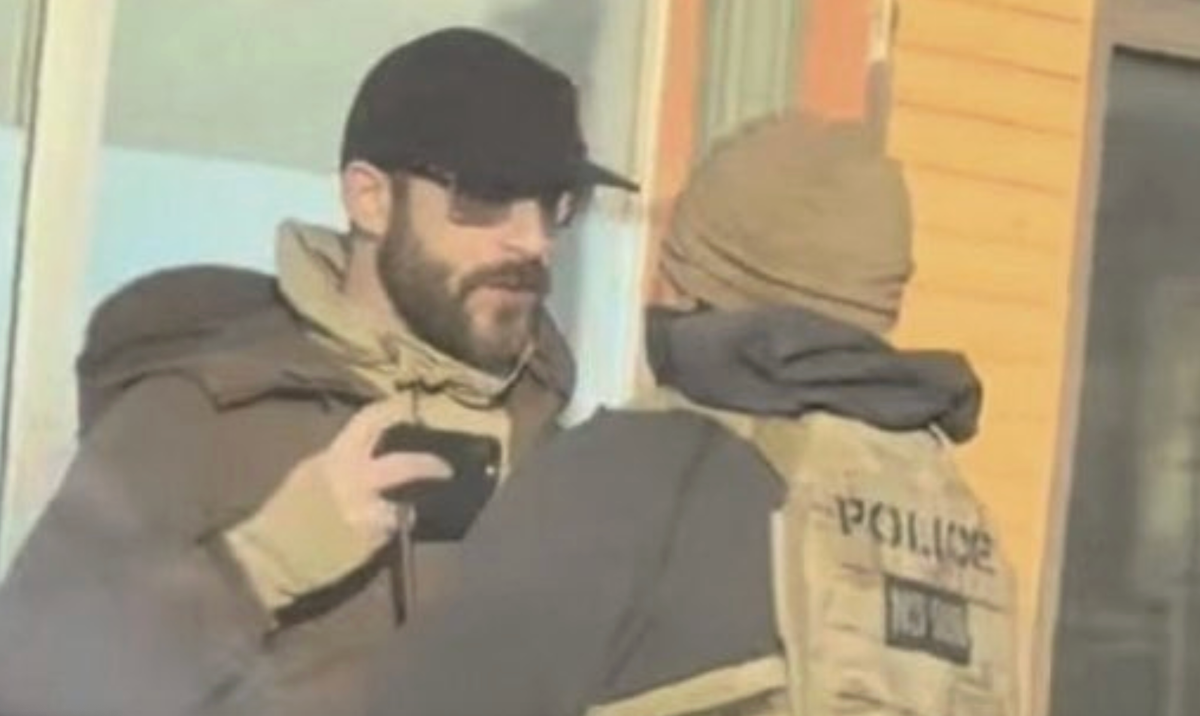
Brandon Siguenza, a special education teacher in Minneapolis who was arrested while recording ICE agents, says what observers are doing is “beautiful” and gives him hope. “The least we can do is try to keep federal agents from disappearing people without a trace—documenting where they take our neighbors helps their loved ones know what happened.”
But on January 24, Alex Pretti, a 37-year-old ICU nurse who worked at a Veterans Affairs hospital, was executed in Minneapolis by United States Border Patrol agents while exercising his First Amendment right to film their actions.
The war on the right to record, which extends beyond professional journalists, is crucial to President Donald Trump and his administration’s agenda to cleanse parts of the country of ethnic populations through racial profiling and warrantless arrests of undocumented immigrants, lawful permanent residents, and U.S. citizens.
Pretti is not the first observer to be killed while documenting Border Patrol and ICE agents. On January 7, ICE agent Jonathan Ross shot and killed 37-year-old Renee Good in Minneapolis. Good served on the school board of her son’s charter school and encouraged parents to “monitor” ICE operations.
As with Good, Department of Homeland Security (DHS) Secretary Kristi Noem maliciously lied about Pretti after the Border Patrol killed him. “An individual approached US Border Patrol officers with a 9 mm semi-automatic handgun. The officers attempted to disarm this individual, but the armed suspect reacted violently. Fearing for his life and for the lives of his fellow officers around him, an agent fired defensive shots.”
“This looks like a situation where an individual arrived at the scene to inflict maximum damage on individuals and to kill law enforcement,” Noem further stated. “This individual who came with weapons and ammunition to stop a law enforcement operation of federal law enforcement committed an act of domestic terrorism. That’s the facts.”
However, video posted by Drop Site News hours after the incident shows that Border Patrol officers wrestled Pretti to the ground as he tried to help a woman that officers were manhandling. Border Patrol then forced Pretti to the ground, punched him several times, pepper sprayed, and importantly, an officer took a gun that he had a permit to carry and confiscated it.
Seconds later, a Border Patrol officer fired his weapon multiple times while Pretti was on his knees. (Pretti had a permit to carry his gun, and it was concealed.)
A “children’s entertainer” stood in their pink coat and courageously captured the video that made it next to impossible for Noem, Border Patrol Commander Gregory Bovino, and other officials to spread their lies.
The video quickly took on a level of importance similar to the video, which Darnella Frazier recorded in 2020 that showed Minneapolis police murdering George Floyd.
Noem previously insisted that “violence” against ICE and Border Patrol agents includes “videotaping them where they’re at.” She believes that individuals who report on the locations of agents are “actively encouraging people to avoid law enforcement activities and operations,” and they deserve to be arrested.
DHS Assistant Secretary for Public Affairs Tricia McLaughlin has said “videotaping ICE law enforcement and posting photos and videos of them online is doxing our agents,” and, “We will prosecute those who illegally harass ICE agents to the fullest extent of the law.”
Recently, a “legal observer” was recording a masked ICE agent in Maine when the agent took their photo. The legal observer asked why the agent took a picture of them. The agent replied, “Cause we have a nice little database and now you’re considered a domestic terrorist.”
Given the constant flood of videos from communities that capture the true nature of ICE and Border Patrol operations, Noem and other officials treat citizens who exercise their First Amendment right to record as “terrorists” because these networks of observers pierce through the propaganda manufactured to justify their brutal and unlawful operations.
'I Don't Feel Like I Can Go Home'
The fear of retaliation is why the children’s entertainer withheld her identity after sharing video of the Border Patrol executing Pretti. “I don’t feel like I can go home because I heard agents were looking for me. I don’t know what the agents will do when they find me.”
In a declaration [PDF] submitted as part of a major lawsuit in Minnesota, the children’s entertainer described how Pretti was nearby recording a video. An agent ordered them to stand on the sidewalk. Two observers were “forced backward” by another agent, who shoved one of them to the ground and pepper sprayed them.
Pretti was pepper sprayed, but he somehow managed to maintain his composure in an effort to help one of the observers, a woman, get up off the ground as agents roughly pushed her around.
“The agents pulled the man [Pretti] on the ground. I didn't see him touch any of them—he wasn't even turned toward them. It didn't look like he was trying to resist, just trying to help the woman up. I didn't see him with a gun,” according to the children’s entertainer. “They threw him to the ground. Four or five agents had him on the ground, and they just started shooting him. They shot him so many times.”
The complaint [PDF] filed as part of the Minnesota lawsuit against Noem, Acting ICE Director Todd Lyons, and other officials makes it clear that mafia tactics have been utilized by ICE and the Border Patrol in many of the cities where they have deployed.
Siguenza, the special education teacher, submitted a declaration [PDF] that recounted an incident that occurred on January 11. He had been recording ICE agents with a fellow member of a community group. Agents exited their SUV and surrounded them. One agent sprayed pepper spray into the vent of their car, and then the ICE agents drove off.
The two individuals followed the SUV, which quickly stopped. The agents smashed the driver side and passenger side windows. “Get out of the car. Get the fuck out of the car.” An agent knocked Siguenza’s phone out of his hand. Siguenza had a whistle that an agent took, too. “This is mine now, I’ll be using this later.”
Siguenza was arrested for “impeding operations.” He was taken to the Whipple detention center, shackled him, and placed him in a small interrogation room. He called his wife and was later questioned by agents. If Siguenza provided the “names of undocumented people” then they would help his family, and maybe even give him money, one agent said.
Many hours later, ICE released Siguenza. “My phone had been knocked out of my hand when they broke the windows and arrested us, so I didn’t know what exactly to do.” He tried to make his way to a group of protesters to see if someone would let him use their phone. An agent shot him with a pepper ball.
“I feel like it’s my job to tell this story so people will know what happened here, but I’m afraid,” Siguenza stated.
'The Value of Documenting Injustice'
All across the United States this is the current playbook for ICE. If agents catch observers recording them on the streets, they will knock them over, slap their phones out of their hands, and possibly even hold them incommunicado.
ICE agents will surround vehicles, break their windows, and detain observers. Or as the lawsuit describes, ICE agents will obtain the home addresses of individuals who are documenting their misconduct and drive to their home while the observer is following them—simply to “demonstrate they know where the observer lives.”
“This threat and intimidation tactic is straight out of organized crime and has an obvious chilling effect on observers’ and protesters’ exercise of their First Amendment rights,” the lawsuit states.
What happened to Pretti and Good shows agents may even escalate to assassinating people who record them. They know high-ranking officials in the Trump administration will defend them after they pull the trigger, and they do not have to worry about facing criminal charges for their actions. The federal government will simply thwart any state or county investigation intended to hold agents accountable.
It’s hard to fathom a greater threat to the First Amendment right to record. The fear of being killed by ICE or Border Patrol agents is enough to put a damper on the growing networks of observers from coast to coast, who are boldly standing up for their communities.
Members of the news media should not be presumptuous in thinking that this kind of incident could not happen to a journalist, too. The threat to observers is a massive assault on the right of everyone to engage in freedom of the press.
In spite of this violent repression, a great many observers will return to the streets. They will assert their rights, and these individuals are heroes just like Pretti and Good were heroes.
As the children’s entertainer eloquently concluded in their declaration, “[I]t is important to remember the value of documenting injustice. We show up for the people who need us to bear witness, because it can’t be one group of people bearing the brunt of their tyranny.”
“This is a struggle to protect our freedom and democracy, those things are on the line. [Pretti] lost his life for those values.”
Comments ()